PEA (Palmitoylethanolamide, PEAptimize™) supplier specification
Nutrition BioTech is a bulk palmitoylethanolamide (PEA) ingredient supplier and manufacturer, supplying PEA (CAS 544-31-0) as PEAptimize™ at 99% minimum by HPLC in standard, micronized and ultra-micronized particle-size grades, produced by organic synthesis from palmitic acid and ethanolamine, for B2B nutraceutical formulation.
For PEA the specification conversation is only half about assay. Because the material is a waxy, poorly water-soluble fatty acid amide, particle size distribution, bulk and tapped density, flowability and capsule-fill performance decide whether a formula runs on line. Every lot ships with a Certificate of Analysis stating identity, HPLC assay and the assay basis.
| Ingredient name | PEA (Palmitoylethanolamide) — PEAptimize™ |
|---|---|
| Synonyms | Palmitoylethanolamide; PEA; palmidrol; N-(2-hydroxyethyl)hexadecanamide; N-palmitoylethanolamine |
| CAS number | 544-31-0 |
| Machine-readable identifiers | InChIKey HXYVTAGFYLMHSO-UHFFFAOYSA-N · PubChem CID 4671 |
| Molecular formula | C18H37NO2 |
| Molecular weight | 299.49 g/mol |
| Assay / purity | 99% minimum by HPLC, stated on the Certificate of Analysis for each lot. The particle-size grade is specified separately per order and does not change the assay specification. |
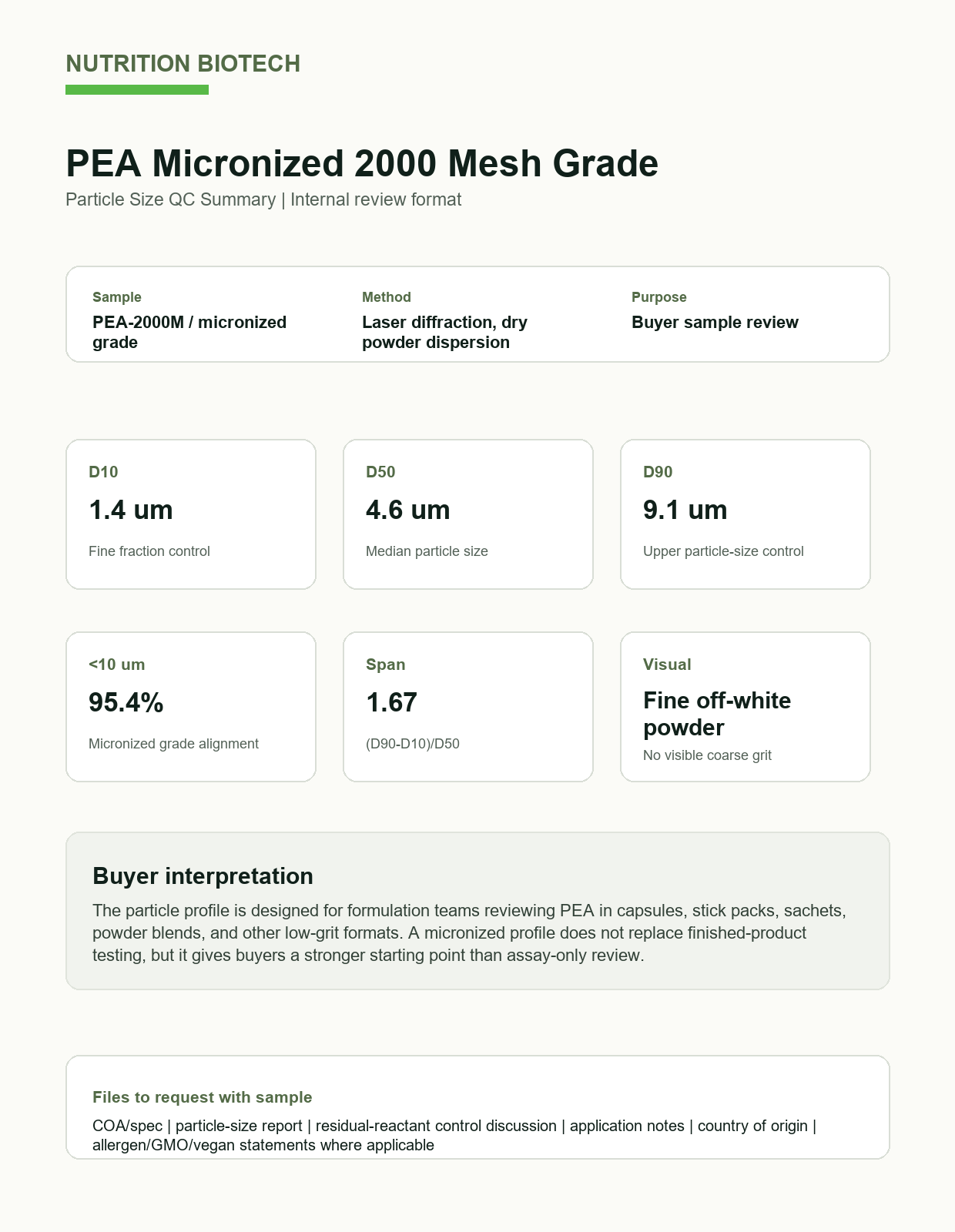
| Particle-size grades | Supplied as standard (non-micronized), micronized and ultra-micronized grades. Particle size distribution (D10/D50/D90) is measured per lot and reported on the Certificate of Analysis, with the method stated. Grades are not interchangeable: the same assay at a different particle size behaves differently in blending, capsule filling and dissolution testing. |
| Particle size — ultramicronized grade (typical, batch PEA-260505) | D10 1.395 µm · D50 2.580 µm · D90 4.773 µm · D97 6.363 µm · D[4,3] 3.04 µm; distribution mode 2.55 µm. Cumulative undersize: 99.8% below 10 µm, 96.7% below 6 µm, 32.8% below 2 µm, 3.0% below 1 µm. Typical values for the batch stated; the distribution is measured by in-house determination and reported on the Certificate of Analysis for each lot. Release limit D90 ≤ 6.0 µm. |
| Particle size method | Laser diffraction, dry dispersion. ISO 13320 (equivalently GB/T 19077-2016). Report states D10/D50/D90, D[4,3], distribution mode and dispersion mode. |
| Packaging | 25 kg per drum. Alternative pack sizes quoted per order. |
| Minimum order quantity | 25 kg (one drum). |
| Lead time | Dispatch within 3 days. |
| Source / production route | Organic synthesis — amidation of palmitic acid with ethanolamine, followed by purification and crystallisation. PEA is an endogenous fatty acid amide also present in foods; commercial material is synthesised, not extracted. The origin of the palmitic acid feedstock (vegetable-derived, e.g. palm or other vegetable oil) is stated on the specification sheet, together with sustainability documentation where required. |
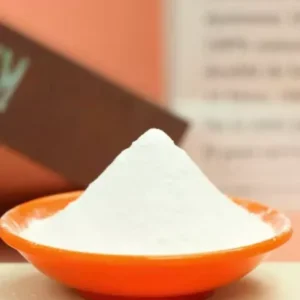
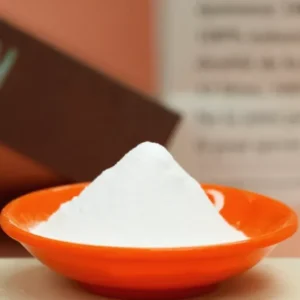
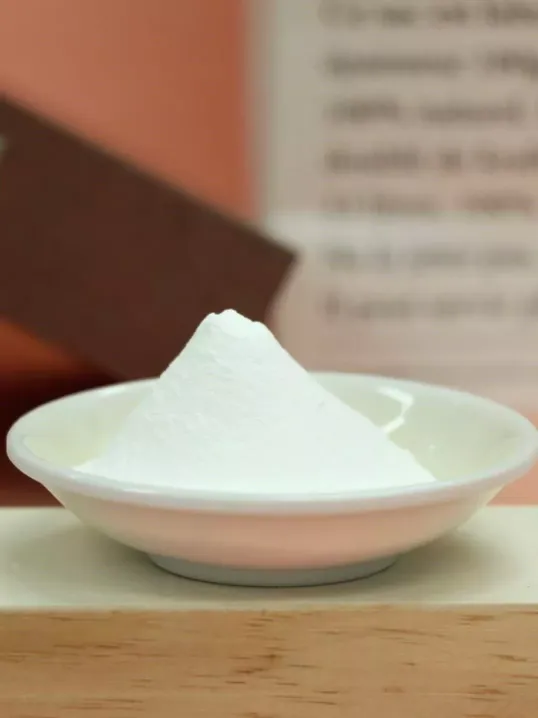
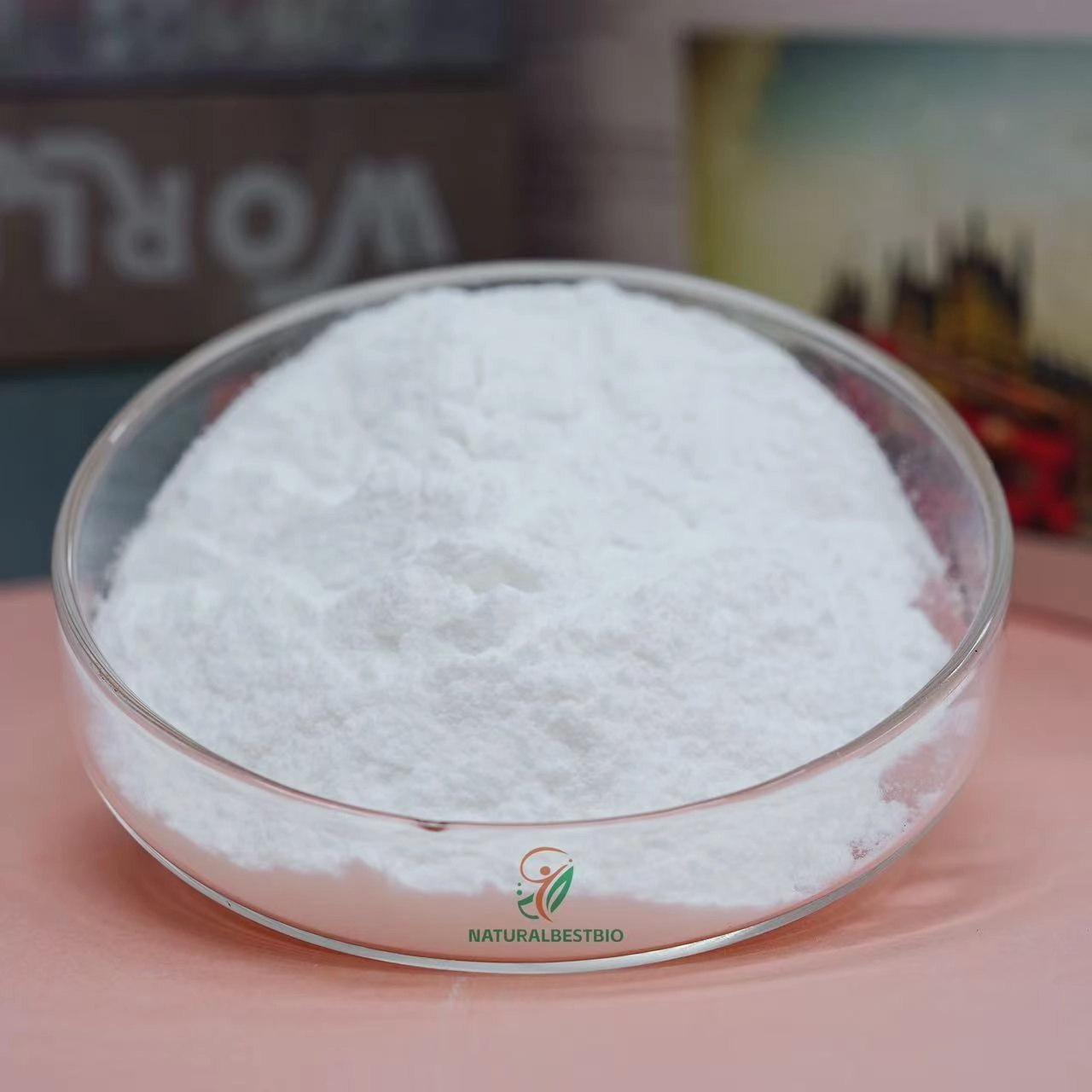
| Appearance | White to off-white crystalline or waxy powder |
| Solubility | Practically insoluble in water; soluble in ethanol, DMSO and warm lipid systems. Wetting behaviour, dispersion and dissolution medium should be confirmed for the intended dosage form. |
| Powder properties | Bulk and tapped density, angle of repose, loss on drying and sieve analysis available per lot on request — these are the parameters that govern capsule weight consistency and tablet compaction for a low-density amide. |
| Typical applications | Capsules, tablets, sachets, stick packs, chewables and softgel or lipid-matrix formats for B2B nutraceutical manufacturing |
| Documentation | Download public specification sheet Public sheet prepared from the current product-page specification block; not a batch-specific Certificate of Analysis. Lot-specific COA and supporting records are available for qualified buyer review when appropriate. |
| Stability / storage | Store in tightly closed containers in a cool, dry place away from direct heat and light. Melting behaviour should be considered when the material is exposed to heat during granulation, tableting or lipid-phase processing. |
| Regulatory note | Permitted use, notification status and labelling requirements for palmitoylethanolamide differ by jurisdiction. Buyers are responsible for confirming the regulatory position in each market of sale before launch. |
| Contaminant testing | Heavy metals, microbiological limits and residual solvents are tested to United States Pharmacopeia general chapter methods. The chapters applied and the results are stated on the Certificate of Analysis for each lot. |
| Quality system | ISO 22000:2018, FSSC 22000, HACCP and GMP (certificates provided on request) |
| Supplier | Nutrition BioTech, 1601 W. Mission Blvd, Suite 103 (DL#29), Pomona, CA 91766, United States |
PEA (Palmitoylethanolamide) (PEAptimize™)
PEAptimize™ PEA for neurocomfort, recovery and healthy inflammatory-response formulas.
Why brands ask for it
PEAptimize™ Palmitoylethanolamide is positioned for neurocomfort, recovery and healthy inflammatory-response formulas. For B2B formulation, the key challenge is not only assay but particle size, bulk density, flowability and capsule-filling performance.
Finished-product fit
Comfort-free active lifestyle, recovery, neurocomfort, comfort-response support, sports recovery. The strongest conversations start with format, serving size, documentation, and how the material behaves in the intended formula.
What makes the sample useful
- Micronized/ultra-micronized options
- Bulk density and capsule-fill performance matter
- Strong European/clinical story in consumer market
Before the sample ships
- Request contaminant, residual solvent, and microbiology files as needed.
- Confirm particle size.
- Confirm bulk density.
- Match the material to the target capsule, tablet, sachet, gummy, or powder format.
- Confirm it have carrier.
File Package
Ask for the material files that match your market, dosage form, and internal review process.
Available documents may include: COA / Specification / Allergen Statement / GMO Statement / Vegan Statement / Heavy Metals / Microbial Limits / Manufacturing Flow Chart / Residual Solvent / Country of Origin / Composition Statement.
Regulatory & Facility Support
Regulatory review notes for the target market can be provided. Nutrition BioTech does not hold and does not claim any GRAS notification or NDI notification for this material.
Facility and quality system support follows the same certificate set named in the specification table: ISO 22000:2018, FSSC 22000, HACCP and GMP. The holding entity for each certificate is named on the certificate and confirmed under buyer review.
Specification FAQ
What is the CAS number for PEA?
The CAS number for PEA is 544-31-0. The molecular formula is C18H37NO2 and the molecular weight is 299.49 g/mol. Machine-readable identifiers: InChIKey HXYVTAGFYLMHSO-UHFFFAOYSA-N · PubChem CID 4671.
What purity is PEA supplied at, and by which method?
99% minimum by HPLC, stated on the Certificate of Analysis for each lot. The particle-size grade is specified separately per order and does not change the assay specification.
Is PEA soluble in water?
Practically insoluble in water; soluble in ethanol, DMSO and warm lipid systems. Wetting behaviour, dispersion and dissolution medium should be confirmed for the intended dosage form.
How is PEA produced and where does it come from?
Organic synthesis — amidation of palmitic acid with ethanolamine, followed by purification and crystallisation. PEA is an endogenous fatty acid amide also present in foods; commercial material is synthesised, not extracted. The origin of the palmitic acid feedstock (vegetable-derived, e.g. palm or other vegetable oil) is stated on the specification sheet, together with sustainability documentation where required.
What is the difference between micronized and ultramicronized PEA?
Neither term has a pharmacopoeial or ISO definition for PEA, so the words alone are not a specification. The threshold most often carried into commercial use is “more than 90% by volume below 6 µm.” Our ultramicronized grade measures 96.7% below 6 µm, with D50 2.6 µm and D90 4.8 µm by laser diffraction per ISO 13320. Because suppliers apply the terms differently, compare the full distribution — D10, D50, D90 and the cumulative undersize at the thresholds your specification uses — rather than the adjective.
Published research context
Palmitoylethanolamide (PEA) has a peer-reviewed physicochemical and formulation literature. The studies below are provided as technical context for formulators evaluating this raw material. These entries summarise what the cited publications report. They are not claims about Nutrition BioTech material, and no health, therapeutic or cosmetic outcome is claimed or implied for any finished product. Buyers are responsible for the claims they make on their own labels and for confirming what is permitted in their market.
- Two crystal polymorphs characterised Reported single-crystal X-ray structures of two polymorphs of N-palmitoylethanolamine, a monoclinic alpha form and an orthorhombic beta form, with molecules organised tail-to-tail in a bilayer-like packing, acyl chains tilted about 35 degrees with respect to the bilayer normal, and extended zig-zag hydrogen-bonded networks in both forms. Kamlekar RK, Swamy MJ. J Lipid Res. 2006;47(7):1424-1433. PMID 16609146. DOI 10.1194/jlr.M600043-JLR200. source
- Oleogelation of edible oils measured Reported that palmitoylethanolamide gels edible oils at concentrations as low as 0.5 wt%, with elastic moduli of about 1400 Pa at 1 wt% and 9000 Pa at 2 wt%, the gelator forming lamellar solid aggregates tens of micrometres wide; on heating, rheology showed a gel-to-sol transition and DSC showed melting of the solid particles at a higher temperature. Schwaller D, Sui Y, Carvalho A, Collin D, Mésini PJ. Food Chem. 2022;386:132671. PMID 35334321. DOI 10.1016/j.foodchem.2022.132671. source
- Particle size grades and oral absorption compared Compared single-dose oral pharmacokinetics of micronized (10 µm and 6 µm), water-dispersible and standard non-micronized palmitoylethanolamide in male Sprague-Dawley rats, noting the compound's poor water solubility as the rationale for the different dissolution-oriented formats. The matrix of this work is rat plasma, not a raw-material assay; identity and assay of supplied powder follow the methods stated on our specification sheet and COA. Mehkri S, Dinesh KG, Ashok G, Bopanna K. Indian J Pharmacol. 2025;57(4):219-225. PMID 40686353. DOI 10.4103/ijp.ijp_964_24. source