Chrysosplenol D 98% supplier specification
Nutrition BioTech is a bulk Chrysosplenol D ingredient supplier, supplying the rare methoxylated flavonol Chrysosplenol D (CAS 14965-20-9) at 98% minimum by HPLC as a yellow powder, produced by botanical isolation and purification, for B2B research-stage and premium-botanical formulation.
Chrysosplenol D is a small-volume, differentiation-driven material rather than a commodity flavonoid, so beyond the 98% assay the first conversation is about identity confirmation, available lot size, lead time and the regulatory review route for the destination market. Every lot ships with a Certificate of Analysis stating identity, HPLC assay and the assay basis.
| Ingredient name | Chrysosplenol D 98% |
|---|---|
| Synonyms | Chrysosplenol D; 3,6,7-trimethoxy-3′,4′,5-trihydroxyflavone (methoxylated flavonol) |
| CAS number | 14965-20-9 |
| Machine-readable identifiers | InChIKey BYWLLSQTJBXAPV-UHFFFAOYSA-N · PubChem CID 5280699 |
| Molecular formula | C18H16O8 |
| Molecular weight | 360.32 g/mol |
| Assay / purity | 98% minimum by HPLC, stated on the Certificate of Analysis for each lot. |
| Source / production route | Botanical isolation and purification from Artemisia annua plant material. The plant source and route for the supplied lot are stated on the specification sheet and COA. |
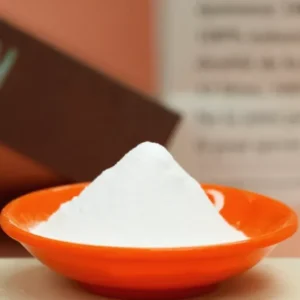
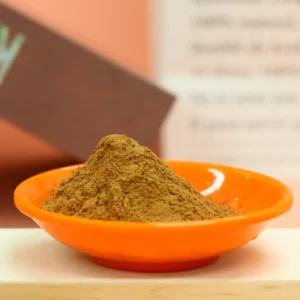
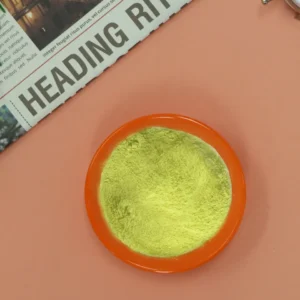
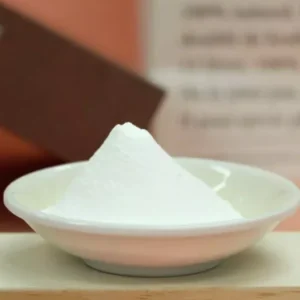
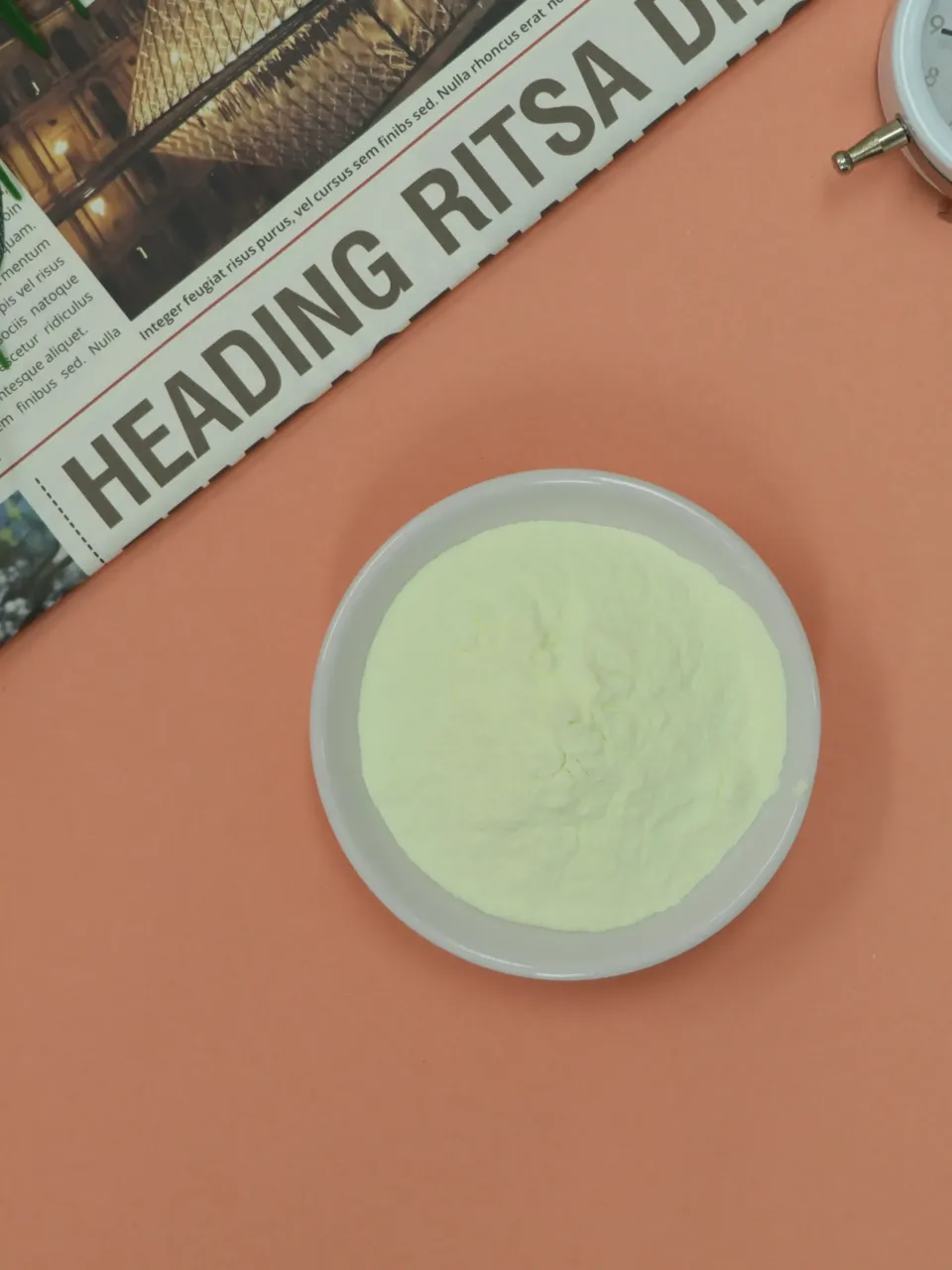
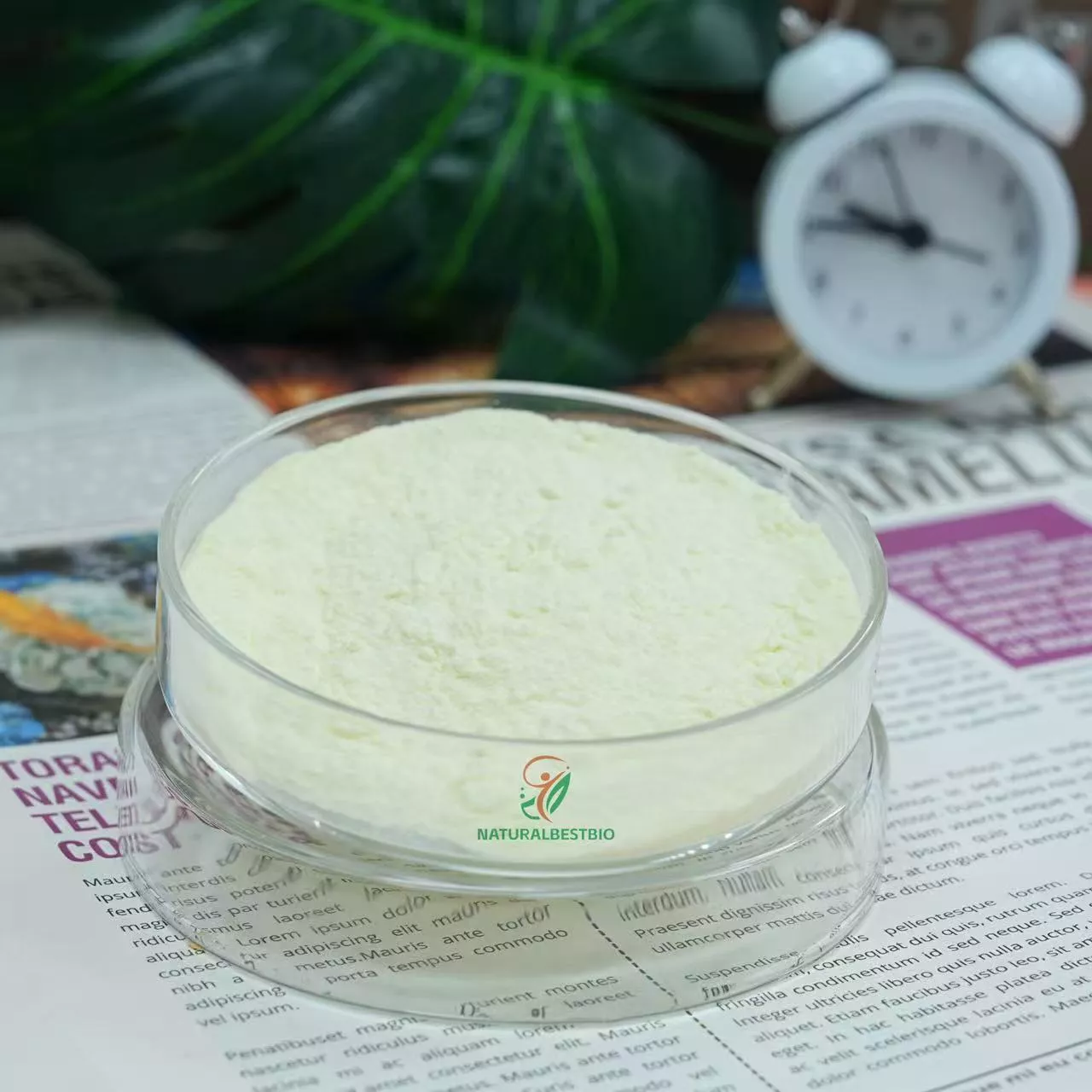
| Appearance | Yellow to light yellow powder |
| Moisture | NMT 1.0%. |
| Heavy metals | Meets USP standard for Pb, As, Hg and Cd. |
| Residual solvents | Meets USP residual solvent standard. |
| Microbiological limits | Total plate count NMT 1,000 cfu/g; yeast and mold NMT 100 cfu/g; E. coli and Salmonella not detected. |
| Particle size | 40 mesh. |
| Solubility | Poorly soluble in water; soluble in DMSO and in ethanol. Solubility and particle size should be confirmed for the intended dosage form. |
| Minimum order quantity | 1 kg. |
| Packaging | 1 kg, 5 kg and 25 kg. |
| Lead time | Typically dispatches within 3 business days after order confirmation, subject to lot availability and buyer documentation review. |
| Storage | Store sealed in a cool, dry and well-ventilated place. |
| Shelf life / origin | 3 years when stored as recommended. Country of origin: China. |
| Availability note | Chrysosplenol D is a rare, small-volume flavonol. Lot size, lead time and reference-standard availability should be confirmed at enquiry rather than assumed. |
| Typical applications | Low-dose capsules, tablets and R&D-stage powder blends for B2B evaluation |
| Regulatory note | This is an emerging botanical active with a narrow commercial history. The regulatory review route for the destination market should be confirmed before formulation. |
| Documentation | Download public specification sheet Public sheet prepared from the current product-page specification block; not a batch-specific Certificate of Analysis. Lot-specific COA and supporting records are available for qualified buyer review when appropriate. |
| Quality system | ISO 22000:2018, FSSC 22000, HACCP and GMP (certificates provided on request) |
| Supplier | Nutrition BioTech, 1601 W. Mission Blvd, Suite 103 (DL#29), Pomona, CA 91766, United States |
Identity: what the formula and the mass do not tell you
Chrysosplenol D is C18H16O8, molecular weight 360.32. Neither of those two numbers is enough to identify the material by itself. Several flavonoids and related natural products share the same elemental formula and nominal mass, so a buyer should match the named compound, CAS number, structural description and InChIKey before approving a lot.
| Compound | Structural note | CAS | InChIKey |
|---|---|---|---|
| Chrysosplenol D (this material) | quercetagetin 3,6,7-trimethyl ether | 14965-20-9 | BYWLLSQTJBXAPV-UHFFFAOYSA-N |
| Chrysosplenol C | same formula, different methoxy / hydroxy placement | – | QQBSPLCHDUCBNM-UHFFFAOYSA-N |
| Jaceidin | same formula and mass; different substitution pattern | 10173-01-0 | XUWTZJRCCPNNJR-UHFFFAOYSA-N |
| Centaureidin | same formula and mass; different flavonoid identity | 17313-52-9 | BZXULYMZYPRZOG-UHFFFAOYSA-N |
| Arcapillin | same formula class reported in chemical databases | – | – |
| Irigenin | same formula class reported in chemical databases | – | – |
| Rosmarinic acid | same formula and mass, but not a flavonoid | 20283-92-5 | DOUMFZQKYFQNTF-WUTVXBCWSA-N |
For procurement review, do not approve Chrysosplenol D by formula and molecular weight alone. Ask for the lot COA and confirm that the identity record points to Chrysosplenol D, CAS 14965-20-9 and InChIKey BYWLLSQTJBXAPV-UHFFFAOYSA-N. A published single-crystal structure for Chrysosplenol D also supports this identity route: it reports C18H16O8, monoclinic P21/n, Z = 4 and a calculated density consistent with MW 360.32. This is structural context, not a claim about biological activity.
Chrysosplenol D
Rare flavonoid active for brands seeking a high-differentiation botanical story.
Why brands ask for it
Chrysosplenol D is an emerging botanical active for R&D-led brands seeking a differentiated flavonoid story. It is best positioned for early-stage formula exploration where the buyer values uniqueness, technical discussion and claim-boundary review.
Finished-product fit
Rare methoxylated flavonol supplied as an identity-defined reference-grade material for R&D-stage evaluation. Positioning, category and any structure/function language are the buyer’s decision and should be set against the buyer’s own substantiation. The strongest conversations start with format, serving size, documentation, and how the material behaves in the intended formula.
What makes the sample useful
- Rare active/story
- Small-dose premium positioning
- Research-led differentiation for advanced brands
Before the sample ships
- Confirm source, identity, and supporting documentation.
- Confirm active marker, assay method, and specification range.
- Confirm the regulatory review route for the intended market.
- Review serving-size logic and label-space fit.
- Confirm whether the material is commercially scalable at your target volume.
File Package
Ask for the material files that match your market, dosage form, and internal review process.
Available documents may include: COA / Specification / Allergen Statement / GMO Statement / Vegan Statement / Heavy Metals / Microbial Limits / Manufacturing Flow Chart / Residual Solvent / Country of Origin / Composition Statement.
Regulatory & Facility Support
Chrysosplenol D has a narrow commercial history as a food or supplement ingredient. Nutrition BioTech holds no NDI notification, GRAS notice or ODI listing for this material, and none is implied. The regulatory review route for the destination market is the buyer’s to establish before formulation.
Facility and quality system support follows the same certificate set named in the specification table: ISO 22000:2018, FSSC 22000, HACCP and GMP. The holding entity for each certificate is named on the certificate and confirmed under buyer review.
Specification FAQ
What is the CAS number for Chrysosplenol D?
The CAS number for Chrysosplenol D is 14965-20-9. The molecular formula is C18H16O8 and the molecular weight is 360.32 g/mol. Machine-readable identifiers: InChIKey BYWLLSQTJBXAPV-UHFFFAOYSA-N · PubChem CID 5280699.
What purity is Chrysosplenol D supplied at, and by which method?
98% minimum by HPLC, stated on the Certificate of Analysis for each lot.
Is Chrysosplenol D soluble in water?
Poorly soluble in water; soluble in DMSO and in ethanol. Solubility and particle size should be confirmed for the intended dosage form.
How is Chrysosplenol D produced and where does it come from?
Botanical isolation and purification from Artemisia annua plant material. The plant source and route for the supplied lot are stated on the specification sheet and COA.
Published research context
Chrysosplenol D has a peer-reviewed analytical literature in the botanical matrices where it naturally occurs, including Artemisia annua and Viticis Fructus. The studies below are provided as technical context for formulators evaluating this raw material. These entries summarise what the cited publications report. They are not claims about Nutrition BioTech material, and no health, therapeutic or cosmetic outcome is claimed or implied for any finished product. Buyers are responsible for the claims they make on their own labels and for confirming what is permitted in their market.
- Validated HPLC-DAD quantification and geographic variation in Artemisia annuaReported a validated HPLC-DAD method, with LC-ESI-QTOF-MS/MS confirmation to avoid false-positive results, for simultaneous quantification of five flavonoids, two coumarins and four sesquiterpenes in Artemisia annua. Samples with higher chrysosplenol D content (0.64 ± 0.14 mg/g) were mainly distributed in eastern and northern China — plant origin measurably shifts the flavonoid profile of the botanical starting material.Fu C, Yu P, Wang M, Qiu F. Food Chem. 2020;312:126070. PMID 31911352. DOI 10.1016/j.foodchem.2019.126070. source
- Quality-marker role in Viticis Fructus (UHPLC-ESI-MS/MS)Reported a validated UHPLC-ESI-MS/MS method quantifying nine flavones and one iridoid glycoside in Viticis Fructus from different production areas. Chemometric analysis identified vitexicarpin, chrysosplenol D and agnuside as the components that best represent overall quality in that matrix, supporting the use of chrysosplenol D as a quality-evaluation marker.Ren WJ et al. J Sep Sci. 2025;48(6):e70174. PMID 40474651. DOI 10.1002/jssc.70174. source
- Bioanalytical LC-MS/MS method and glucuronidated metabolitesReported a validated liquid chromatography-tandem mass spectrometry assay for simultaneous determination of chrysosplenol D, chrysoplenetin and artemetin and their glucuronidated metabolites after oral administration of an Artemisia annua extract, and measured significantly higher exposure of the conjugated forms, with only trace intact flavonoid. The matrix in this work is rat plasma, not raw-material release testing; identity and assay of supplied material follow the methods stated in the specification and Certificate of Analysis.Wang S et al. J Sep Sci. 2019;42(21):3330-3339. PMID 31483950. DOI 10.1002/jssc.201900668. source
- Phase II conjugates dominate circulating forms after oral dosingReported that after oral administration of a Viticis Fructus extract, only small amounts of free chrysosplenol D were detected, while enzymatic hydrolysis with β-glucosidase revealed significantly higher total Cmax and AUC0-t — indicating that chrysosplenol D circulates mainly as phase II metabolites. The matrix in this work is rat plasma, not raw-material release testing; identity and assay of supplied material follow the methods stated in the specification and Certificate of Analysis.Tao C, Ren W, Zhai Y, Qiu F. J Pharm Biomed Anal. 2025;262:116898. PMID 40239556. DOI 10.1016/j.jpba.2025.116898. source