Tauroursodeoxycholic acid (TUDCA) supplier specification
Nutrition BioTech is a bulk tauroursodeoxycholic acid (TUDCA) ingredient supplier and manufacturer, supplying TUDCA powder (CAS 14605-22-2) at 99% minimum by HPLC, produced by taurine conjugation of ursodeoxycholic acid, for B2B nutraceutical and specialty supplement formulation.
TUDCA is a taurine conjugate of ursodeoxycholic acid. Bile-acid ingredients are positioning- and documentation-sensitive, so buyer conversations start with salt form, assay basis, sodium content, dosage format and the regulatory status in the destination market. Every lot ships with a Certificate of Analysis stating identity, HPLC assay and the assay basis.
| Ingredient name | Tauroursodeoxycholic acid (TUDCA) |
|---|---|
| Synonyms | TUDCA; taurourso; taurine-conjugated ursodeoxycholic acid; 2-{[(3α,5β,7β)-3,7-dihydroxy-24-oxocholan-24-yl]amino}ethanesulfonic acid; sodium salt form CAS 35807-85-3 |
| CAS number | 14605-22-2 (free acid) · 35807-85-3 (sodium salt) |
| Machine-readable identifiers | CAS 14605-22-2 — InChIKey BHTRKEVKTKCXOH-LBSADWJPSA-N · PubChem CID 9848818 CAS 35807-85-3 — InChIKey IYPNVUSIMGAJFC-JUWYWQLMSA-M · PubChem CID 46782978 |
| Molecular formula | C26H45NO6S (free acid) · C26H44NNaO6S (sodium salt) |
| Molecular weight | 499.70 g/mol (free acid, anhydrous basis) · 521.69 g/mol (sodium salt) |
| Assay / purity | 99% minimum by HPLC. Salt form, water content and sodium content are stated on the Certificate of Analysis and should be confirmed before label and serving-size work. |
| Production route | Semi-synthetic: taurine conjugation of ursodeoxycholic acid. Non-animal-sourced routes can be confirmed per lot on request. |
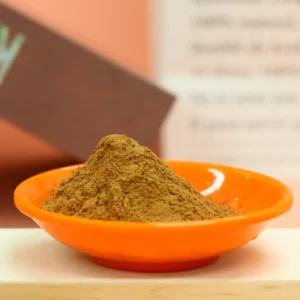
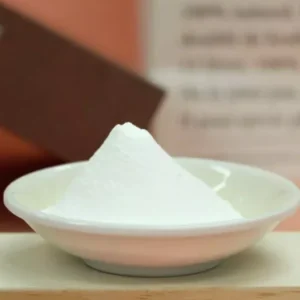
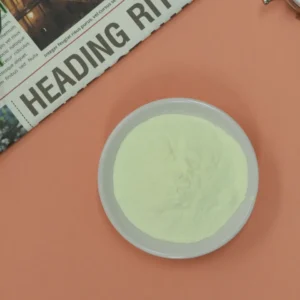
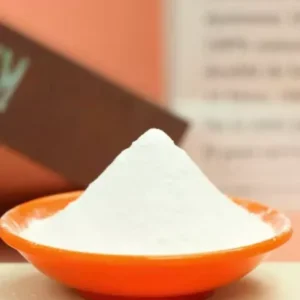
| Appearance | White to off-white crystalline powder |
| Solubility | Sodium salt is soluble in water; the free acid is sparingly soluble in water and soluble in ethanol and alkaline aqueous media. |
| Typical applications | Capsules, tablets and powder blends for B2B nutraceutical manufacturing |
| Documentation | Download public specification sheet Public sheet prepared from the current product-page specification block; not a batch-specific Certificate of Analysis. Lot-specific COA and supporting records are available for qualified buyer review when appropriate. |
| Quality system | ISO 22000:2018, FSSC 22000, HACCP and GMP (certificates provided on request) |
| Supplier | Nutrition BioTech, 1601 W. Mission Blvd, Suite 103 (DL#29), Pomona, CA 91766, United States |
Tauroursodeoxycholic Acid (TUDCA)
TUDCA for premium liver wellness and cellular stress-support formulas.
Why brands ask for it
TUDCA is positioned for premium liver wellness and cellular stress-support formulas. It is best suited for brands that understand the regulatory and positioning sensitivity of bile-acid ingredients and need reliable specification and dossier support.
Finished-product fit
Liver support, cellular stress support, recovery, advanced wellness stack. The strongest conversations start with format, serving size, documentation, and how the material behaves in the intended formula.
What makes the sample useful
- Strong high-end supplement demand
- Liver/cellular stress story
- Pairs with milk thistle, NAC, DHM
Before the sample ships
- Confirm source, identity, and supporting documentation.
- Confirm active marker, assay method, and specification range.
- Confirm sodium content.
- Review serving-size logic and label-space fit.
- Confirm the regulatory review route for the intended market.
File Package
Ask for the material files that match your market, dosage form, and internal review process.
Available documents may include: COA / Specification / Allergen Statement / GMO Statement / Vegan Statement / Heavy Metals / Microbial Limits / Manufacturing Flow Chart / Residual Solvent / Country of Origin / Composition Statement.
Regulatory & Facility Support
Regulatory review notes for the target market can be provided. Nutrition BioTech does not hold and does not claim any GRAS notification or NDI notification for this material.
Facility and quality system support follows the same certificate set named in the specification table: ISO 22000:2018, FSSC 22000, HACCP and GMP. The holding entity for each certificate is named on the certificate and confirmed under buyer review.
Specification FAQ
What is the CAS number for Tauroursodeoxycholic acid?
The CAS number for Tauroursodeoxycholic acid is 14605-22-2 (free acid) · 35807-85-3 (sodium salt). The molecular formula is C26H45NO6S (free acid) · C26H44NNaO6S (sodium salt) and the molecular weight is 499.70 g/mol (free acid, anhydrous basis) · 521.69 g/mol (sodium salt). Machine-readable identifiers: CAS 14605-22-2 — InChIKey BHTRKEVKTKCXOH-LBSADWJPSA-N · PubChem CID 9848818CAS 35807-85-3 — InChIKey IYPNVUSIMGAJFC-JUWYWQLMSA-M · PubChem CID 46782978.
What purity is Tauroursodeoxycholic acid supplied at, and by which method?
99% minimum by HPLC. Salt form, water content and sodium content are stated on the Certificate of Analysis and should be confirmed before label and serving-size work.
Is Tauroursodeoxycholic acid soluble in water?
Sodium salt is soluble in water; the free acid is sparingly soluble in water and soluble in ethanol and alkaline aqueous media.
Published research context
Tauroursodeoxycholic acid has a long peer-reviewed literature. The studies below are provided as technical context for formulators evaluating this raw material. These entries summarise what the cited publications report. They are not claims about Nutrition BioTech material, and no health, therapeutic or cosmetic outcome is claimed or implied for any finished product. Buyers are responsible for the claims they make on their own labels and for confirming what is permitted in their market.
- Hydrophilic-hydrophobic balance measured by reversed-phase HPLCDerived a bile salt monomeric hydrophobicity index from reversed-phase HPLC capacity factors, standardized so that taurocholate is 0 and taurolithocholate is 1, and reported an index of -0.47 for tauroursodeoxycholate versus +0.46 for taurochenodeoxycholate and +0.59 for taurodeoxycholate, placing tauroursodeoxycholate among the most hydrophilic of the bile salts measured; the indices of taurine-conjugated bile salts were constant across pH 2.8-9.0.Heuman DM. J Lipid Res. 1989;30(5):719-730. PMID 2760545. source
- HPLC resolution of the major conjugated bile acidsDescribed a reversed-phase HPLC system with isocratic methanol-phosphate buffer elution at pH 5.35 and detection at 200 nm that simultaneously resolves the glycine and taurine amidates of cholic, chenodeoxycholic, ursodeoxycholic and deoxycholic acids – including the taurine amidate of ursodeoxycholic acid, i.e. TUDCA – and reported relative retention times for these species in human bile.Rossi SS, Converse JL, Hofmann AF. J Lipid Res. 1987;28(5):589-595. PMID 3598401. source
- LC-MS/MS separation of ursodeoxycholate conjugate isomersDeveloped and validated an LC-MS/MS method separating ursodeoxycholic acid, glycoursodeoxycholic acid and tauroursodeoxycholic acid on a C18 column, detecting tauroursodeoxycholic acid at the ion transition m/z 498 to 80, and reported that insufficient separation of ursodeoxycholic acid from its isomer isoursodeoxycholic acid can distort quantitative results. The matrix in that work is human plasma, not a raw-material assay; identity and assay of our supplied powder follow the methods stated on our specification sheet and COA.Chang Y, Li X, Jiang J, Gui L, Wan L, Zhou X, Liao L, Li K, Lan K. J Pharm Biomed Anal. 2024;239:115882. PMID 38071766. DOI 10.1016/j.jpba.2023.115882. source