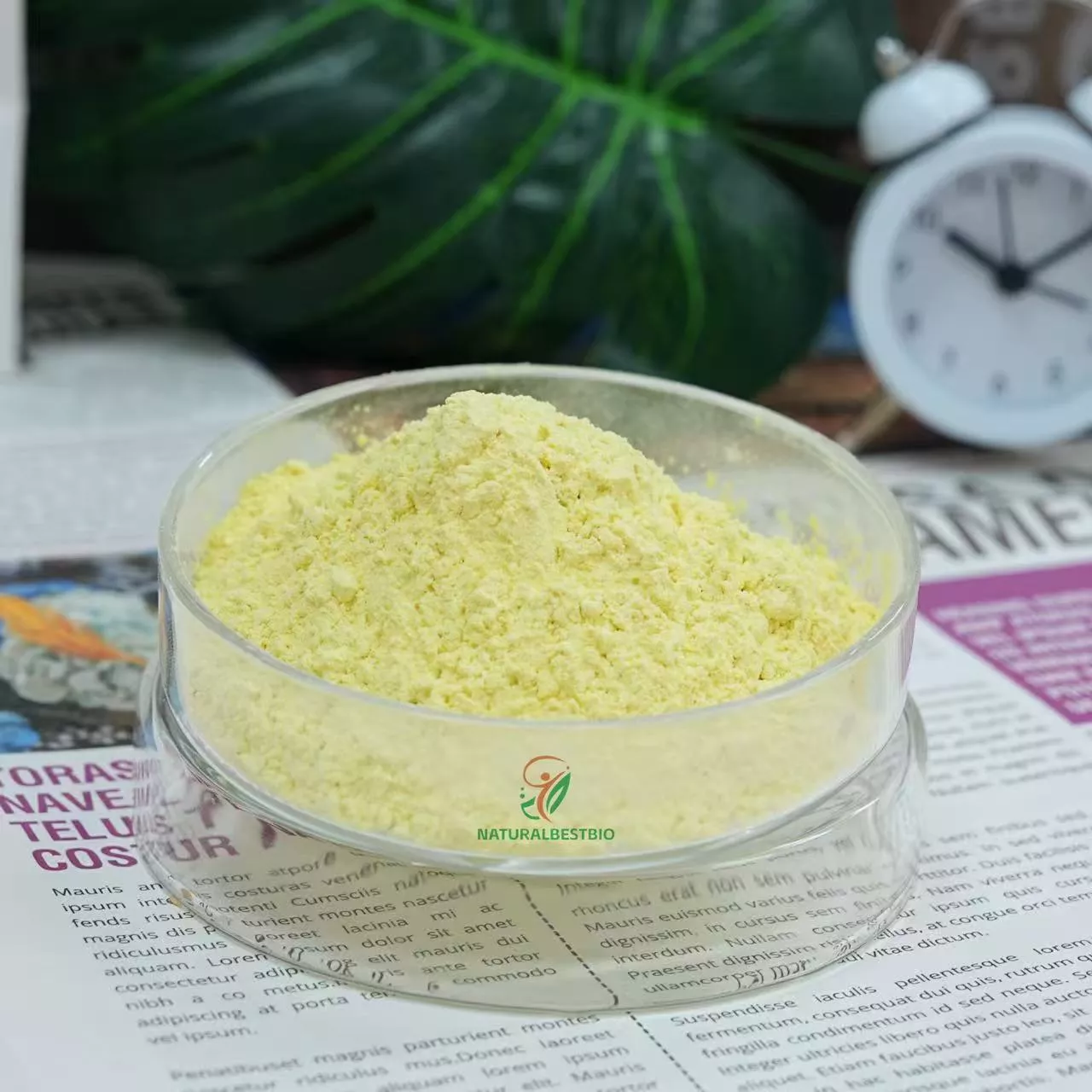
Luteolin 98% supplier specification
Nutrition BioTech is a bulk luteolin ingredient supplier and manufacturer, supplying luteolin (CAS 491-70-3) at 98% minimum by HPLC, produced by botanical extraction and purification, for B2B nutraceutical formulation.
Luteolin is a low-dose, poorly water-soluble flavone, so particle size, wetting behaviour and blend uniformity are as much part of the specification as the assay figure. Every lot ships with a Certificate of Analysis stating identity, HPLC assay and the assay basis.
| Ingredient name | Luteolin 98% |
|---|---|
| Synonyms | 3′,4′,5,7-Tetrahydroxyflavone; digitoflavone; luteolol; 2-(3,4-dihydroxyphenyl)-5,7-dihydroxy-4H-chromen-4-one |
| CAS number | 491-70-3 |
| Machine-readable identifiers | InChIKey IQPNAANSBPBGFQ-UHFFFAOYSA-N · PubChem CID 5280445 |
| Molecular formula | C15H10O6 |
| Molecular weight | 286.24 |
| Assay / purity | 98% minimum by HPLC; assay basis stated on the Certificate of Analysis |
| Source / production route | Botanical extraction and purification; the botanical source used for the supplied lot is stated on the specification sheet |
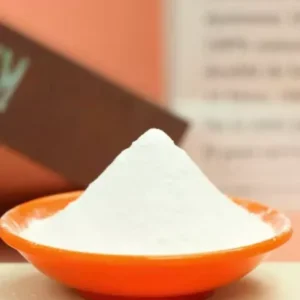
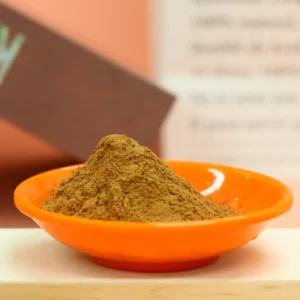
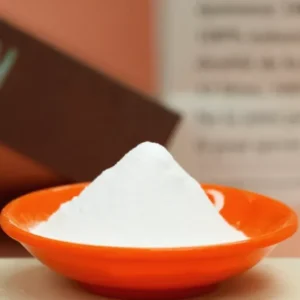
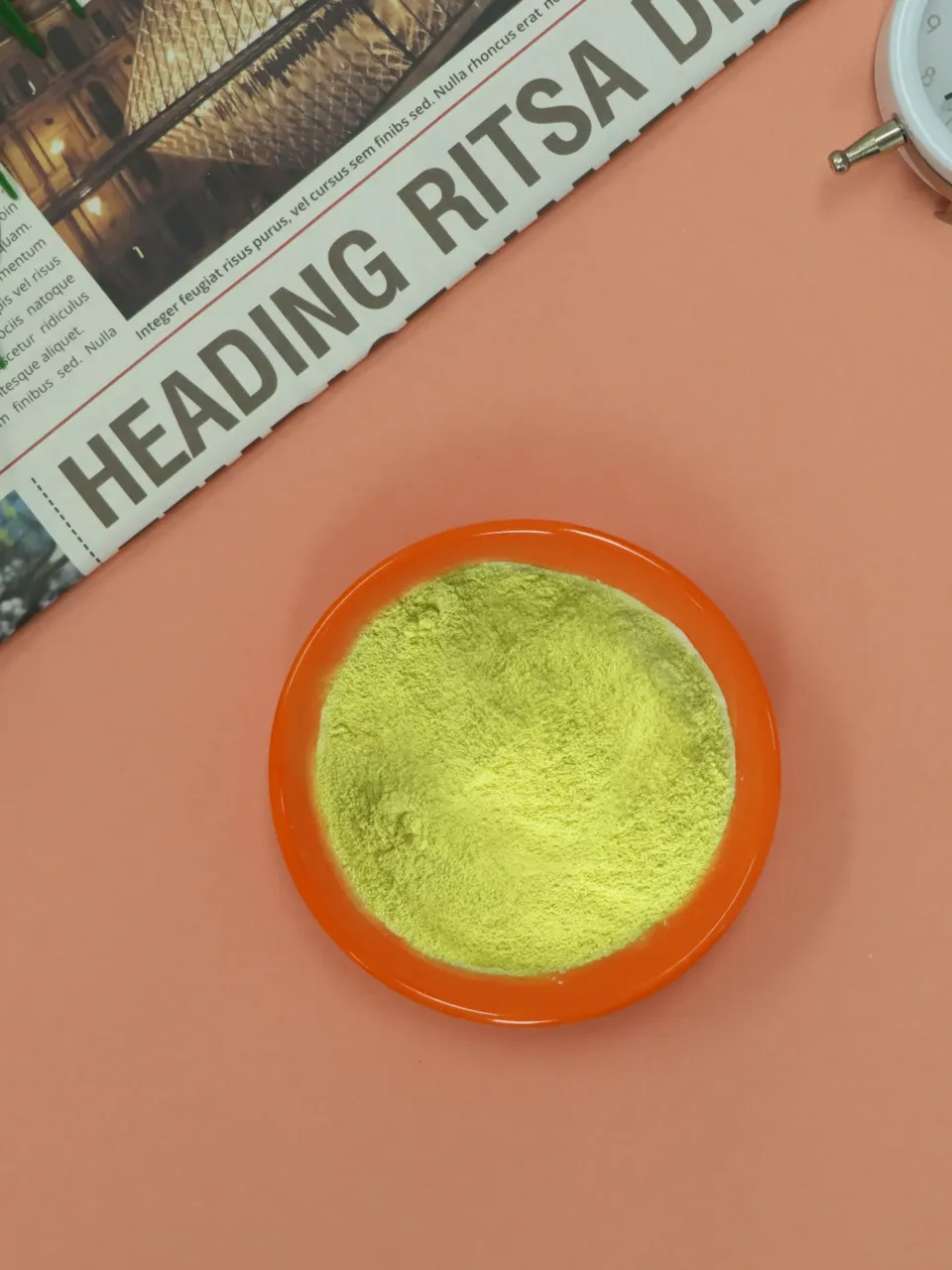
| Appearance | Yellow to light yellow crystalline powder |
| Solubility | Practically insoluble in water; soluble in DMSO and in dilute alkali. Particle size, wetting behaviour and any dispersion or liposomal format should be confirmed for the intended dosage form. |
| Typical applications | Capsules, tablets and low-dose powder blends for B2B nutraceutical manufacturing; commonly formulated alongside palmitoylethanolamide (PEA), quercetin, apigenin and fisetin |
| Allergen and source note | Because commercial luteolin is obtained from more than one botanical source, the botanical origin and allergen status are confirmed per lot; buyers should confirm both before formula lock where allergen labelling applies |
| Documentation | Download public specification sheet Public sheet prepared from the current product-page specification block; not a batch-specific Certificate of Analysis. Lot-specific COA and supporting records are available for qualified buyer review when appropriate. |
| Quality system | ISO 22000:2018, FSSC 22000, HACCP and GMP (certificates provided on request) |
| Supplier | Nutrition BioTech, 1601 W. Mission Blvd, Suite 103 (DL#29), Pomona, CA 91766, United States |
Luteolin 98%
High-purity luteolin for brain-aging, calm cognition and flavonoid longevity formulas.
Why brands ask for it
Luteolin 98% is a potent flavonoid active for advanced nootropic, brain-aging and immune-balance formulas. It is best positioned as a high-purity, low-dose ingredient that pairs well with PEA, quercetin, apigenin and other longevity flavonoids.
Finished-product fit
Brain aging, mast-cell support, calm cognition, antioxidant nootropic. The strongest conversations start with format, serving size, documentation, and how the material behaves in the intended formula.
What makes the sample useful
- 98% high purity
- Brain/immune crossover
- Pairs with PEA, quercetin, apigenin, fisetin
Before the sample ships
- Confirm source, identity, and supporting documentation.
- Confirm dissolution, dispersion, and the intended powder or granule format.
- Review serving-size logic and label-space fit.
- Confirm any liposomal option.
- Request contaminant, residual solvent, and microbiology files as needed.
File Package
Ask for the material files that match your market, dosage form, and internal review process.
Available documents may include: COA / Specification / Allergen Statement / GMO Statement / Vegan Statement / Heavy Metals / Microbial Limits / Manufacturing Flow Chart / Residual Solvent / Country of Origin / Composition Statement.
Regulatory & Facility Support
Regulatory review notes for the target market can be provided. Nutrition BioTech does not hold and does not claim any GRAS notification or NDI notification for this material.
Facility and quality system support follows the same certificate set named in the specification table: ISO 22000:2018, FSSC 22000, HACCP and GMP. The holding entity for each certificate is named on the certificate and confirmed under buyer review.
Published research context
Luteolin has an extensive peer-reviewed literature. The studies below are provided as technical context for formulators evaluating this raw material. These entries summarise what the cited publications report. They are not claims about Nutrition BioTech material, and no health, therapeutic or cosmetic outcome is claimed or implied for any finished product. Buyers are responsible for the claims they make on their own labels and for confirming what is permitted in their market.
- Solubility in twelve pure solvents and solid-state behaviourMeasured solubility in water, ethylene glycol, propylene glycol, PEG-400, methanol, ethanol, isopropanol, 1-butanol, 2-butanol, ethyl acetate, DMSO and Transcutol at 298.2–318.2 K using a shake-flask method with UPLC detection at 348 nm. The solid was characterised by DSC and powder X-ray diffraction in both pure and equilibrated form, and the apparent thermodynamic analysis described dissolution as endothermic and entropy-driven in every solvent studied.Shakeel F, Haq N, Alshehri S, Ibrahim MA, Elzayat EM, Altamimi MA, Mohsin K, Alanazi FK, Alsarra IA. Journal of Molecular Liquids. 2018;255:43–50. DOI 10.1016/j.molliq.2018.01.155 — source
- Solubility across nonpolar, polar aprotic and polar protic solventsDetermined the solubility of luteolin alongside other polyphenolic compounds in water and in a series of nonpolar, polar aprotic and polar protic solvents, using FTIR in combination with HPLC quantification. Relevant to extraction solvent and carrier selection.Rajhard S, Hladnik L, Vicente FA, Srčič S, Grilc M, Likozar B. Processes. 2021;9(11):1952. DOI 10.3390/pr9111952 — source
- Site-dependent intestinal absorption and effect of the plant matrixUsed an in situ single-pass intestinal perfusion model in rats and reported that luteolin absorption appeared to be passive, was more efficient in the jejunum and duodenum than in the colon, and gave higher absorption parameters when presented as peanut hull extract than as individually purified luteolin.Zhou P, Li LP, Luo SQ, Jiang HD, Zeng S. Journal of Agricultural and Food Chemistry. 2008;56(1):296–300. PMID 18052241 — source
Specification FAQ
What is the CAS number for Luteolin?
The CAS number for Luteolin is 491-70-3. The molecular formula is C15H10O6 and the molecular weight is 286.24. Machine-readable identifiers: InChIKey IQPNAANSBPBGFQ-UHFFFAOYSA-N · PubChem CID 5280445.
What purity is Luteolin supplied at, and by which method?
98% minimum by HPLC; assay basis stated on the Certificate of Analysis
Is Luteolin soluble in water?
Practically insoluble in water; soluble in DMSO and in dilute alkali. Particle size, wetting behaviour and any dispersion or liposomal format should be confirmed for the intended dosage form.
How is Luteolin produced and where does it come from?
Botanical extraction and purification; the botanical source used for the supplied lot is stated on the specification sheet