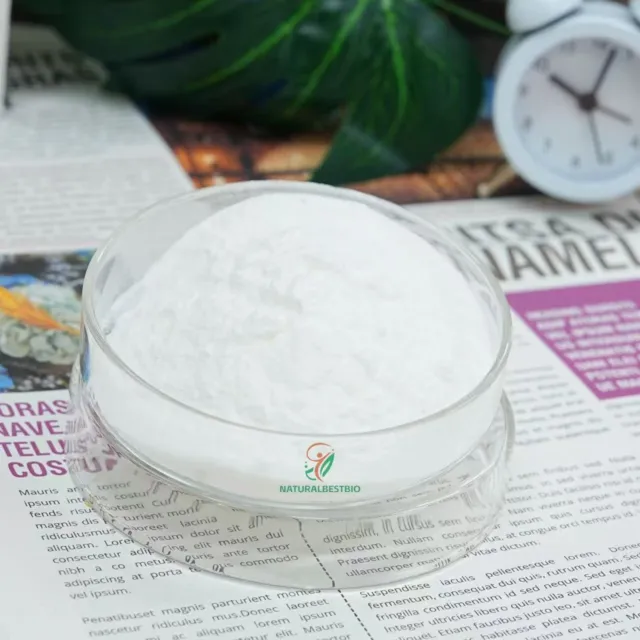
Milk Thistle Extract supplier specification
Nutrition BioTech is a bulk milk thistle extract ingredient supplier and manufacturer, supplying Silybum marianum (L.) Gaertn. seed extract (CAS 84604-20-6) standardized to an agreed silymarin content and released with the figure reported both by UV and by HPLC, produced by solvent extraction and purification of the fruit and seed, for B2B nutraceutical formulation.
Milk thistle extract is a multi-constituent botanical extract, not a single molecule, so it is defined by botanical identity, plant part, extraction ratio, solvent and the standardization marker rather than by a molecular formula. Every lot ships with a Certificate of Analysis stating botanical identity, the standardization figure and the analytical method used to obtain it.
| Ingredient name | Milk Thistle Extract (Silybum marianum seed extract) |
|---|---|
| Synonyms | Silybum marianum extract; milk thistle seed extract; St. Mary’s thistle extract; Carduus marianus extract; silymarin extract |
| CAS number | 84604-20-6 (Silybum marianum extract). Standardization marker complex: silymarin, CAS 65666-07-1. |
| Molecular formula / weight | Not applicable — multi-constituent botanical extract. Silymarin is itself a flavonolignan complex (silybin A and B, isosilybin, silychristin, silydianin) rather than a single compound, so no single molecular formula or molecular weight describes the material. Identity is established by botanical source, plant part and marker profile. |
| Botanical identity | Silybum marianum (L.) Gaertn., family Asteraceae. Plant part: fruit and seed (achene). Identity confirmed by macroscopic, microscopic and chromatographic (HPLC or TLC) comparison against a reference; identity documentation supplied per lot. |
| Standardization / assay | Standardized to an agreed silymarin content, reported both by UV and by HPLC on the Certificate of Analysis for each lot. The exact grade is specified per order; grade options available on request. The two figures are not interchangeable: UV-spectrophotometric silymarin and HPLC sum-of-flavonolignans measure the material differently, so the same lot reads differently by each method. Because both are reported per lot, the buyer can align the incoming release specification to whichever method their own monograph or customer specification is written against, without re-testing. |
| Extraction ratio and solvent | Extraction ratio (e.g. drug-to-extract ratio) and extraction solvent are specified per order and stated on the specification sheet. Residual solvent results are reported per lot against the applicable pharmacopoeial limits. |
| Carrier / excipient declaration | Any carrier used for standardization or flowability (for example maltodextrin or silicon dioxide) is declared on the specification sheet with its inclusion level, so that the buyer’s label and allergen statement can be built correctly. |
| Appearance | Light yellow to yellowish-brown fine powder, characteristic odour and bitter taste |
| Solubility | Flavonolignans are practically insoluble in water and soluble in ethanol, methanol and acetone. Water-dispersible and solubility-enhanced formats are handled as separate specifications; dissolution behaviour should be confirmed for the intended dosage form. |
| Stability / storage | Store in tightly closed containers in a cool, dry place, protected from light and moisture. Flavonolignans are sensitive to prolonged heat, high humidity and light; stability data available on request. |
| Typical applications | Capsules, tablets, softgels, powder blends and sachets for B2B nutraceutical manufacturing; commonly formulated alongside NAC, TUDCA, dihydromyricetin and artichoke extract |
| Documentation | Certificate of Analysis, specification sheet, botanical identity documentation, heavy metals, microbiological testing, residual solvents, pesticide residues, aflatoxins, allergen statement, GMO statement, irradiation statement, organic certification where applicable, particle size data and stability data |
| Quality system | ISO 22000:2018, FSSC 22000, HACCP and GMP (certificates provided on request) |
| Supplier | Nutrition BioTech, 1601 W. Mission Blvd, Suite 103 (DL#29), Pomona, CA 91766, United States |
Milk Thistle Extract
Milk Thistle Extract for liver wellness and classic botanical supplement formulas.
Why brands ask for it
Milk Thistle Extract is a well-recognized liver wellness ingredient for capsule, tablet and recovery-positioned formulas. The product page should emphasize silymarin standardization, solvent control, botanical identity and documentation readiness.
Finished-product fit
Liver support, recovery routine, wellness cleanse, metabolic recovery blends. The strongest conversations start with format, serving size, documentation, and how the material behaves in the intended formula.
What makes the sample useful
- Silymarin standardization
- Mature consumer market
- Pairs with NAC, TUDCA, DHM, artichoke
Before the sample ships
- Confirm silymarin %.
- Request contaminant, residual solvent, and microbiology files as needed.
- Confirm extraction ratio.
- Confirm organic.
File Package
Ask for the material files that match your market, dosage form, and internal review process.
Available documents may include: COA / Specification / Allergen Statement / GMO Statement / Vegan Statement / Heavy Metals / Microbial Limits / Manufacturing Flow Chart / Residual Solvent / Country of Origin / Composition Statement.
Regulatory & Facility Support
Product-specific regulatory information may include Self-GRAS, NDI/NDIN, GRAS, ODI, or regulatory review notes, depending on the ingredient and target market.
Facility and quality system support may include Kosher, Halal, HACCP, ISO 22000, PCQI, c-GMP, NSF and other applicable certificates upon request.