Green tea extract supplier specification
Nutrition BioTech is a bulk green tea extract ingredient supplier and manufacturer, supplying Camellia sinensis leaf extract (CAS 84650-60-2) standardised to an agreed total catechin or EGCG percentage by HPLC, produced by water or water-ethanol extraction and purification, for B2B nutraceutical formulation.
Green tea extract is a multi-component botanical extract, so two lots carrying the same total polyphenol figure can still differ in EGCG share and caffeine content. The specification therefore has to name the marker, the analytical method and the caffeine limit. Every lot ships with a Certificate of Analysis stating extraction solvent, catechin and EGCG assay by HPLC, caffeine content and the assay basis.
| Ingredient name | Green tea extract (Camellia sinensis leaf extract) |
|---|---|
| Synonyms | Camellia sinensis leaf extract; green tea polyphenols; tea catechins; EGCG extract |
| CAS number | 84650-60-2 (Camellia sinensis leaf extract). Principal marker epigallocatechin gallate (EGCG), CAS 989-51-5. |
| Molecular formula | Not applicable to the extract, which is a multi-component botanical material. EGCG marker: C22H18O11 |
| Molecular weight | Not applicable to the extract. EGCG marker: 458.37 |
| Assay / purity | Standardised to the agreed total catechin or EGCG percentage by HPLC; low-caffeine and decaffeinated grades available. Exact grade, marker, method and caffeine limit are specified per order. Grade options available on request. |
| Source / production route | Leaf of Camellia sinensis; water or water-ethanol extraction, concentration, purification and drying. Extraction solvent, plant part, extract ratio and any carrier are stated on the specification sheet. |
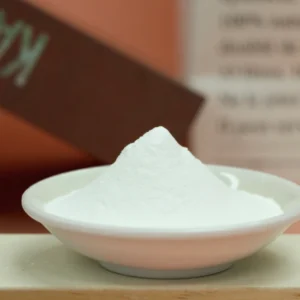
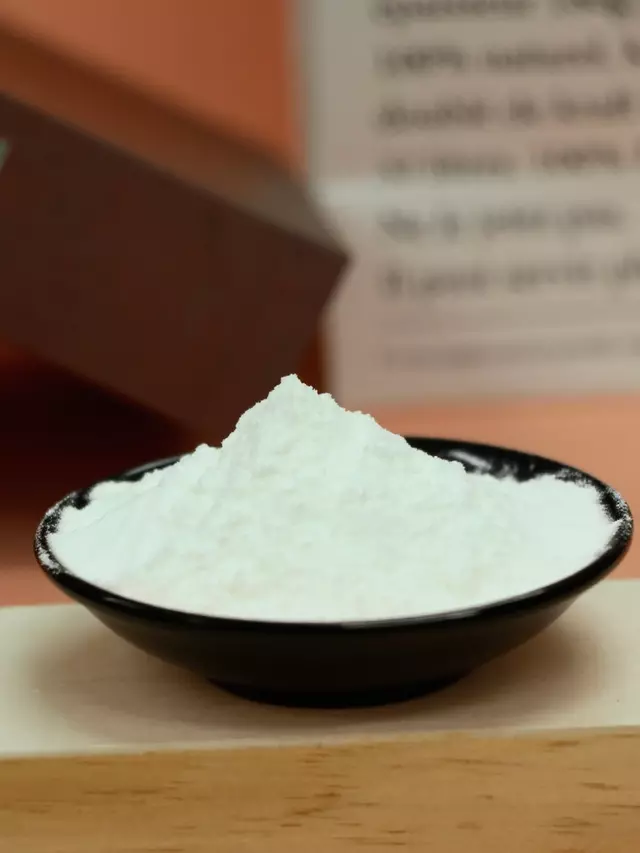
| Appearance | Off-white to light brown or greenish-brown fine powder; colour varies with catechin grade and decaffeination route |
| Solubility | Soluble to dispersible in water and in ethanol-water depending on grade; high-catechin grades are hygroscopic. Confirm dissolution, taste masking and behaviour in the intended matrix before formula lock. |
| Caffeine declaration | Caffeine content is measured and stated on every Certificate of Analysis, and low-caffeine or decaffeinated grades can be specified per order |
| Stability and storage | Catechins are sensitive to heat, moisture, alkaline pH, light and oxygen. Store cool and dry in tightly closed, light-protected containers; confirm stability data for the intended format, particularly for beverages and liquid systems. |
| Typical applications | Capsules, tablets, beverage and stick powders, and polyphenol or metabolic blends for B2B nutraceutical manufacturing; also used in topical and cosmetic formats |
| Regulatory note | Catechin, EGCG and caffeine contents are declared per lot so that buyers can meet the labelling and dosage requirements that apply to green tea catechin products in the destination market; confirming those requirements is the buyer’s responsibility before launch |
| Documentation | Download public specification sheet Public sheet prepared from the current product-page specification block; not a batch-specific Certificate of Analysis. Lot-specific COA and supporting records are available for qualified buyer review when appropriate. |
| Quality system | ISO 22000:2018, FSSC 22000, HACCP and GMP (certificates provided on request) |
| Supplier | Nutrition BioTech, 1601 W. Mission Blvd, Suite 103 (DL#29), Pomona, CA 91766, United States |
Green Tea Extract
Green Tea Extract for antioxidant, metabolic and polyphenol-rich supplement formulas.
Why brands ask for it
Green Tea Extract remains a widely accepted polyphenol ingredient for antioxidant and metabolic-support formulas. Nutrition BioTech can support standardized catechin/EGCG options, caffeine discussion and documentation for capsule, tablet and blend projects.
Finished-product fit
Antioxidant, metabolism, weight-management, green tea polyphenol wellness. The strongest conversations start with format, serving size, documentation, and how the material behaves in the intended formula.
What makes the sample useful
- EGCG/catechin standardization
- Low-caffeine option
- Familiar market with broad acceptance
Before the sample ships
- Confirm eGCG percentage.
- Confirm caffeine content.
- Request contaminant, residual solvent, and microbiology files as needed.
- Confirm liver warning.
- Review serving-size logic and label-space fit.
File Package
Ask for the material files that match your market, dosage form, and internal review process.
Available documents may include: COA / Specification / Allergen Statement / GMO Statement / Vegan Statement / Heavy Metals / Microbial Limits / Manufacturing Flow Chart / Residual Solvent / Country of Origin / Composition Statement.
Regulatory & Facility Support
Regulatory review notes for the target market can be provided. Nutrition BioTech does not hold and does not claim any GRAS notification or NDI notification for this material.
Facility and quality system support follows the same certificate set named in the specification table: ISO 22000:2018, FSSC 22000, HACCP and GMP. The holding entity for each certificate is named on the certificate and confirmed under buyer review.
Specification FAQ
What is the CAS number for Green tea extract?
The CAS number for Green tea extract is 84650-60-2 (Camellia sinensis leaf extract). Principal marker epigallocatechin gallate (EGCG), CAS 989-51-5. The molecular formula is Not applicable to the extract, which is a multi-component botanical material. EGCG marker: C22H18O11 and the molecular weight is Not applicable to the extract. EGCG marker: 458.37.
What purity is Green tea extract supplied at, and by which method?
Standardised to the agreed total catechin or EGCG percentage by HPLC; low-caffeine and decaffeinated grades available. Exact grade, marker, method and caffeine limit are specified per order. Grade options available on request.
Is Green tea extract soluble in water?
Soluble to dispersible in water and in ethanol-water depending on grade; high-catechin grades are hygroscopic. Confirm dissolution, taste masking and behaviour in the intended matrix before formula lock.
How is Green tea extract produced and where does it come from?
Leaf of Camellia sinensis; water or water-ethanol extraction, concentration, purification and drying. Extraction solvent, plant part, extract ratio and any carrier are stated on the specification sheet.
Published research context
Green tea catechins have a long peer-reviewed literature. The studies below are provided as technical context for formulators evaluating this raw material. These entries summarise what the cited publications report. They are not claims about Nutrition BioTech material, and no health, therapeutic or cosmetic outcome is claimed or implied for any finished product. Buyers are responsible for the claims they make on their own labels and for confirming what is permitted in their market.
- Degradation and epimerization kinetics in aqueous systemsCharacterized simultaneous degradation and epimerization of (-)-epigallocatechin gallate (EGCG) in aqueous systems by HPLC-UV during isothermal reactions at 25-100 °C combined with earlier data at 100-165 °C. Both reactions followed first-order kinetics and their rate constants followed the Arrhenius equation; the models were validated at 70 °C with catechins from different sources. Two transition temperatures were identified: below 44 °C degradation was more profound, above 44 °C epimerization from (-)-gallocatechin gallate (GCG) to (-)-EGCG was faster than degradation, and at 98 °C and above that epimerization became prominent.Wang R, Zhou W, Jiang X. J Agric Food Chem. 2008;56(8):2694-2701. PMID 18361498. DOI 10.1021/jf0730338. source
- Auto-oxidation and epimerization under common experimental conditionsReported that auto-oxidation and epimerization are the two major reactions causing EGCG instability, identified the structures of the major oxidation products (EGCG dimers), and showed that the rates of these reactions were affected by temperature, pH, the partial pressure of oxygen, the level of antioxidants, the concentration of EGCG, and other components of tea.Sang S, Lee MJ, Hou Z, Ho CT, Yang CS. J Agric Food Chem. 2005;53(24):9478-9484. PMID 16302765. DOI 10.1021/jf0519055. source
- UHPLC quality-control method for catechins and caffeineDeveloped and fully validated a UHPLC-UV method on a C18 column (50 mm x 2.1 mm, 1.8 µm) that separated six major catechins and caffeine in a 3-minute run, with precision, detection and quantification limits, linearity and accuracy established, and applied it to the quantification of catechins and caffeine in green tea infusions of different geographical origins.Naldi M, Fiori J, Gotti R, Périat A, Veuthey JL, Guillarme D, Andrisano V. J Pharm Biomed Anal. 2014;88:307-314. PMID 24103292. DOI 10.1016/j.jpba.2013.08.054. source
- HPLC versus spectrophotometric total-catechin assaysCompared an HPLC method against a vanillin-HCl spectrophotometric method (measured at 505 nm) for total catechins in tea extracts and reported that the spectrophotometric result depended strongly on the calibration standard: catechin and epicatechin calibration curves gave lower totals, while an EGCG calibration curve gave results equivalent to the HPLC assay. This is why the assay method and calibration basis should always be stated alongside any total-catechin figure.He Q, Yao K, Jia D, Fan H, Liao X, Shi B. Nat Prod Res. 2009;23(1):93-100. PMID 19140075. DOI 10.1080/14786410801886682. source