Magnesium Chelates supplier specification
Nutrition BioTech is a bulk magnesium chelate ingredient supplier and manufacturer, supplying magnesium bisglycinate (CAS 14783-68-7), magnesium taurate (CAS 334824-43-0), magnesium L-aspartate (CAS 2068-80-6) and VC magnesium / magnesium ascorbate (CAS 15431-40-0) as fully reacted organic magnesium salts and amino acid chelates, assayed by titration or HPLC with elemental magnesium content reported per lot, for B2B nutraceutical formulation.
These four forms are a platform, not substitutes for one another. They differ in elemental magnesium content per gram, in taste, in bulk density and in the second nutrient they carry (glycine, taurine, aspartic acid or ascorbic acid), which is why capsule count and label design change with the form selected. Every lot ships with a Certificate of Analysis stating identity, assay, elemental magnesium content and the assay basis.
| Ingredient name | Magnesium Chelates platform — magnesium bisglycinate, magnesium taurate, magnesium L-aspartate, VC magnesium (magnesium ascorbate) |
|---|---|
| Magnesium bisglycinate | CAS 14783-68-7 · C4H8MgN2O4 · 172.42 g/mol (anhydrous basis; commonly supplied as the dihydrate, hydration state stated on the specification sheet). Synonyms: magnesium glycinate, magnesium diglycinate, bis(glycinato)magnesium. |
| Magnesium taurate | CAS 334824-43-0 · C4H12MgN2O6S2 · 272.57 g/mol. Synonyms: magnesium ditaurate, magnesium taurinate. |
| Magnesium L-aspartate | CAS 2068-80-6 (magnesium dihydrogen di-L-aspartate) · C8H12MgN2O8 · 288.5 g/mol anhydrous, 324.5 g/mol as the dihydrate. CAS 18962-61-3 is also cited in the trade for magnesium L-aspartate; the applicable registry number, stereochemistry and hydration state for a given lot are stated on the specification sheet. |
| VC magnesium (magnesium ascorbate) | CAS 15431-40-0 · C12H14MgO12 · 374.54 g/mol. Magnesium salt of L-ascorbic acid, supplying both magnesium and vitamin C in a single buffered, water-soluble salt. Synonyms: vitamin C magnesium salt, L-ascorbic acid magnesium salt. Identity confirmed on the specification sheet before order. |
| Assay / purity | Assay by titration or HPLC, with elemental magnesium content determined per lot and stated on the Certificate of Analysis. Grade options available on request; the exact assay and elemental magnesium specification are agreed per order. |
| Elemental magnesium basis | Elemental magnesium differs by form and by hydration state, so 500 mg of one chelate does not deliver the same magnesium as 500 mg of another. The declared elemental magnesium per gram is taken from the lot Certificate of Analysis, and the serving calculation should be built on that figure rather than on the salt weight. |
| Source / production route | Full reaction of a magnesium source with the corresponding ligand — glycine, taurine, L-aspartic acid or L-ascorbic acid — followed by drying and milling. Unreacted starting material and free ligand are controlled to the specification sheet limits; the applicable route is stated per form. |
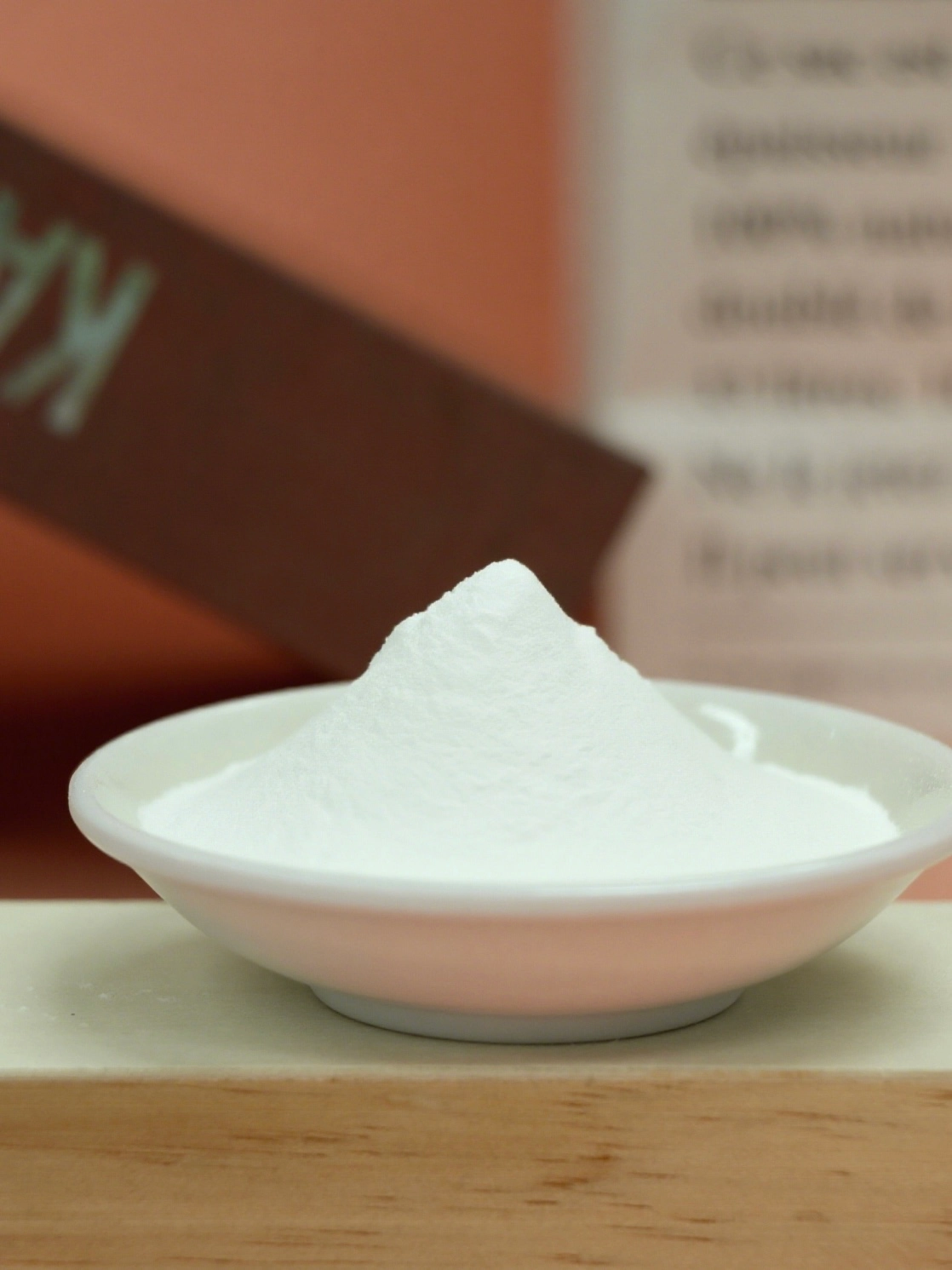
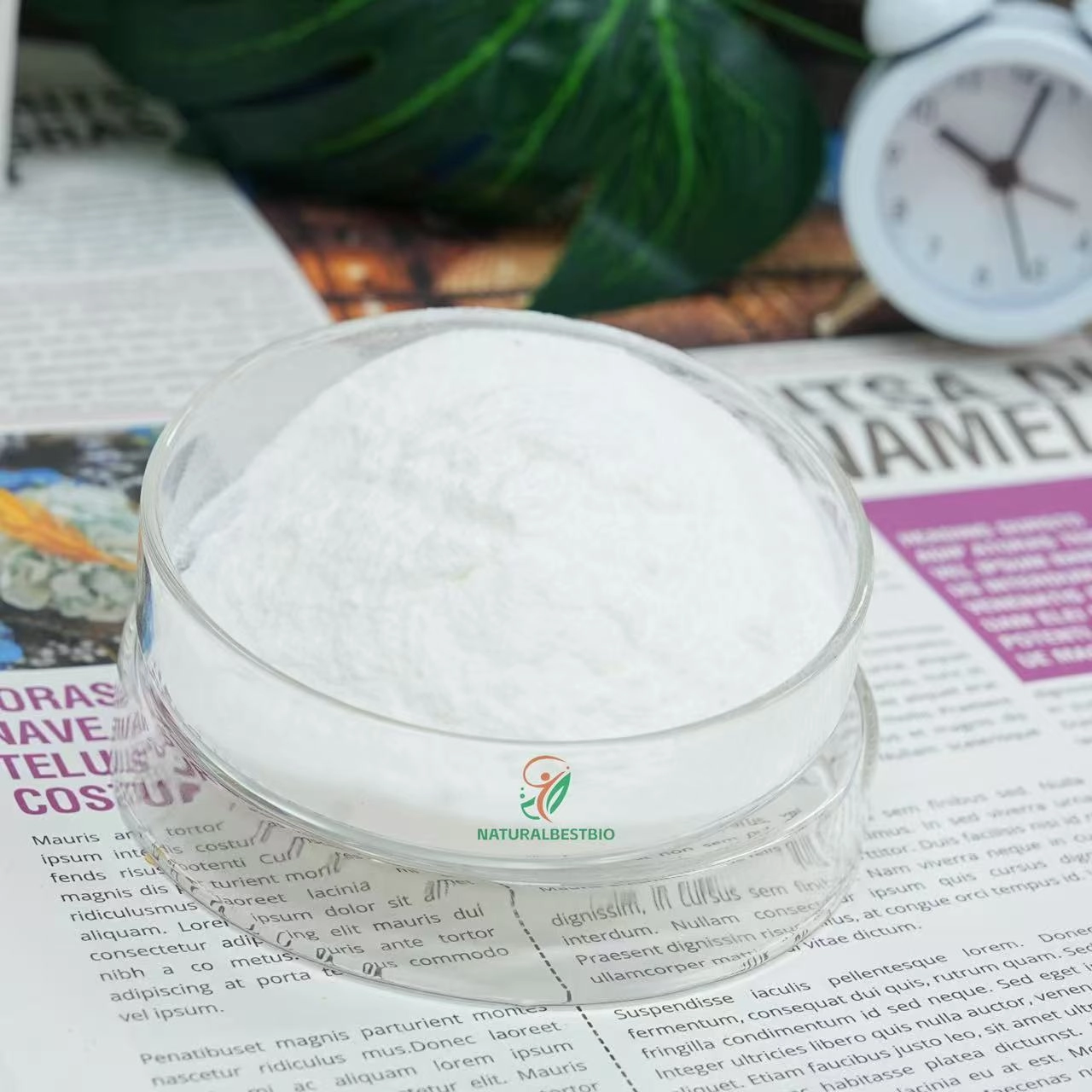
| Appearance | White to off-white free-flowing powder or granule, depending on form and grade. VC magnesium is off-white to pale yellow. |
| Solubility | Water solubility differs by form: magnesium ascorbate is freely water-soluble, magnesium bisglycinate and magnesium taurate are sparingly to moderately soluble, and magnesium L-aspartate is water-soluble. Dissolution behaviour and taste profile should be confirmed for the intended dosage form and flavour system. |
| Powder properties | Bulk and tapped density, sieve analysis, loss on drying and flow data available per lot on request — these determine capsule count, tablet weight and stick-pack fill for what is a comparatively high-inclusion mineral. |
| Typical applications | Capsules, tablets, powder blends, stick packs, gummies and beverage formats for B2B nutraceutical manufacturing; granulated and taste-masked grades available for powder and stick formats |
| Documentation | Download public specification sheet Public sheet prepared from the current product-page specification block; not a batch-specific Certificate of Analysis. Lot-specific COA and supporting records are available for qualified buyer review when appropriate. |
| Stability / storage | Store in tightly closed containers in a cool, dry place. Magnesium ascorbate is moisture- and oxygen-sensitive as an ascorbate and should be protected accordingly; hygroscopicity differs by form and is noted on the specification sheet. |
| Quality system | ISO 22000:2018, FSSC 22000, HACCP and GMP (certificates provided on request) |
| Supplier | Nutrition BioTech, 1601 W. Mission Blvd, Suite 103 (DL#29), Pomona, CA 91766, United States |
Magnesium Chelates (VC Magnesium, Magnesium Glycinate, Magnesium Taurate, Magnesium Aspartate)
Magnesium chelate platform for sleep, energy, stress and daily mineral products.
Why brands ask for it
Nutrition BioTech offers a magnesium chelate platform including glycinate, taurate, aspartate and VC magnesium options. This helps brands select the right form based on label claim, elemental magnesium, capsule count, taste and consumer positioning.
Finished-product fit
Sleep, stress, muscle, heart, energy, daily mineral support. The strongest conversations start with format, serving size, documentation, and how the material behaves in the intended formula.
What makes the sample useful
- Multiple forms for different use cases
- Clean label mineral platform
- High-volume commodity plus differentiation opportunity
Before the sample ships
- Confirm which form is best for sleep.
- Confirm elemental magnesium percentage.
- Confirm dissolution, dispersion, and the intended powder or granule format.
- Check taste, odor, and sensory fit before formula lock.
- Review serving-size logic and label-space fit.
File Package
Ask for the material files that match your market, dosage form, and internal review process.
Available documents may include: COA / Specification / Allergen Statement / GMO Statement / Vegan Statement / Heavy Metals / Microbial Limits / Manufacturing Flow Chart / Residual Solvent / Country of Origin / Composition Statement.
Regulatory & Facility Support
Regulatory review notes for the target market can be provided. Nutrition BioTech does not hold and does not claim any GRAS notification or NDI notification for this material.
Facility and quality system support follows the same certificate set named in the specification table: ISO 22000:2018, FSSC 22000, HACCP and GMP. The holding entity for each certificate is named on the certificate and confirmed under buyer review.
Specification FAQ
What purity is Magnesium Chelates platform supplied at, and by which method?
Assay by titration or HPLC, with elemental magnesium content determined per lot and stated on the Certificate of Analysis. Grade options available on request; the exact assay and elemental magnesium specification are agreed per order.
Is Magnesium Chelates platform soluble in water?
Water solubility differs by form: magnesium ascorbate is freely water-soluble, magnesium bisglycinate and magnesium taurate are sparingly to moderately soluble, and magnesium L-aspartate is water-soluble. Dissolution behaviour and taste profile should be confirmed for the intended dosage form and flavour system.
How is Magnesium Chelates platform produced and where does it come from?
Full reaction of a magnesium source with the corresponding ligand — glycine, taurine, L-aspartic acid or L-ascorbic acid — followed by drying and milling. Unreacted starting material and free ligand are controlled to the specification sheet limits; the applicable route is stated per form.
Published research context
Chelated and organic magnesium salts have a comparative peer-reviewed absorption literature spanning stable-isotope animal work and randomized human studies. The studies below are provided as technical context for formulators evaluating this raw material. These entries summarise what the cited publications report. They are not claims about Nutrition BioTech material, and no health, therapeutic or cosmetic outcome is claimed or implied for any finished product. Buyers are responsible for the claims they make on their own labels and for confirming what is permitted in their market.
- Stable-isotope comparison of ten magnesium saltsUsing an enriched 26Mg stable-isotope approach in magnesium-depleted rats, compared ten organic and inorganic salts including aspartate, citrate, gluconate, lactate, oxide, chloride, sulphate, carbonate, acetate and pidolate; measured absorption values ranging from 50% to 67%, reported that organic salts were slightly more available than inorganic salts, and that gluconate exhibited the highest bioavailability of the ten salts under these experimental conditions.Coudray C, Rambeau M, Feillet-Coudray C, Gueux E, et al. Magnes Res. 2005;18(4):215-223. PMID 16548135. source
- 60-day randomized human comparison of chelate, citrate and oxideIn a randomized, double-blind, placebo-controlled 60-day study in 46 adults taking 300 mg elemental magnesium per day, reported that the organic forms (citrate and amino-acid chelate) showed greater absorption than magnesium oxide at 60 days as assessed by 24-hour urinary magnesium excretion, and that magnesium citrate led to the greatest mean serum magnesium concentration after both acute and chronic supplementation.Walker AF, Marakis G, Christie S, Byng M. Magnes Res. 2003;16(3):183-191. PMID 14596323. source
- Absorption of magnesium diglycinate as an intact dipeptideIn a double-blind, randomized crossover study of a 100 mg dose of 26Mg-labeled magnesium diglycinate versus magnesium oxide in 12 adults with ileal resection, measured group-wide 26Mg absorption of 23.5% versus 22.8%, and reported that the data support partial absorption of magnesium diglycinate as an intact dipeptide, probably via a dipeptide transport pathway. The study population is a surgical cohort, not the general population; the finding cited here is the absorption mechanism, not any outcome.Schuette SA, Lashner BA, Janghorbani M. JPEN J Parenter Enteral Nutr. 1994;18(5):430-435. PMID 7815675. DOI 10.1177/0148607194018005430. source