Polydatin 98% supplier specification
Nutrition BioTech is a bulk polydatin ingredient supplier and manufacturer, supplying polydatin (CAS 27208-80-6) at 98% minimum by HPLC, produced by extraction and purification from Polygonum cuspidatum root, for B2B nutraceutical and cosmetic formulation.
Polydatin is resveratrol 3-O-β-D-glucoside — a distinct chemical entity from resveratrol, not a synonym and not interchangeable with it on a milligram-for-milligram basis. Every lot ships with a Certificate of Analysis stating identity, HPLC assay and the assay basis.
| Ingredient name | Polydatin 98% |
|---|---|
| Synonyms | Piceid; trans-polydatin; trans-resveratrol 3-O-β-D-glucopyranoside; resveratrol-3-O-glucoside |
| CAS number | 27208-80-6 |
| Machine-readable identifiers | InChIKey HSTZMXCBWJGKHG-CUYWLFDKSA-N · PubChem CID 5281718 |
| Molecular formula | C20H22O8 |
| Molecular weight | 390.38 g/mol |
| Assay / purity | 98% minimum by HPLC, stated on the Certificate of Analysis for each lot. Other grades available on request. |
| Source / production route | Extraction and purification from Polygonum cuspidatum Sieb. et Zucc. root (Japanese knotweed). Plant part, extraction solvent and residual solvent limits stated on the specification sheet. |
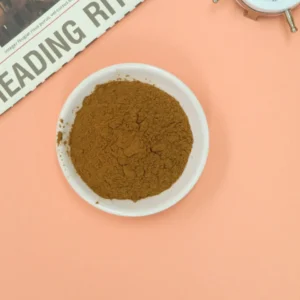
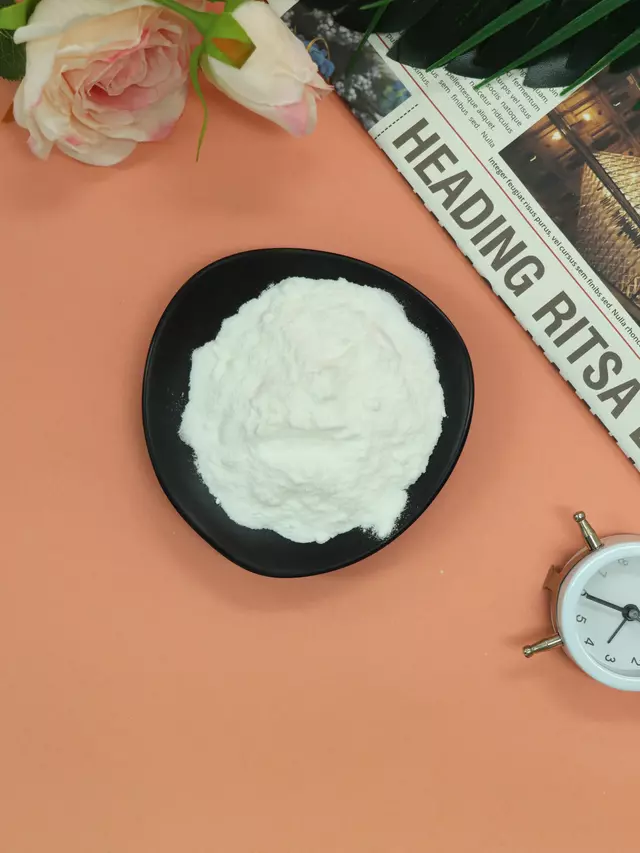
| Appearance | White to off-white crystalline powder |
| Solubility | Water solubility is higher than that of the corresponding aglycone resveratrol; soluble in methanol, ethanol and DMSO. Dissolution and dispersion behaviour should be confirmed for the intended dosage form. |
| Relationship to resveratrol | Polydatin is the 3-O-glucoside of resveratrol (resveratrol CAS 501-36-0). The glucoside carries additional molecular weight, so equal weights of the two materials do not supply equal resveratrol-equivalent content. Label and formulation basis must be agreed before lock-down. |
| Typical applications | Capsules, tablets, powder blends, beverage and stick-pack formats, and topical cosmetic formulations for B2B manufacturing |
| Documentation | Download public specification sheet Public sheet prepared from the current product-page specification block; not a batch-specific Certificate of Analysis. Lot-specific COA and supporting records are available for qualified buyer review when appropriate. |
| Quality system | ISO 22000:2018, FSSC 22000, HACCP and GMP (certificates provided on request) |
| Supplier | Nutrition BioTech, 1601 W. Mission Blvd, Suite 103 (DL#29), Pomona, CA 91766, United States |
Polydatin 98%
Polydatin 98% for skin longevity, antioxidant and resveratrol-family formulations.
Why brands ask for it
Polydatin 98% gives brands a differentiated resveratrol-family story for antioxidant and skin-longevity formulas. It can be positioned as a clean polyphenol active with technical discussion around solubility, source and formulation fit.
Finished-product fit
Skin longevity, antioxidant wellness, resveratrol alternative, healthy aging. The strongest conversations start with format, serving size, documentation, and how the material behaves in the intended formula.
What makes the sample useful
- 98% purity
- Resveratrol-related but differentiated
- Potential water-solubility/formulation advantage
Before the sample ships
- Confirm is it different from resveratrol.
- Confirm source, identity, and supporting documentation.
- Confirm dissolution, dispersion, and the intended powder or granule format.
- Review serving-size logic and label-space fit.
- Review stability expectations and storage conditions for the finished format.
File Package
Ask for the material files that match your market, dosage form, and internal review process.
Available documents may include: COA / Specification / Allergen Statement / GMO Statement / Vegan Statement / Heavy Metals / Microbial Limits / Manufacturing Flow Chart / Residual Solvent / Country of Origin / Composition Statement.
Regulatory & Facility Support
Regulatory review notes for the target market can be provided. Nutrition BioTech does not hold and does not claim any GRAS notification or NDI notification for this material.
Facility and quality system support follows the same certificate set named in the specification table: ISO 22000:2018, FSSC 22000, HACCP and GMP. The holding entity for each certificate is named on the certificate and confirmed under buyer review.
Specification FAQ
What is the CAS number for Polydatin?
The CAS number for Polydatin is 27208-80-6. The molecular formula is C20H22O8 and the molecular weight is 390.38 g/mol. Machine-readable identifiers: InChIKey HSTZMXCBWJGKHG-CUYWLFDKSA-N · PubChem CID 5281718.
What purity is Polydatin supplied at, and by which method?
98% minimum by HPLC, stated on the Certificate of Analysis for each lot. Other grades available on request.
Is Polydatin soluble in water?
Water solubility is higher than that of the corresponding aglycone resveratrol; soluble in methanol, ethanol and DMSO. Dissolution and dispersion behaviour should be confirmed for the intended dosage form.
How is Polydatin produced and where does it come from?
Extraction and purification from Polygonum cuspidatum Sieb. et Zucc. root (Japanese knotweed). Plant part, extraction solvent and residual solvent limits stated on the specification sheet.
Published research context
Polydatin (piceid) has a peer-reviewed physicochemical and analytical literature. The studies below are provided as technical context for formulators evaluating this raw material. These entries summarise what the cited publications report. They are not claims about Nutrition BioTech material, and no health, therapeutic or cosmetic outcome is claimed or implied for any finished product. Buyers are responsible for the claims they make on their own labels and for confirming what is permitted in their market.
- Polymorphs and amorphous form characterised Reported two crystalline polymorphs and an amorphous form of polydatin prepared in a binary solvent system, with both crystal structures determined for the first time by single-crystal X-ray diffraction. Batch consistency and stability were assessed by powder X-ray diffraction, functional groups by FTIR, and thermal properties by DSC and TGA. Gong N, Wang X, Wang Y, Yang S, Song J, Lu Y, Du G. J Pharm Biomed Anal. 2020;190:113260. PMID 32846398. DOI 10.1016/j.jpba.2020.113260. source
- Photostability and cyclodextrin inclusion Reported that trans-polydatin formed 1:1 inclusion complexes with beta-cyclodextrin, methyl-beta-cyclodextrin and hydroxypropyl-beta-cyclodextrin, characterised by phase-solubility, XRD, thermogravimetry, DSC, SEM and NMR methods, and that the solubility, thermal stability and photostability of trans-polydatin were improved after complexation. Li S, Yuan L, Zhang B, Zhou W, Wang X, Bai D. RSC Adv. 2018;8(46):25941-25948. PMID 35541971. DOI 10.1039/c8ra04778b. source
- Co-crystallisation and dissolution behaviour Reported a co-crystal of polydatin with L-proline (1:3 stoichiometry) whose crystal structure was characterised, and measured a 15.8% increase in solubility and dissolution rate in water at pH 7.0 for the co-crystal relative to pristine polydatin. Lou Y, Yu K, Wu X, Wang Z, Cui Y, Bao H, Wang J, et al. Molecules. 2021;26(18):5722. PMID 34577193. DOI 10.3390/molecules26185722. source
- Solubility-driven extraction solvent design Described polydatin as having poor water solubility and stability, and reported a betaine-glycerol deep eutectic solvent selected by COSMO-RS thermodynamic screening that extracted 20.34 mg/g of polydatin from Polygonum cuspidatum, about 2.1-fold the yield of ethanol extraction, with the extraction mechanism examined by SEM, FTIR and 1H NMR. Cai X, Xiong Y, Hong Z, Xia T, Li D, Tang L. ACS Omega. 2026;11(16):24665-24678. PMID 42077896. DOI 10.1021/acsomega.6c01051. source