
NAD+ raw material has quickly become one of the most talked-about ingredients in the longevity, anti-aging, and nutritional supplement industries. If you have browsed through health blogs, supplement websites, or biotech research papers recently, you’ve probably seen the term NAD+ pop up again and again. But what exactly is NAD+ raw material? How is it produced? And why are supplement companies investing so heavily in it?
Think of NAD+ as the “fuel molecule” for your cells. Just like gasoline powers a car engine, Nicotinamide Adenine Dinucleotide (NAD+) powers many biological reactions in the body. Without it, cells cannot efficiently produce energy, repair DNA, or regulate metabolism.
But here’s where things get interesting: NAD+ levels decline as we age. Studies show that by the time someone reaches middle age, NAD+ levels may drop significantly compared to youth. That decline is one of the reasons researchers are exploring NAD+ supplements and precursors as tools for improving energy, metabolism, and potentially longevity.
Behind every NAD+ supplement capsule, injectable therapy, or research compound lies something fundamental—NAD+ raw material. This ingredient is the purified chemical form used by manufacturers to produce finished products.
In this comprehensive guide, we’ll explore everything you need to know about NAD+ raw material:
- What NAD+ raw material actually is
- How it’s produced through different manufacturing technologies
- The quality standards used in the pharmaceutical and supplement industries
- How brands use NAD+ raw material in finished products
- How buyers choose reliable suppliers
Whether you’re a supplement brand owner, researcher, distributor, or simply curious about longevity science, this guide will walk you through the full story.
Let’s start with the basics.
1. What Is NAD+ Raw Material
Understanding NAD+ at the Molecular Level
NAD+ raw material refers to purified Nicotinamide Adenine Dinucleotide in its oxidized form, produced at industrial scale and used as an ingredient for supplements, pharmaceutical formulations, and research applications.
At its core, NAD+ is a coenzyme present in every living cell. It plays a central role in metabolic reactions, especially those related to energy production in mitochondria.
In simple terms, NAD+ works like a biochemical shuttle bus. It transports electrons during cellular reactions, allowing enzymes to convert nutrients into usable energy.
If you imagine the body as a massive city, then NAD+ molecules act like delivery trucks transporting energy packages from one metabolic factory to another.
Without NAD+, the body’s metabolic traffic would slow to a crawl.
Chemical Structure of NAD+
Chemically, NAD+ is composed of two nucleotides:
- Adenine nucleotide
- Nicotinamide nucleotide
These two units are connected through phosphate groups.
The molecular formula is:
C21H27N7O14P2
Compared to simpler vitamins like Vitamin C or Vitamin B3, NAD+ is more complex, larger, and more sensitive to environmental conditions such as heat, light, and pH.
Because of this complexity, producing high-purity NAD+ raw material requires advanced biotechnology and purification techniques.
NAD+ vs NADH vs NAD+ Precursors
To fully understand NAD+ raw material, it’s helpful to compare it with related molecules.
| Molecule | Description | Stability | Common Uses |
|---|---|---|---|
| NAD+ | Oxidized form of nicotinamide adenine dinucleotide | Moderate | Supplements, research |
| NADH | Reduced form carrying electrons | Less stable | Energy supplements |
| NMN | Nicotinamide mononucleotide precursor | More stable | Anti-aging supplements |
| NR | Nicotinamide riboside precursor | Highly stable | Commercial supplements |
Compared with NMN and NR, NAD+ raw material is often more expensive and harder to stabilize. However, it delivers the active molecule directly, which some therapies prefer.
Compared with NADH, NAD+ is more versatile in metabolic pathways, making it widely used in scientific research.
Why NAD+ Raw Material Is Important
NAD+ is involved in more than 500 enzymatic reactions in the body. These include:
- ATP energy production
- DNA repair
- Cell signaling
- Immune response
- Circadian rhythm regulation
Researchers have discovered that NAD+ activates important longevity proteins such as sirtuins.
Sirtuins act like cellular maintenance workers, repairing damage and optimizing metabolism.
Without sufficient NAD+, those repair systems become weaker.
This is one reason scientists are studying NAD+ supplementation for:
- Aging
- Neurodegenerative diseases
- Metabolic disorders
- Fatigue and mitochondrial dysfunction
Why Supplement Companies Need NAD+ Raw Material
For supplement manufacturers, NAD+ raw material is the starting ingredient used to produce finished products like:
- Capsules
- Powder supplements
- Injectable formulations
- IV therapy products
Compared with finished supplements, raw materials must meet much stricter purity and quality standards.
Think of NAD+ raw material as the “flour” used by supplement companies to bake their nutritional “bread.”
If the flour is contaminated or low quality, the final product cannot be trusted.
2. Production Methods of NAD+ Raw Material
Producing NAD+ raw material is far more complicated than producing simple vitamins.
There are three major manufacturing methods used in the biotechnology industry:
- Chemical synthesis
- Enzymatic synthesis
- Microbial fermentation
Each method has advantages and disadvantages in terms of cost, purity, scalability, and environmental impact.
Let’s explore them in detail.
Chemical Synthesis of NAD+ Raw Material
Chemical synthesis was historically the first method used to produce NAD+.
In this process, chemists assemble NAD+ through multi-step chemical reactions starting from smaller molecules like:
- Nicotinamide
- Ribose
- Adenine derivatives
Advantages
Compared with biological fermentation, chemical synthesis can be:
- Faster in small-scale production
- Easier to control in laboratory environments
- Suitable for early research
Disadvantages
However, chemical synthesis also has several drawbacks.
Compared with enzymatic methods, it tends to be:
- More expensive
- Less environmentally friendly
- More complex in purification
Another major challenge is that NAD+ molecules are sensitive to chemical degradation during synthesis.
As a result, yields may be lower compared with fermentation methods.
Enzymatic Production of NAD+ Raw Material
Enzymatic synthesis uses biological enzymes to assemble NAD+ molecules.
This method mimics the natural metabolic pathways used by living cells.
Process Overview
- Enzymes convert precursor molecules into intermediate compounds
- Additional enzymes add phosphate groups and nucleotides
- The final NAD+ molecule is formed and purified
Compared with chemical synthesis, enzymatic production is often:
- Cleaner
- More efficient
- More environmentally friendly
Advantages
Enzymatic synthesis offers several benefits:
- Higher purity
- Fewer unwanted byproducts
- Lower environmental impact
Compared with chemical synthesis, it is often better suited for pharmaceutical-grade production.
Disadvantages
However, enzymatic systems require:
- Specialized enzymes
- Controlled temperature conditions
- Expensive biotechnology equipment
This can make the process more expensive initially, especially at smaller production scales.
Microbial Fermentation for NAD+ Raw Material
Today, microbial fermentation has become one of the most widely used methods for producing NAD+ raw material.
In this process, genetically engineered microorganisms such as yeast or bacteria produce NAD+ naturally during growth.
Scientists modify metabolic pathways so that microbes overproduce NAD+ molecules.
Production Steps
| Step | Description |
|---|---|
| Fermentation | Microorganisms grow in nutrient media |
| NAD+ biosynthesis | Engineered pathways produce NAD+ |
| Extraction | NAD+ molecules extracted from cells |
| Purification | Filtration and chromatography |
| Drying | Powder form raw material |
Advantages
Compared with chemical synthesis, fermentation is:
- More scalable
- More sustainable
- Lower cost at industrial scale
Compared with enzymatic synthesis, fermentation can also produce larger volumes.
Disadvantages
However, fermentation requires:
- Advanced bioreactors
- Strict contamination control
- Complex purification steps
Which Production Method Is Best?
The best production method depends on the intended application.
| Method | Cost | Purity | Scalability | Environmental Impact |
|---|---|---|---|---|
| Chemical synthesis | More expensive | Moderate | Limited | Higher waste |
| Enzymatic synthesis | Moderate | Very high | Medium | Cleaner |
| Fermentation | Less expensive at scale | High | Excellent | Sustainable |
Compared with chemical synthesis, fermentation is generally better for large-scale supplement production.
Compared with fermentation, enzymatic synthesis can sometimes produce higher purity materials, which may be required for pharmaceutical use.
3. Quality Standards for NAD+ Raw Material
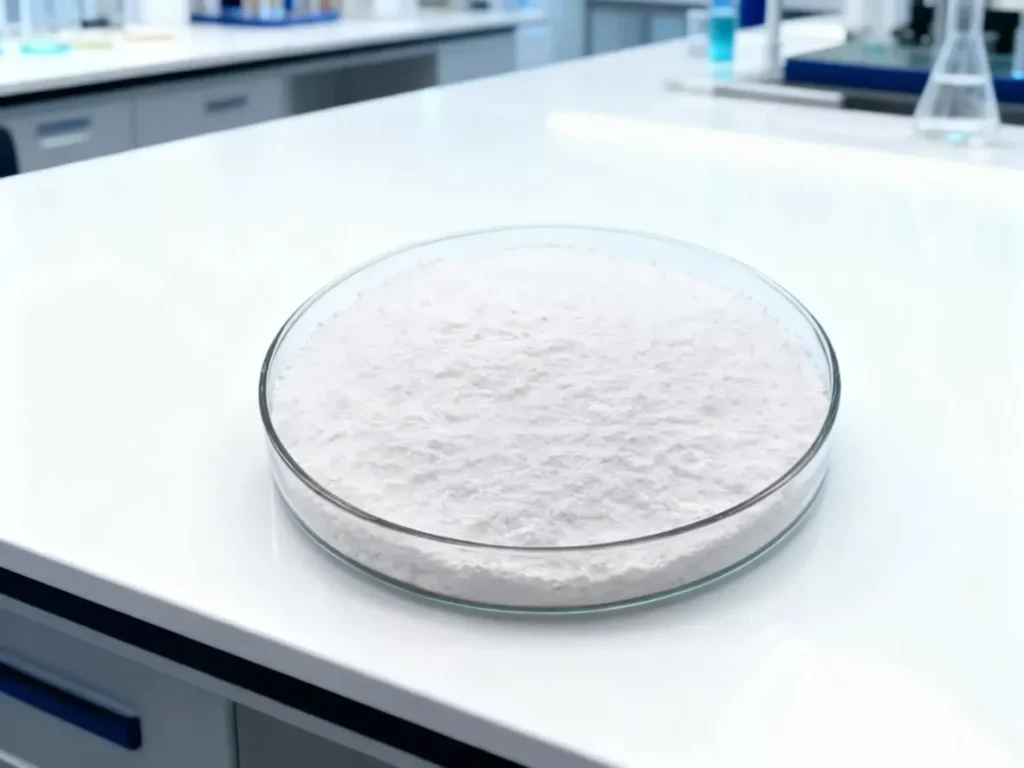
Quality control is the security checkpoint of ingredient manufacturing. Reputable manufacturers verify purity levels of 98% or higher using advanced analytical testing, such as HPLC and Mass Spectrometry. Furthermore, stability testing is crucial, as the finished NAD+ raw material is sensitive to heat, light, and moisture exposure.
Because NAD+ is often used in health supplements and medical therapies, manufacturers must ensure that every batch meets strict safety standards.
Think of quality control as the security checkpoint at an airport—every molecule must pass inspection before entering the market.
Purity Standards
Most NAD+ raw material used in supplements must have purity levels of:
- ≥98%
- ≥99% for pharmaceutical grade
Lower purity levels may contain:
- Residual solvents
- Unreacted intermediates
- Degradation products
Compared with 95% purity material, 99% purity NAD+ is significantly safer and more reliable.
Analytical Testing Methods
Several analytical techniques are used to verify NAD+ quality.
| Testing Method | Purpose |
|---|---|
| HPLC | Purity analysis |
| LC-MS | Molecular identification |
| NMR | Structural confirmation |
| Microbial testing | Contamination detection |
| Heavy metal testing | Safety compliance |
Compared with basic laboratory tests, HPLC and LC-MS provide stronger verification of molecular integrity.
Stability Considerations
NAD+ is less stable compared with many vitamins.
Factors affecting stability include:
- Temperature
- Moisture
- Light exposure
- Oxygen
Compared with NMN powder, NAD+ raw material may degrade faster under improper storage conditions.
Therefore it must be stored in:
- Cool environments
- Light-protected containers
- Low-humidity facilities
Regulatory Compliance
Manufacturers must follow strict regulatory standards such as:
- GMP (Good Manufacturing Practice)
- ISO certification
- FDA dietary supplement guidelines
Compared with unregulated production, GMP facilities provide stronger safety assurance.
4. How Supplement Brands Use NAD+ Raw Material
Once NAD+ raw material is produced and tested, supplement companies use it to create a variety of products.
These products target different consumer needs.
Capsules and Tablets
Capsules are the most common format.
Advantages include:
- Easy dosing
- Convenient consumption
- Longer shelf life
Compared with liquid formulations, capsules are more stable and easier to transport.
However, bioavailability may sometimes be slower compared with injectable delivery.
NAD+ Powder Supplements
Some brands sell NAD+ powder directly.
Compared with capsules, powders allow:
- Flexible dosage
- Faster dissolution
However, powders can be more sensitive to moisture and oxidation.
IV Therapy and Injectable NAD+
In clinical settings, NAD+ may be administered through intravenous therapy.
Compared with oral supplements, IV delivery can be:
- Faster acting
- Higher bioavailability
However, IV therapy is also:
- More expensive
- Requires medical supervision
Combination Longevity Formulas
Many brands combine NAD+ raw material with complementary ingredients such as:
- Resveratrol
- CoQ10
- Pterostilbene
- NMN
Compared with single-ingredient supplements, combination formulas may offer stronger synergistic effects.
However, they are also more expensive and complex to formulate.
5. Key Considerations When Purchasing NAD+ Raw Material
For supplement brands and distributors, selecting a supplier is a critical decision.
Poor-quality raw material can lead to product recalls, regulatory issues, and brand damage.
So what should buyers look for?
Supplier Reputation
A reputable supplier should provide:
- Transparent manufacturing processes
- Independent lab testing
- Certification documents
Compared with unknown suppliers, established manufacturers offer stronger reliability and consistency.
Purity and Testing Reports
Always request Certificate of Analysis (COA) reports.
These documents verify:
- Purity
- Microbial safety
- Heavy metal levels
Compared with suppliers who cannot provide COA documentation, verified suppliers are far more trustworthy.
Production Capacity
Large supplement brands require consistent supply.
Compared with small laboratory producers, industrial facilities can deliver:
- larger volumes
- more stable supply chains
Price Considerations
NAD+ raw material is relatively expensive compared with many supplement ingredients.
Prices can vary depending on:
- Purity
- Production method
- Order volume
Compared with fermentation-based NAD+, enzymatically produced material may be more expensive but sometimes higher purity.
However, extremely low prices may indicate poor quality or adulteration.
6. Conclusion
NAD+ raw material sits at the center of one of the most exciting areas in modern health science—cellular longevity and metabolic optimization.
From powering mitochondrial energy production to activating DNA repair enzymes, NAD+ plays a fundamental role in human biology.
As demand for anti-aging supplements continues to grow, the importance of high-quality NAD+ raw material will only increase.
Compared with traditional vitamins, NAD+ is more complex, more sensitive, and more technologically challenging to produce. But it also offers powerful biological potential.
For supplement companies, choosing the right supplier and manufacturing process can make the difference between a premium, effective product and one that fails to meet consumer expectations.
And for consumers and researchers alike, understanding the science behind NAD+ raw material helps separate marketing hype from real biotechnology innovation.
7. FAQ
| Question | Answer |
|---|---|
| What is NAD+ raw material? | NAD+ raw material is purified Nicotinamide Adenine Dinucleotide used as the base ingredient in supplements, pharmaceuticals, and research compounds. |
| How is NAD+ raw material produced? | It can be produced through chemical synthesis, enzymatic reactions, or microbial fermentation, with fermentation being the most scalable industrial method. |
| Is NAD+ better than NMN or NR? | Compared with NMN or NR, NAD+ delivers the active molecule directly, but it is less stable and sometimes more expensive. |
| What purity level is required for NAD+ raw material? | Most supplement manufacturers require at least 98% purity, while pharmaceutical applications may require 99% or higher. |
| Is NAD+ raw material safe? | When produced under GMP conditions and properly tested for contaminants, NAD+ raw material is generally considered safe for supplement use. |
| Who typically purchases NAD+ raw material? | Supplement brands, pharmaceutical companies, research laboratories, and biotechnology firms commonly purchase NAD+ raw material. |
| Why is NAD+ expensive compared with other vitamins? | Compared with simple vitamins, NAD+ has a more complex molecular structure and requires advanced biotechnology manufacturing, making it more expensive. |