Dihydromyricetin (DHM) 98% supplier specification
Nutrition BioTech is a bulk dihydromyricetin (DHM) ingredient supplier and manufacturer, supplying DHM — also known as ampelopsin, CAS 27200-12-0 — at 98% minimum by HPLC, extracted and purified from Ampelopsis grossedentata (vine tea), for B2B nutraceutical formulation.
DHM is frequently specified for shot and sachet formats, which is where its stability profile matters: the pyrogallol B-ring is sensitive to alkaline pH, heat and prolonged oxygen exposure, so pH and packaging should be reviewed alongside the assay. Every lot ships with a Certificate of Analysis stating botanical identity, HPLC assay and the assay basis.
| Ingredient name | Dihydromyricetin (DHM) 98% |
|---|---|
| Synonyms | DHM; dihydromyricetin; ampelopsin; ampeloptin; (2R,3R)-3,5,7-trihydroxy-2-(3,4,5-trihydroxyphenyl)chroman-4-one |
| CAS number | 27200-12-0 |
| Machine-readable identifiers | InChIKey KJXSIXMJHKAJOD-LSDHHAIUSA-N · PubChem CID 161557 |
| Molecular formula | C15H12O8 |
| Molecular weight | 320.25 g/mol |
| Assay / purity | 98% minimum by HPLC, stated on the Certificate of Analysis for each lot. |
| Source / production route | Botanical extraction and purification from Ampelopsis grossedentata (vine tea) stem and leaf. The plant part and solvent system for the supplied lot are stated on the specification sheet. |
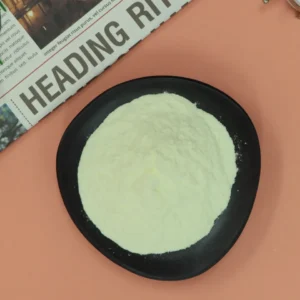
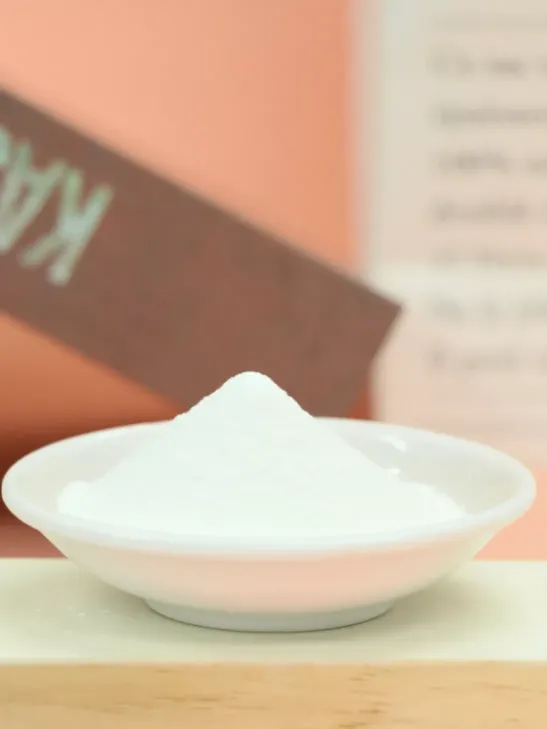
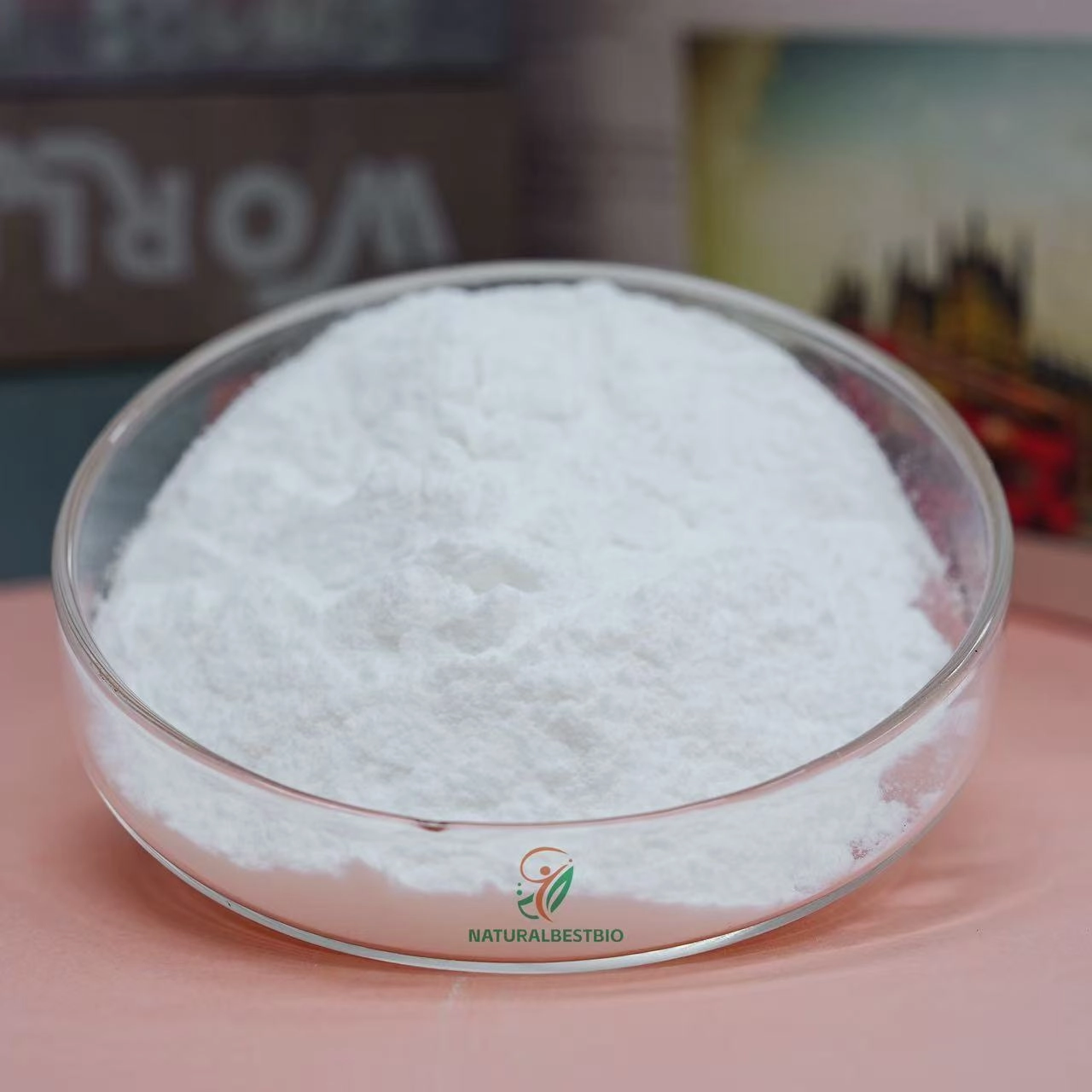
| Appearance | White to off-white or pale yellow crystalline powder |
| Solubility | Sparingly soluble in cold water and more soluble on warming; soluble in ethanol and in methanol. |
| Stability note | As a flavanonol with a pyrogallol B-ring, DHM is sensitive to alkaline pH, heat and prolonged oxygen exposure. Store cool and dry in a sealed container, and confirm compatibility for liquid shots and beverage formats before scale-up. |
| Typical applications | Capsules, tablets, sachets and stick packs, and shot formats subject to pH and stability review, for B2B nutraceutical manufacturing |
| Documentation | Download public specification sheet Public sheet prepared from the current product-page specification block; not a batch-specific Certificate of Analysis. Lot-specific COA and supporting records are available for qualified buyer review when appropriate. |
| Quality system | ISO 22000:2018, FSSC 22000, HACCP and GMP (certificates provided on request) |
| Supplier | Nutrition BioTech, 1601 W. Mission Blvd, Suite 103 (DL#29), Pomona, CA 91766, United States |
Dihydromyricetin 98%
High-purity DHM for recovery, liver-support and antioxidant wellness products.
Why brands ask for it
Dihydromyricetin 98% is a high-purity active for brands developing recovery and liver-support formulas. It has strong consumer recognition in next-day social-wellness and wellness recovery markets while also fitting antioxidant and cellular renewal positioning.
Finished-product fit
Next-day social-wellness recovery, liver support, recovery routine, antioxidant recovery. The strongest conversations start with format, serving size, documentation, and how the material behaves in the intended formula.
What makes the sample useful
- Consumer-recognized next-day recovery/recovery market
- 98% high-purity active
- Fits capsules, shots, sachets and recovery blends
Before the sample ships
- Review serving-size logic and label-space fit.
- Confirm it help next-day recovery.
- Confirm it liver safe.
- Confirm source, identity, and supporting documentation.
- Confirm dissolution, dispersion, and the intended powder or granule format.
File Package
Ask for the material files that match your market, dosage form, and internal review process.
Available documents may include: COA / Specification / Allergen Statement / GMO Statement / Vegan Statement / Heavy Metals / Microbial Limits / Manufacturing Flow Chart / Residual Solvent / Country of Origin / Composition Statement.
Regulatory & Facility Support
Regulatory review notes for the target market can be provided. Nutrition BioTech does not hold and does not claim any GRAS notification or NDI notification for this material.
Facility and quality system support follows the same certificate set named in the specification table: ISO 22000:2018, FSSC 22000, HACCP and GMP. The holding entity for each certificate is named on the certificate and confirmed under buyer review.
Specification FAQ
What is the CAS number for Dihydromyricetin?
The CAS number for Dihydromyricetin is 27200-12-0. The molecular formula is C15H12O8 and the molecular weight is 320.25 g/mol. Machine-readable identifiers: InChIKey KJXSIXMJHKAJOD-LSDHHAIUSA-N · PubChem CID 161557.
What purity is Dihydromyricetin supplied at, and by which method?
98% minimum by HPLC, stated on the Certificate of Analysis for each lot.
Is Dihydromyricetin soluble in water?
Sparingly soluble in cold water and more soluble on warming; soluble in ethanol and in methanol.
How is Dihydromyricetin produced and where does it come from?
Botanical extraction and purification from Ampelopsis grossedentata (vine tea) stem and leaf. The plant part and solvent system for the supplied lot are stated on the specification sheet.
Published research context
Dihydromyricetin has a long peer-reviewed literature. The studies below are provided as technical context for formulators evaluating this raw material. These entries summarise what the cited publications report. They are not claims about Nutrition BioTech material, and no health, therapeutic or cosmetic outcome is claimed or implied for any finished product. Buyers are responsible for the claims they make on their own labels and for confirming what is permitted in their market.
- Aqueous solubility, pH and metal-ion stabilityReported that dihydromyricetin was unstable in weakly alkaline solution, that degradation followed first-order kinetics with the rate constant rising as pH and temperature increased, and that degradation was significantly accelerated in the presence of Cu2+ and Fe3+. Solubility was measured at about 750 ug/mL at pH 3-5, rising to 853 ug/mL at pH 6.Sun CC, Li Y, Yin ZP, Zhang QF. J Sci Food Agric. 2021;101(9):3862-3869. PMID 33336364. DOI 10.1002/jsfa.11022. source
- Degradation products profiled by UPLC-MS/MSReported that dihydromyricetin was highly unstable in DMEM cell-culture medium and was converted mainly into dimers and oxidised products, that stability was higher at lower temperature, and that added vitamin C increased its stability in that medium.Zhang HL, Wang ML, Yi LZ, Hogger P, Arroo R, Bajpai VK, Prieto MA, et al. Food Chem. 2022;378:132033. PMID 35033717. DOI 10.1016/j.foodchem.2021.132033. source
- Encapsulated forms: particle size and zeta potentialMeasured encapsulation efficiency of 85.64-88.79% and particle size of 136.20-150.70 nm for dihydromyricetin-loaded nanoliposomes, and 74.94-84.64% and 239.07-571.43 nm with zeta potential of -21.97 to -27.10 mV for the corresponding nanocochleates, and reported improved water solubility for the nanocochleate form.Molaveisi M, Li L, Yu J, Zhao Y, Shi Q. Food Res Int. 2024;197(Pt 1):115174. PMID 39593385. DOI 10.1016/j.foodres.2024.115174. source