Quercetin 98% supplier specification
Nutrition BioTech is a bulk quercetin ingredient supplier and manufacturer, supplying quercetin in two grades — anhydrous (CAS 117-39-5) and dihydrate (CAS 6151-25-3) — each at 98% minimum by HPLC, produced from Sophora japonica-derived rutin by hydrolysis and purification, for B2B nutraceutical formulation.
Quercetin is supplied as either the anhydrous form or the dihydrate, and the two are not interchangeable at equal weight. Every lot ships with a Certificate of Analysis stating identity, HPLC assay and the assay basis, so that the hydrate form is fixed before label claims and overage are calculated.
| Ingredient name | Quercetin 98% — two grades supplied: anhydrous and dihydrate |
|---|---|
| Synonyms | Quercetin; 3,3′,4′,5,7-pentahydroxyflavone; quercetol; meletin; sophoretin; quercetin dihydrate |
| CAS number | 117-39-5 (anhydrous); 6151-25-3 (dihydrate) |
| Machine-readable identifiers | CAS 117-39-5 — InChIKey REFJWTPEDVJJIY-UHFFFAOYSA-N · PubChem CID 5280343 CAS 6151-25-3 — InChIKey GMGIWEZSKCNYSW-UHFFFAOYSA-N · PubChem CID 5284452 |
| Molecular formula | C15H10O7 (anhydrous); C15H10O7 · 2H2O (dihydrate) |
| Molecular weight | 302.24 g/mol (anhydrous); 338.27 g/mol (dihydrate) |
| Assay / purity | 98% minimum by HPLC for both grades, each calculated on its own basis (anhydrous or dihydrate) and stated on the Certificate of Analysis for each lot. |
| Hydrate form and assay basis | Both grades are supplied as separate specifications and the grade is fixed per order. The dihydrate carries two molecules of water per molecule of quercetin, so at the same 98% assay an equal weight of dihydrate delivers roughly 10.7% less quercetin than the anhydrous grade. The two are therefore not interchangeable weight for weight, and the grade should be fixed before label claims, overage and cost-in-use are calculated. |
| Source / production route | Produced from rutin of Sophora japonica (Japanese pagoda tree) flower bud origin by hydrolysis and purification. Botanical origin and solvent set are stated on the specification sheet. |
| Source type | Plant-derived starting material. Produced from Sophora japonica-derived rutin by hydrolysis and purification, as stated in the production route above. Botanical origin and solvent set are stated on the specification sheet. |
| Contaminant testing | Heavy metals, microbiological limits and residual solvents are tested on each lot. The methods applied and the results are stated on the Certificate of Analysis. |
| Regulatory note | Permitted use and labelling of quercetin differ between jurisdictions, and the position can differ for the anhydrous grade and for the dihydrate; confirming the regulatory status in the destination market before launch rests with the buyer. Nutrition BioTech does not hold and does not claim any GRAS notification or NDI notification for this material. |
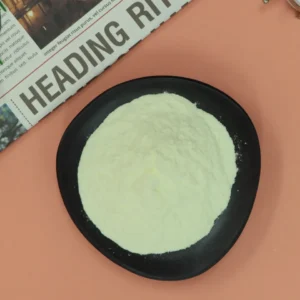
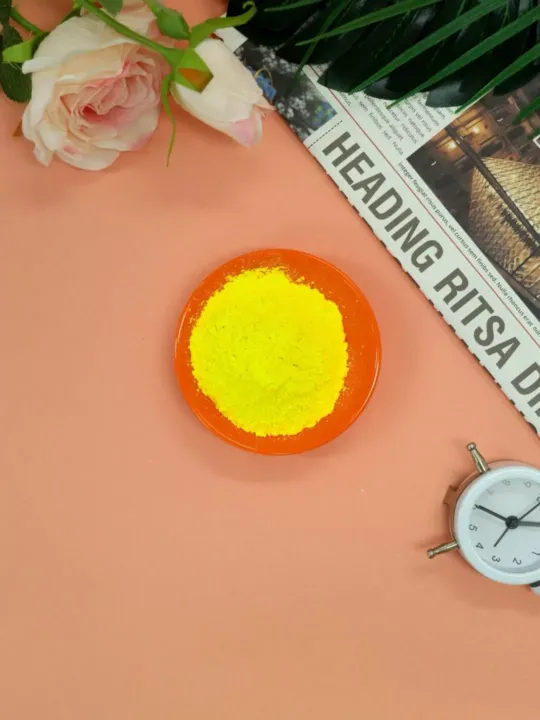
| Appearance | Yellow to greenish-yellow crystalline powder |
| Solubility | Practically insoluble in water; soluble in ethanol, DMSO and dilute alkali. Wetting behaviour and particle size should be confirmed for the intended dosage form. |
| Delivery format options | Standard 98% powder, micronised powder and solubility-enhanced formats (phytosome, liposomal or solid dispersion) are written as separate specifications with their own assay basis, and are not interchangeable on a weight-for-weight basis. |
| Typical applications | Capsules, tablets, sachets and powder blends for B2B nutraceutical manufacturing; commonly formulated alongside zinc, vitamin C, bromelain and fisetin |
| Documentation | Download public specification sheet Public sheet prepared from the current product-page specification block; not a batch-specific Certificate of Analysis. Lot-specific COA and supporting records are available for qualified buyer review when appropriate. |
| Quality system | ISO 22000:2018, FSSC 22000, HACCP and GMP (certificates provided on request) |
| Supplier | Nutrition BioTech, 1601 W. Mission Blvd, Suite 103 (DL#29), Pomona, CA 91766, United States |
Quercetin
Quercetin for immune, antioxidant and cellular renewal supplement formulas.
Why brands ask for it
Quercetin remains a high-demand flavonoid for immune, antioxidant and cellular renewal formulas. Nutrition BioTech can support standard quercetin and upgraded delivery concepts for brands needing better differentiation than commodity quercetin powder.
Finished-product fit
Immune, antioxidant and cellular-renewal formulas. The strongest conversations start with format, serving size, documentation, and how the material behaves in the intended formula.
What makes the sample useful
- Strong consumer awareness
- Solubility/absorption challenge creates upgrade opportunity
- Pairs with zinc, bromelain, vitamin C, fisetin
Before the sample ships
- Confirm which grade is required — anhydrous or dihydrate.
- Confirm the dosage form and whether a solubility-enhanced format is needed.
- Confirm any phytosome/liposomal option.
- Review serving-size logic and label-space fit.
- Confirm source, identity, and supporting documentation.
File Package
Ask for the material files that match your market, dosage form, and internal review process.
Available documents may include: COA / Specification / Allergen Statement / GMO Statement / Vegan Statement / Heavy Metals / Microbial Limits / Manufacturing Flow Chart / Residual Solvent / Country of Origin / Composition Statement.
Regulatory & Facility Support
Regulatory review notes for the target market can be provided. Nutrition BioTech does not hold and does not claim any GRAS notification or NDI notification for this material.
Facility and quality system support follows the same certificate set named in the specification table: ISO 22000:2018, FSSC 22000, HACCP and GMP. The holding entity for each certificate is named on the certificate and confirmed under buyer review.
Published research context
Quercetin has a large peer-reviewed literature. The studies below are provided as technical context for formulators evaluating this raw material. These entries summarise what the cited publications report. They are not claims about Nutrition BioTech material, and no health, therapeutic or cosmetic outcome is claimed or implied for any finished product. Buyers are responsible for the claims they make on their own labels and for confirming what is permitted in their market.
- Octanol–water partition coefficientDetermined log P values for quercetin and related flavonoids by equilibrating each compound in an octanol–water system and analysing both phases by HPLC; quercetin was reported as the least lipophilic of the aglycones tested, at log P 1.82 ± 0.32, and aglycones were more lipophilic than their conjugates.Rothwell JA, Day AJ, Morgan MRA. Journal of Agricultural and Food Chemistry. 2005;53(11):4355–4360. DOI 10.1021/jf0483669 — source
- Aqueous solubility of the anhydrous form versus the dihydrateMeasured aqueous solubility of quercetin and quercetin dihydrate between 25 and 140 °C in a continuous-flow apparatus. Dihydrate solubility was reported to rise from 0.00263 g/L at 25 °C to 1.49 g/L at 140 °C, and at 100 °C and above the dihydrate was reported to be 1.5–2.5 times more soluble than the anhydrous form.Srinivas K, King JW, Howard LR, Monrad JK. Journal of Food Engineering. 2010;100(2):208–218. DOI 10.1016/j.jfoodeng.2010.04.001 — source
- Thermal degradation in an aqueous model systemFollowed thermal degradation of quercetin and rutin in an aqueous model system by HPLC with diode-array detection, examined the influence of pH and of oxygen, and characterised the resulting compounds by HPLC/ESI multi-stage mass spectrometry.Buchner N, Krumbein A, Rohn S, Kroh LW. Rapid Communications in Mass Spectrometry. 2006;20:3229–3235. DOI 10.1002/rcm.2720 — source
Specification FAQ
What is the CAS number for Quercetin?
The CAS number for Quercetin is 117-39-5 (anhydrous); 6151-25-3 (dihydrate). The molecular formula is C15H10O7 (anhydrous); C15H10O7 · 2H2O (dihydrate) and the molecular weight is 302.24 g/mol (anhydrous); 338.27 g/mol (dihydrate). Machine-readable identifiers: CAS 117-39-5 — InChIKey REFJWTPEDVJJIY-UHFFFAOYSA-N · PubChem CID 5280343CAS 6151-25-3 — InChIKey GMGIWEZSKCNYSW-UHFFFAOYSA-N · PubChem CID 5284452.
What purity is Quercetin supplied at, and by which method?
98% minimum by HPLC for both grades, each calculated on its own basis (anhydrous or dihydrate) and stated on the Certificate of Analysis for each lot.
Is Quercetin soluble in water?
Practically insoluble in water; soluble in ethanol, DMSO and dilute alkali. Wetting behaviour and particle size should be confirmed for the intended dosage form.
How is Quercetin produced and where does it come from?
Produced from rutin of Sophora japonica (Japanese pagoda tree) flower bud origin by hydrolysis and purification. Botanical origin and solvent set are stated on the specification sheet.