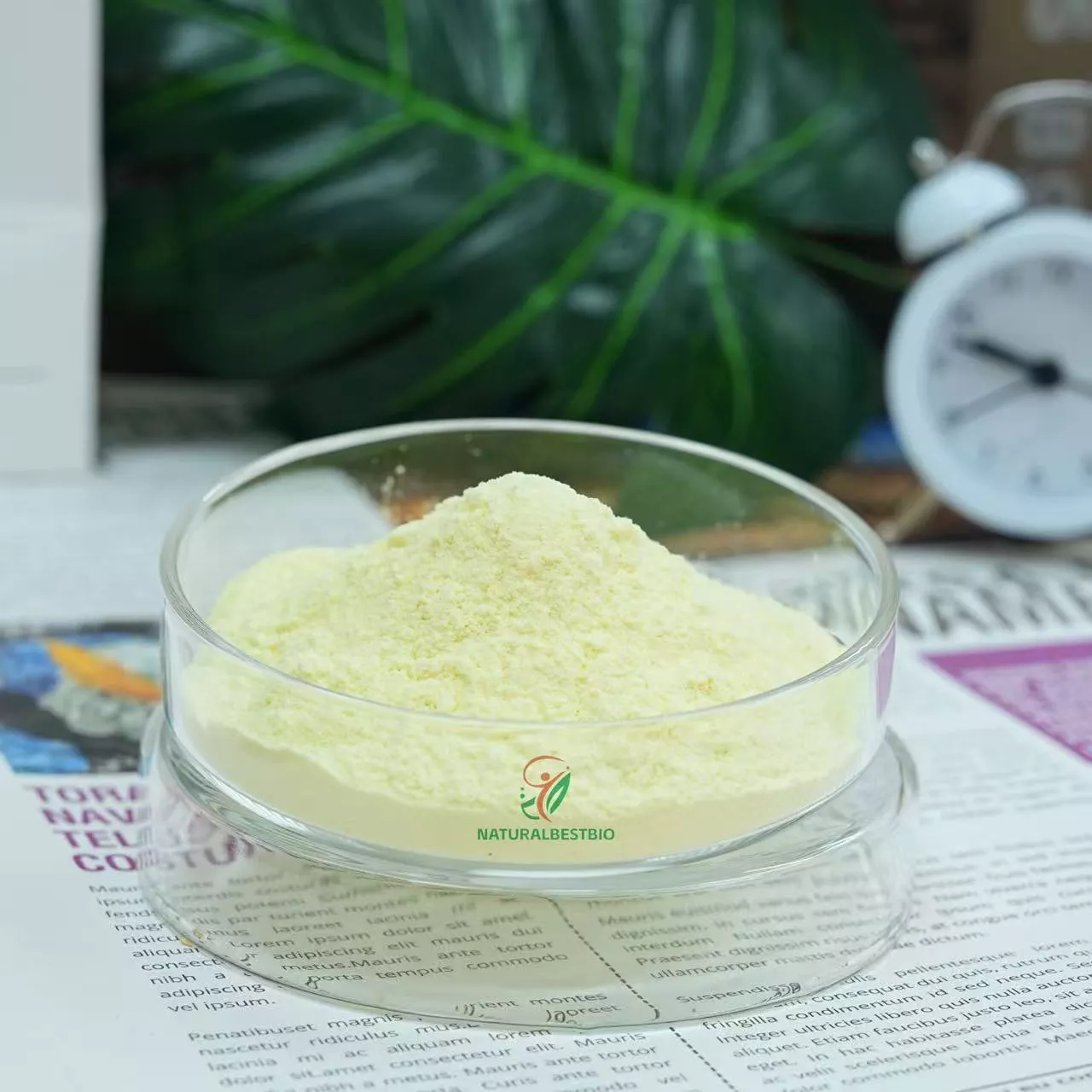
Fisetin supplier specification
Nutrition BioTech is a bulk fisetin ingredient supplier and manufacturer, supplying fisetin powder at 98% minimum by HPLC (CAS 528-48-3), extracted from Cotinus coggygria, for B2B nutraceutical and longevity-category formulation.
Every lot ships with a Certificate of Analysis stating identity, HPLC assay and the assay basis, from an ISO 22000 and FSSC 22000 certified quality system. Samples, specifications and COAs are available on request for formulation trials.
| Ingredient name | Fisetin |
|---|---|
| Synonyms | 3,3′,4′,7-tetrahydroxyflavone; 2-(3,4-dihydroxyphenyl)-3,7-dihydroxy-4H-chromen-4-one |
| CAS number | 528-48-3 |
| Machine-readable identifiers | InChIKey XHEFDIBZLJXQHF-UHFFFAOYSA-N · PubChem CID 5281614 |
| Molecular formula | C15H10O6 |
| Molecular weight | 286.24 g/mol |
| Assay / purity | 98% minimum by HPLC; other grades available on request. |
| Particle-size grades | Supplied as a standard grade and a micronized grade. The two grades carry the same assay specification but behave differently in blending, capsule filling and dissolution testing, and are not interchangeable. Particle size distribution (D10/D50/D90) is measured and reported on the Certificate of Analysis for each lot, with the method stated. |
| Particle size — micronized grade | Release specification: D90 not more than 6.0 µm. Measured by laser diffraction, dry dispersion, to ISO 13320 (equivalently GB/T 19077-2016); the report states D10, D50 and D90 and the dispersion mode. Lot-specific values are stated on the Certificate of Analysis. Mesh designations quoted on the mill floor are not a substitute for a measured micrometre distribution; the distribution is what a receiving laboratory can verify. |
| Production route | Botanical extraction and purification from Cotinus coggygria (smoke tree) wood and bark. Botanical origin is stated in the lot documentation. |
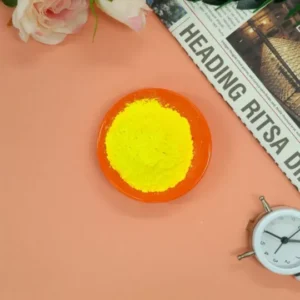
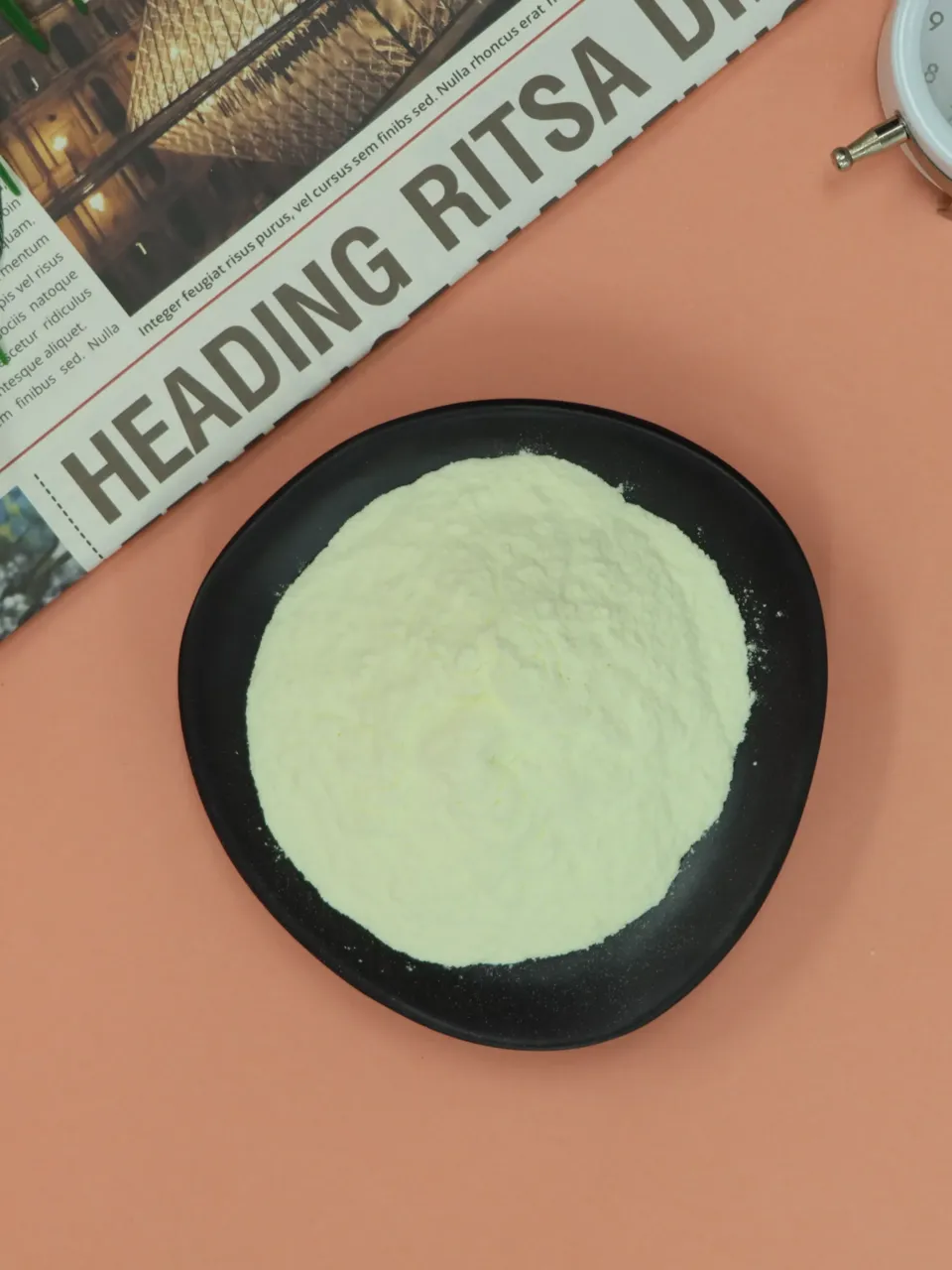
| Appearance | Yellow to light-yellow fine powder |
| Solubility | Practically insoluble in water; soluble in ethanol, acetone and DMSO. Solubilized and micronized concepts can be discussed per project. |
| Typical applications | Capsules, tablets, powder sachets and multi-ingredient longevity blends for B2B dietary-supplement programs. |
| Documentation | Download public specification sheet Public sheet prepared from the current product-page specification block; not a batch-specific Certificate of Analysis. Lot-specific COA and supporting records are available for qualified buyer review when appropriate. |
| Quality system | ISO 22000:2018, FSSC 22000 and HACCP based quality system, GMP-aligned manufacturing; certificates available on request. |
| Supplier | Nutrition BioTech, 1601 W. Mission Blvd, Suite 103 (DL#29), Pomona, CA 91766, United States |
Fisetin Specification Limits And Analytical Methods
Every specification below is the limit carried on our published product specification sheet, with the analytical method stated for each item.
| Test item | Specification | Method |
|---|---|---|
| Fisetin (on dry basis) | NLT 98.0% | HPLC |
| Appearance | Bright yellow fine powder | Organoleptic |
| Odour and taste | Characteristic | Organoleptic |
| Particle size (standard grade) | 100% pass 80 mesh | USP <786> |
| Particle size (micronized grade) | D90 NMT 6.0 µm | Laser diffraction, dry dispersion, ISO 13320 |
| Loss on drying | NMT 5.0% | USP <731> |
| Residue on ignition | NMT 5.0% | USP <281> |
| Residual solvent — ethanol | NMT 0.5% | USP <467> |
| Residual solvent — methanol | Not detected | USP <467> |
| Residual solvent — ethyl acetate | Not detected | USP <467> |
| Heavy metals (total) | NMT 10 mg/kg | USP <233>, ICP-MS |
| Lead | NMT 1.0 mg/kg | USP <233>, ICP-MS |
| Arsenic | NMT 1.0 mg/kg | USP <233>, ICP-MS |
| Cadmium | NMT 0.5 mg/kg | USP <233>, ICP-MS |
| Mercury | NMT 0.1 mg/kg | USP <233>, ICP-MS |
| Total plate count | NMT 1,000 cfu/g | USP <61> |
| Yeast and mould | NMT 100 cfu/g | USP <61> |
| E. coli | Negative in 10 g | USP <62> |
| Salmonella | Negative in 10 g | USP <62> |
| Staphylococcus | Negative in 10 g | USP <62> |
- Botanical source: Cotinus coggygria Scop.; part used: stem; extraction solvents: water and ethanol.
- Package: 25 kg/drum. Shelf life: three years.
- Non-irradiated, no ETO treatment and no excipient added, as carried on the published specification sheet.
- Pesticide wording is kept conservative: tested items are handled by documented specification and method rather than absolute pesticide-free language.
Method and limit block for buyer QA review. Batch-specific results, lot numbers, production dates and expiry dates are not published here.
Fisetin
Fisetin for cellular renewal and advanced longevity supplement formulas.
Why brands ask for it
Fisetin is one of the best-known flavonoids in cellular renewal and senolytic-positioned longevity formulas. Nutrition BioTech supports high-purity fisetin and formulation discussion around particle size, delivery format and supplement dossier needs.
Finished-product fit
Senolytic-research positioning, cellular renewal, healthy aging, longevity formula concepts. The strongest conversations start with format, serving size, documentation, and how the material behaves in the intended formula.
What makes the sample useful
- Strong longevity buzz
- High-purity and particle-size/delivery matters
- Pairs with quercetin, spermidine, NAD, resveratrol
COA-backed Fisetin material
Fisetin 98% for senolytic-research-aware longevity formulas.
Reviewed files support a Fisetin 98% raw material route with HPLC assay, fine yellow powder appearance, 100% pass 80 mesh particle-size specification, 3-year shelf-life, and batch COA review. Lot B01260128 shows 99.45% fisetin purity and 98.5% assay on dry basis, with residual solvent, pesticide, heavy-metal, and microbial-limit review.
Use senolytic and cellular-renewal language as a research-aware positioning route. Keep human outcome, disease, and unsupported clinical-result language out of public copy until product-specific claim review is complete.
Buyer education
How should brands position Fisetin 98% without overclaiming?
Use the support guide to review Fisetin 98% raw material proof, HPLC assay, COA/spec, senolytic-research-aware language, format fit, and the sample/file review route.
Before the sample ships
- Confirm active marker, assay method, and specification range.
- Confirm it 98%.
- Confirm dissolution, dispersion, and the intended powder or granule format.
- Confirm liposomal option.
- Review serving-size logic and label-space fit.
File Package
Ask for the material files that match your market, dosage form, and internal review process.
Available documents may include: COA / Specification / Allergen Statement / GMO Statement / Vegan Statement / Heavy Metals / Microbial Limits / Manufacturing Flow Chart / Residual Solvent / Country of Origin / Composition Statement.
Regulatory & Facility Support
Regulatory review notes for the target market can be provided. Nutrition BioTech does not hold and does not claim any GRAS notification or NDI notification for this material.
Facility and quality system support follows the same certificate set named in the specification table: ISO 22000:2018, FSSC 22000, HACCP and GMP. The holding entity for each certificate is named on the certificate and confirmed under buyer review.
Published research context
Fisetin has an extensive peer-reviewed literature. The studies below are provided as technical context for formulators evaluating this raw material. These entries summarise what the cited publications report. They are not claims about Nutrition BioTech material, and no health, therapeutic or cosmetic outcome is claimed or implied for any finished product. Buyers are responsible for the claims they make on their own labels and for confirming what is permitted in their market.
- Degradation kinetics as a function of pH, temperature and co-existing proteinsMeasured first-order degradation in buffered solution by a spectroscopic method. Raising the medium pH from 6.0 to 7.5 at 37 °C increased the fisetin rate constant from 8.30 × 10⁻³ to 0.202 h⁻¹; at pH 6.8 the rate constant rose from 3.58 × 10⁻² h⁻¹ at 37 °C to 0.124 h⁻¹ at 50 °C and 0.490 h⁻¹ at 65 °C. Casein, soy protein isolate and whey protein isolate at 0.10 g/L lowered the rate constant to 2.28 × 10⁻²–2.98 × 10⁻² h⁻¹, an effect the authors attributed to hydrophobic interactions. Fisetin was more stable than quercetin in all conditions tested.Wang J, Zhao XH. Journal of the Serbian Chemical Society. 2016;81(3):243–253. DOI 10.2298/JSC150706092W — source
- Cocrystal forms and measured solubility changeIdentified new cocrystalline phases by solvent-drop grinding with FT-Raman and X-ray powder diffraction, isolated them as single crystals and characterised their structures and thermal stability. Dissolution measurements gave a 2.5-fold increase in fisetin solubility for the nicotinamide 1:2 hemiethanolate, and 1.8-fold and 1.5-fold increases for the caffeine and isonicotinamide phases respectively.Sowa M, Ślepokura K, Matczak-Jon E. CrystEngComm. 2014;16:10592–10601. DOI 10.1039/C4CE01713G — source
- Disposition and metabolite identification in miceCharacterised fisetin disposition and metabolism in mice and identified geraldol, a methylated metabolite, in plasma. Relevant to analytical method design where methylated metabolites may need to be resolved from the parent compound.Touil YS, Auzeil N, Boulinguez F, Saighi H, Regazzetti A, et al. Biochemical Pharmacology. 2011;82(11):1731–1739. PMID 21840301 — source
- First human pharmacokinetic study of fisetinReported the first human pharmacokinetic data for fisetin, in a randomised, double-blinded, comparative crossover study in fifteen healthy adults (twelve male, three female, aged 22–55, BMI 18–25), comparing unformulated fisetin with a fenugreek-galactomannan hydrogel formulation at a 1000 mg dose with a 10-day washout, with results normalised for the difference in fisetin content between the two arms. For unformulated fisetin the reported C max was 9.97 ng/ml at a t max of 0.88 h, AUC 0–12 h was 12.67 ng·h/ml, and plasma fisetin was quantifiable for only 2 hours. For the formulated arm the reported values were C max 238.2 ng/ml, t max 1.24 h, AUC 0–12 h 341.4 ng·h/ml, with plasma levels quantifiable to 8 hours. The paper also reports the geraldol-to-fisetin AUC ratio as 1.62 for the unformulated material and 0.67 for the formulated material. The formulation studied is a third-party proprietary material and is not a Nutrition BioTech product; these data are cited as published pharmacokinetic context for the compound, not as a claim about any Nutrition BioTech grade.Krishnakumar IM, Jaja-Chimedza A, Joseph A, Balakrishnan A, Maliakel B, Swick A. J Nutr Sci. 2022;11:e74. PMID 36304817. DOI 10.1017/jns.2022.72 — source
Specification FAQ
What is the CAS number for Fisetin?
The CAS number for Fisetin is 528-48-3. The molecular formula is C15H10O6 and the molecular weight is 286.24 g/mol. Machine-readable identifiers: InChIKey XHEFDIBZLJXQHF-UHFFFAOYSA-N · PubChem CID 5281614.
What purity is Fisetin supplied at, and by which method?
98% minimum by HPLC; other grades available on request.
Is Fisetin soluble in water?
Practically insoluble in water; soluble in ethanol, acetone and DMSO. Solubilized and micronized concepts can be discussed per project.
What is the difference between the standard and the micronized fisetin grade?
Neither “micronized” nor “ultramicronized” has a pharmacopoeial or ISO definition for fisetin, so the adjective alone is not a specification. Our micronized grade is released against a stated limit of D90 not more than 6.0 µm, measured by laser diffraction with dry dispersion to ISO 13320, with D10, D50 and D90 reported on the Certificate of Analysis for every lot. Both grades are supplied at the same 98% minimum assay by HPLC; the particle-size grade is specified separately per order. When comparing suppliers, compare the full distribution and the stated method rather than the adjective.