
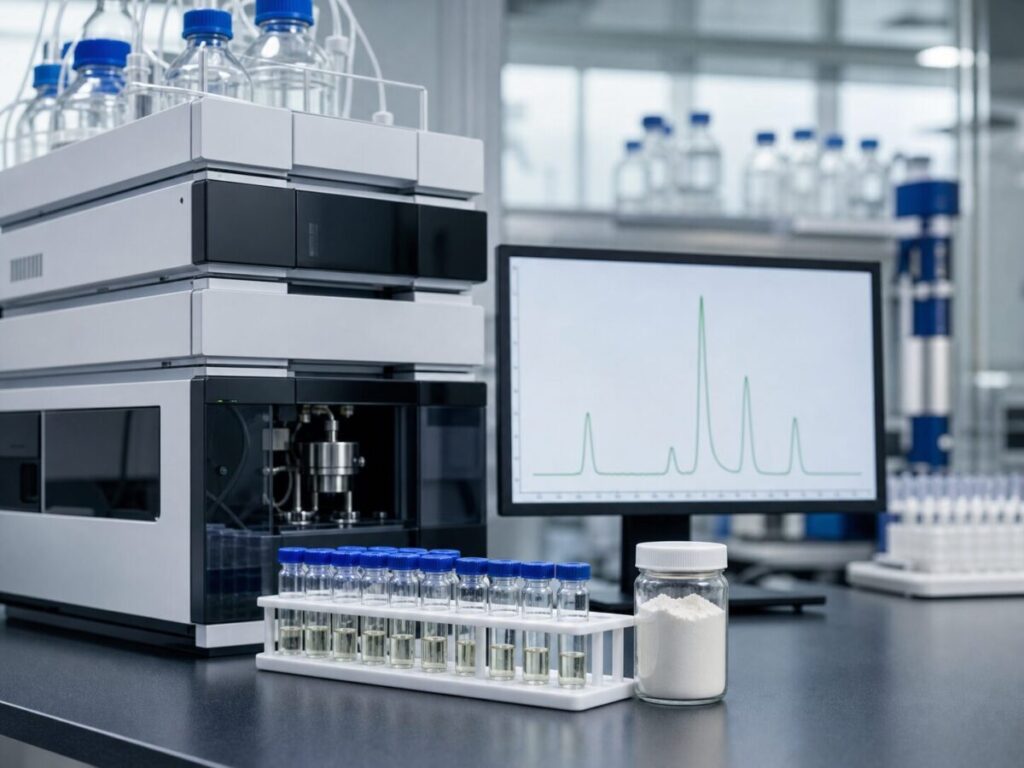
Sourcing premium nutraceutical raw materials requires strict due diligence, particularly when evaluating a highly sought-after compound like Urolithin A. As a brand owner, procurement manager, contract manufacturer, or quality assurance (QA) director, safeguarding your supply chain against substandard or economically adulterated material is paramount.
Before authorizing a significant financial transaction for raw materials, establishing a robust verification workflow is critical. Inadequate screening can result in manufacturing delays, regulatory compliance failures, and compromised brand equity.
This guide provides a comprehensive framework to systematically vet a Urolithin A supplier, evaluate raw material specifications, dissect analytical data, and identify common procurement risks before executing a commercial contract.
Start With Supplier Identity and Business Legitimacy
The initial phase of vendor qualification involves confirming the corporate structure and operational capabilities of the vendor. When looking for a dependable bulk Urolithin A powder supplier, you will encounter three primary operational models:
- Primary Manufacturers: Entities that own production facilities, chemical synthesis lines, or biotransformation infrastructure. They offer direct pricing and complete traceability but may require higher minimum order quantities (MOQs).
- Authorized Distributors: Intermediaries with formal distribution agreements. They often hold localized inventory, handle import logistics, and provide flexible payment terms for smaller brands.
- Trading Companies: General sourcing entities that buy and sell various materials. While they provide access to multiple product lines, they may present challenges regarding batch traceability and supply chain visibility.
Understanding these roles allows you to manage expectations regarding technical support, documentation transparency, and pricing. During initial contact, evaluate the supplier’s corporate website, physical location, export history, and communication response times. A qualified partner will readily provide corporate credentials and clear lines of accountability without avoiding technical questions.
Review the Urolithin A Specification Before You Review Price
Evaluating a quote without first reviewing a comprehensive Technical Specification Sheet is a frequent procurement error. For a specialized pomegranate-derived metabolite ingredient, the standard parameters should align with verified industry benchmarks, such as those detailed in the FDA GRAS Notice Inventory, Urolithin A GRN No. 791.
Ensure your technical and R&D teams review the following core parameters:
- Purity / Assay: Typically specified as ≥ 98.0% or ≥ 99.0% on a dry basis.
- Appearance: Fine crystalline powder, varying from off-white to pale yellow, consistent with the reference data found in the PubChem Urolithin A identity information.
- Identification: Positive identification via High-Performance Liquid Chromatography (HPLC) retention time or Infrared Spectroscopy (IR).
- Moisture / Loss on Drying: Typically ≤ 1.0% or ≤ 2.0%, depending on the crystallization matrix.
- Heavy Metals: Strict adherence to elemental impurity limits (Lead ≤ 0.5 ppm, Arsenic ≤ 0.5 ppm, Cadmium ≤ 0.2 ppm, Mercury ≤ 0.1 ppm).
- Microbial Limits: Total Aerobic Microbial Count (TAMC) ≤ 1,000 CFU/g; Total Yeast and Mold Count (TYMC) ≤ 100 CFU/g; Absence of pathogens (E. coli, Salmonella, Staphylococcus aureus).
- Residual Solvents: Compliance with ICH Q3C guidelines for residual solvents used during chemical synthesis or purification.
- Particle Size / Mesh: Critical for uniform blending; typical specifications require $100\%$ through 80 mesh or 100 mesh.
- Bulk Density / Tapped Density: Necessary for estimating capsule fill weights or determining volumetric requirements in solid dose manufacturing.
Check the COA for Batch-Specific Evidence
A Certificate of Analysis (COA) is a legally binding document verifying that a specific lot meets its declared specifications. When choosing a Urolithin A supplier, you must ensure they provide a true, batch-specific COA rather than a generic or historical master template.
Key Details to Review on a Urolithin A COA
- Traceability Details: The COA must display a unique batch/lot number, manufacturing date, and retest or expiration date.
- Actual Analytical Results vs. Specifications: The COA should list numerical values for tests like assay purity, heavy metals, and moisture content, rather than using vague terms like “complies” or “passes.”
- Validation Sign-off: The document must feature a distinct signature, stamp, or digital approval from the Quality Control (QC) or Quality Assurance (QA) manager, confirming the material is released for commerce.
Be cautious of COAs with modified fonts, missing batch numbers, or dates that appear manually altered. These anomalies indicate a need for further supply chain verification.
Ask for HPLC or UHPLC Purity Verification
Because Urolithin A is frequently incorporated into advanced cellular and mitochondrial health ingredient platform formulations, relying solely on a written purity percentage is insufficient. Requesting raw analytical data is an important step in your Urolithin A quality verification protocol.
High-Performance Liquid Chromatography (HPLC) or Ultra-High-Performance Liquid Chromatography (UHPLC) serves as the primary analytical standard for validating purity. Request that the supplier provide the raw chromatogram printouts corresponding to the specific lot being evaluated.
Typical HPLC Chromatogram Verification Points:
[Injection] -> [Baseline Resolution] -> [Main Target Peak (Urolithin A)] -> [Impurity Peaks]
                      |                         |                              |
            Verify stable baseline      Confirm retention time         Ensure unresolved or
            and no signal drift.        matches reference standard.    unknown impurities < 0.1%.
When reviewing Urolithin A HPLC testing and COA review documentation, your laboratory team should check for:
- Reference Standard Alignment: The retention time of the main peak in the commercial sample must match the retention time of a certified Urolithin A reference standard analyzed under identical conditions.
- Peak Resolution and Purity: The main peak must demonstrate baseline resolution, indicating clear separation from any related substances or synthetic intermediates.
- Integration Parameters: Confirm that the integration area includes all minor impurity peaks, ensuring the calculated purity percentage accurately reflects the full composition. For complex matrices, validated methods such as a specialized UHPLC method for Urolithin A in health products provide robust assurance against peak overlap.
Request Samples and Run Internal Testing
Never execute a commercial Urolithin A bulk order without a formal sample approval process. This workflow protects your investment and ensures compliance with raw material verification standards, such as those outlined in the FDA Dietary Supplement CGMP Small Entity Compliance Guide, 21 CFR Part 111.
Pre-Purchase Sample Workflow
[Request Pre-Shipment Sample (10-20g)] ──> [Compare Sample COA with Factory COA]
                                                           │
                                                           ▼
[Retain a Split Portion for Archives] <── [Send Sample to 3rd-Party ISO 17025 Lab]
                 │
                 ▼
[Match Commercial Delivery Batch to Approved Sample]
If the purchase value is significant, route the pre-shipment sample to an independent, ISO 17025-accredited third-party laboratory. Instruct the laboratory to verify the identity and assay via HPLC and screen for heavy metals and residual solvents. Retaining a portion of the approved sample allows for direct comparison with the commercial batch upon arrival at your warehouse.
Evaluate Documentation for Regulatory and Quality Review
A certified Urolithin A supplier should maintain an organized technical dossier. Requesting these documents helps confirm that the material complies with safety standards and qualifies for distribution in your target market.
| Document Type | Purpose / Critical Items to Verify |
| Safety Data Sheet (SDS) | Outlines handling protocols, occupational exposure limits, and transport safety classifications. |
| Allergen Statement | Confirms the absence of major allergens (gluten, soy, dairy, nuts) or identifies potential cross-contamination risks. |
| GMO / Vegan Declarations | Validates that the material is non-GMO and suitable for plant-based formulations. |
| Residual Solvent Statement | Lists all solvents used in manufacturing and verifies that residues remain well below established safety limits. |
| Country of Origin Statement | Discloses the location of chemical manufacturing and processing for customs and transparency. |
Regulatory compliance requirements depend on your regional jurisdiction, delivery format, and product positioning. For instance, brands planning European market distribution should review the guidelines within the EU novel food application summary for Urolithin A to ensure the ingredient forms meet current regional standards.
Confirm MOQ, Lead Time, Packaging, and Storage
Before sending payment, clarify all logistical and supply chain terms to prevent operational disruptions.
- Minimum Order Quantity (MOQ): Confirm if the supplier supports an initial pilot scale order (e.g., 1 kg to 5 kg) before requiring standard commercial volumes (typically 10 kg to 25 kg).
- Lead Time and Batch Reservation: Determine whether the material is available from stock or requires a dedicated manufacturing run. Secure a written lead time estimation covering production, inner QC testing, and customs clearance.
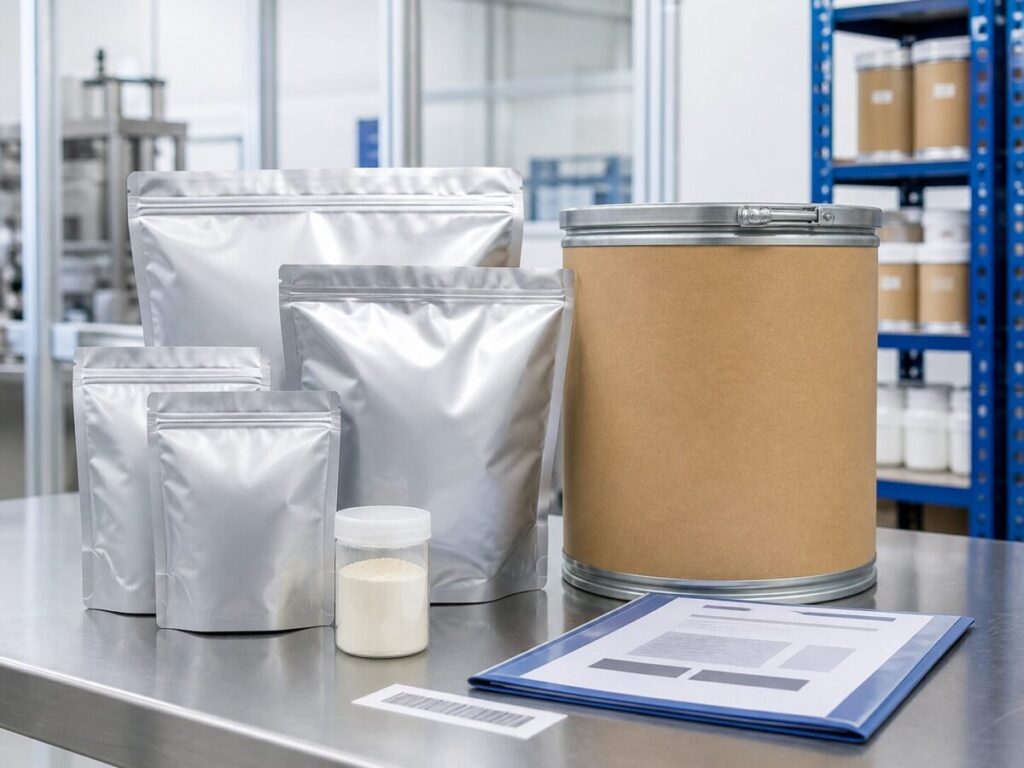
- Packaging Specifications: Premium Urolithin A should be packaged in food-grade, double-layer polyethylene bags, sealed within durable cardboard drums or high-density fiber drums to protect against punctures and moisture contamination.
- Storage and Stability Conditions: Review the supplier’s recommended storage conditions. Urolithin A powder is stable when stored in airtight containers, away from direct heat, moisture, and light. Request real-time or accelerated stability data to justify the stated shelf-life or retest period.
Watch for Red Flags Before Payment
When sourcing ingredients for products intended for cellular or mitochondrial health research applications, identifying supply chain risks early can prevent costly quality issues. Be alert to these key warning signs during the vetting process:
- Pricing Well Below Market Averages: If a vendor’s quote is significantly lower than competing offers, it may indicate compromised purity, industrial-grade synthesis, or adulteration with unrefined intermediates.
- Refusal to Share Analytical Methodology: Reputable suppliers will provide HPLC conditions, column details, and mobile phase specifications to allow your QC laboratory to replicate their results.
- Inconsistent Corporate Documentation: Be cautious if the entity on the invoice does not match the company name listed on the COA, SDS, or manufacturing facility registration.
- High-Pressure Sales Tactics: Avoid suppliers who demand immediate wire transfers by claiming inventory shortages, especially if they hesitate to provide pre-shipment samples or technical documentation.
- Exaggerated Clinical Claims: Suppliers who use unvetted consumer supplement language or claim their raw material cures or reverses aging should be evaluated carefully. Technical suppliers focus on material science, chemical identity, and adherence to research on mitochondrial biomarkers and muscle function.
Final Supplier Verification Checklist
Use this concise operational checklist before finalizing your procurement decisions:
- [ ] Corporate Verification: Confirmed the supplier’s identity, physical location, and manufacturing or distribution role.
- [ ] Technical Specification Alignment: Verified that the raw material specification sheet meets regulatory limits for purity, heavy metals, residual solvents, and microbial parameters.
- [ ] Batch-Specific COA Review: Evaluated a lot-specific COA containing numerical test values and a valid QC release signature.
- [ ] Analytical Data Inspection: Reviewed raw HPLC/UHPLC chromatograms to confirm clear peak resolution and appropriate baseline integration.
- [ ] Pre-Shipment Testing: Requested a pre-shipment sample, completed internal or third-party laboratory verification, and retained a reference sample.
- [ ] Regulatory Dossier Collection: Compiled and filed the SDS, Allergen Statement, Non-GMO declaration, and Residual Solvent certifications.
- [ ] Logistics and Storage Clarification: Finalized terms for MOQ, lead times, packaging integrity, and specific storage requirements.
Work With Nutrition BioTech for Urolithin A Bulk Powder Projects
Partnering with a transparent, quality-focused supplier simplifies the procurement process. Nutrition BioTech provides technical and sourcing support for advanced nutraceutical ingredient portfolios, helping brands navigate the complexities of raw material selection.
Our verification-first approach ensures your procurement and QA teams receive comprehensive documentation, including detailed specification sheets, lot-specific Certificates of Analysis, and transparent analytical data. By prioritizing clear communication regarding HPLC protocols, material specifications, and regulatory documentation, we help you protect your supply chain and build a solid foundation for your product formulations. Contact our technical team today to request a pre-shipment sample or review our compliance documentation for your next project.