
Let’s be honest—finding the right Urolithin A supplier isn’t just about price quotes and certificates. It’s a strategic decision that can make or break your product, your brand reputation, and your long-term growth.
If you’re in nutraceuticals, pharmaceuticals, or functional foods, you already know: Urolithin A is one of the most promising mitochondrial health ingredients on the market. But here’s the catch—not all suppliers are created equal.
So how do you separate the real partners from the risky vendors?
Let’s break it down.
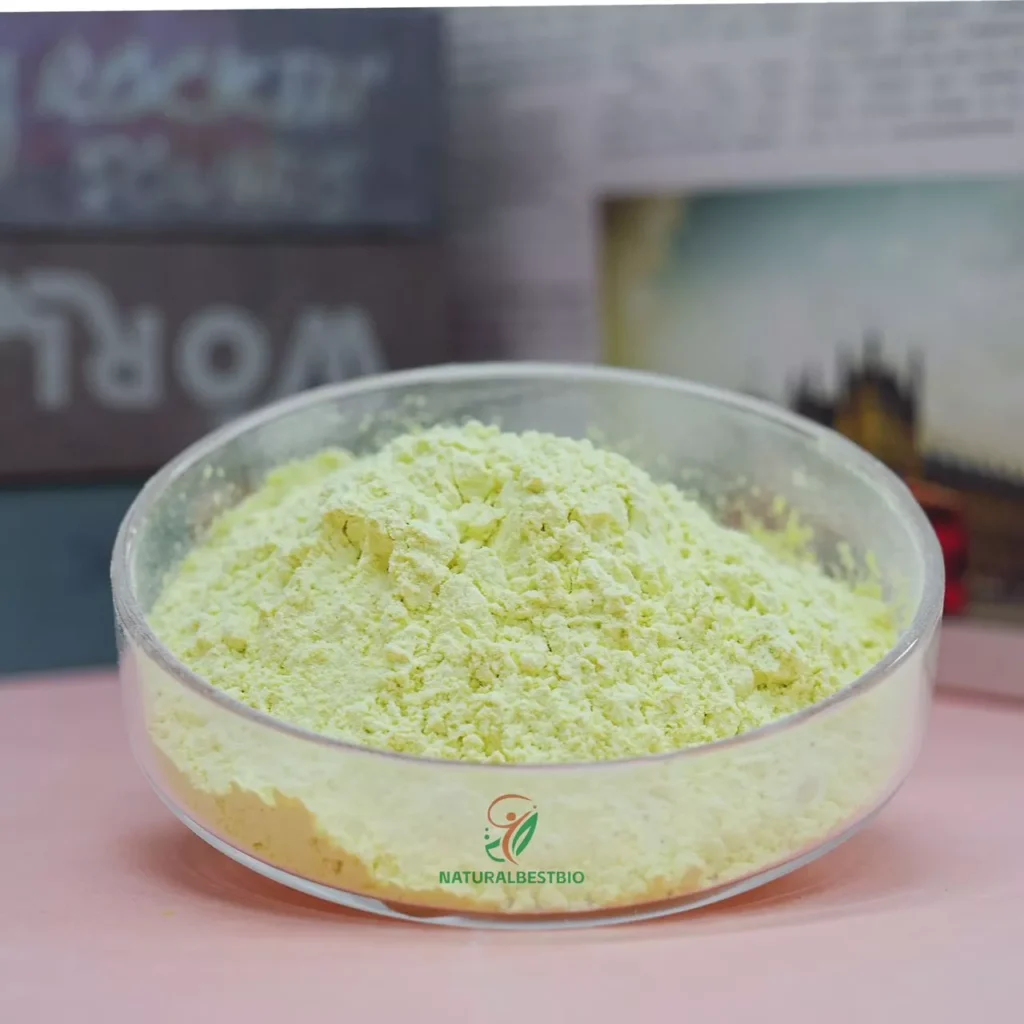
1. Why “High-Purity” Isn’t Just a Number – It’s a Biological Guarantee in Urolithin A Supply
When suppliers say “98% purity,” it sounds impressive, right? But let’s dig deeper.
Purity vs Bioactivity – What Actually Matters?
Think of Urolithin A like fuel for your body’s mitochondria. Would you fill a race car with contaminated fuel just because it’s cheaper? Of course not.
High-purity Urolithin A isn’t just a chemical metric—it’s a biological promise.
- Higher purity = better mitochondrial activation
- Lower impurities = reduced risk of side effects
- Cleaner profile = more consistent results across batches
Compared to lower-grade alternatives, high-purity Urolithin A is:
- Stronger in biological performance
- Safer for long-term consumption
- More reliable in formulation
The Hidden Danger of “Good Enough” Purity
Here’s where many brands get burned.
A supplier offers 95% purity at a lower price. Sounds like a bargain… until:
- Stability issues appear
- Bioavailability drops
- Clinical claims become harder to support
Suddenly, your “cheaper” ingredient becomes more expensive due to reformulation and delays.
Analogy Time
Choosing purity is like choosing between:
- Filtered drinking water (high purity)
- Tap water with unknown contaminants (lower purity)
Both hydrate—but only one builds trust.
2. Stable Supply – The Undervalued Killer of Product Launches in Urolithin A Sourcing
You can have the best formula in the world—but if your supplier can’t deliver, you’re stuck.
Why Supply Stability Matters More Than Price
Let’s say your product is ready to launch. Marketing campaigns are live. Influencers are posting.
Then your supplier says:
“Sorry, production delay. 8–12 weeks.”
That’s not just inconvenient—it’s catastrophic.
Compared to unstable suppliers, reliable ones are:
- Faster in lead times
- Stronger in forecasting accuracy
- Better at handling demand spikes
Common Causes of Supply Instability
- Limited fermentation capacity
- Poor raw material sourcing
- Weak logistics networks
- Over-promising sales teams
What Stable Supply Looks Like
A strong Urolithin A supplier will have:
- Multiple production lines
- Backup raw material sources
- Transparent inventory tracking
- Realistic lead times
The Real Cost of Instability
Delays don’t just cost money—they cost:
- Retail shelf space
- Consumer trust
- Competitive advantage
Compared to stable supply chains, unstable ones are more expensive in the long run, even if the upfront cost looks lower.
3. The 4 Pillars of a Right Urolithin A Supplier (Original Framework)
Let’s build a framework you can actually use.
Pillar 1: Scientific Credibility
Does the supplier understand Urolithin A beyond manufacturing?
Look for:
- Clinical study involvement
- Mechanism-of-action knowledge
- Regulatory awareness
Compared to generic ingredient traders, science-driven suppliers are:
- Better at supporting claims
- Stronger in regulatory compliance
Pillar 2: Manufacturing Excellence
This is where quality becomes real.
Ask:
- Is production fermentation-based or synthetic?
- Are GMP standards followed?
- Is batch consistency validated?
Fermentation-based production is often:
- More natural
- Better tolerated
- Sometimes more expensive, but worth it
Pillar 3: Supply Chain Reliability
We covered this—but it’s worth repeating.
Reliable suppliers are:
- Faster in delivery
- Stronger in crisis management
- Less risky during global disruptions
Pillar 4: Transparency & Communication
If a supplier avoids questions, that’s your answer.
Great suppliers:
- Share COAs openly
- Provide stability data
- Communicate delays early
Compared to opaque vendors, transparent ones are:
- Safer
- More trustworthy
- Better partners long-term
4. 7 Red Flags That Instantly Disqualify a Urolithin A Supplier
Let’s get blunt—some suppliers should be avoided immediately.
Red Flag Breakdown
| Red Flag | Why It’s Dangerous | Impact on Your Business |
|---|---|---|
| Unrealistically low pricing | Likely low purity or shortcuts | Product failure risk |
| No third-party testing | No validation | Regulatory issues |
| Inconsistent COAs | Poor batch control | Brand damage |
| Long, vague lead times | Weak production planning | Launch delays |
| No clinical backing | Weak scientific credibility | Marketing limitations |
| Poor communication | Hidden risks | Operational chaos |
| No traceability | Unknown sourcing | Safety concerns |
Quick Reality Check
If a supplier is:
- Cheaper, but unclear
- Faster, but inconsistent
- Flexible, but undocumented
That’s not a deal—it’s a liability.
5. The Supplier Audit Template – Questions You Must Ask (Printable Checklist)
Think of this as your due diligence toolkit.
Supplier Audit Checklist
| Category | Key Question | What a Good Answer Looks Like |
|---|---|---|
| Purity | What is the verified purity level? | ≥98% with third-party validation |
| Production | What method is used? | Controlled fermentation preferred |
| Stability | Do you provide stability data? | Yes, with shelf-life validation |
| Supply | What is your monthly capacity? | Clearly defined and scalable |
| Compliance | Are you GMP certified? | Certified with documentation |
| Testing | Do you use third-party labs? | Yes, consistently |
| Traceability | Can you track raw materials? | Full traceability system |
| Lead Time | What is your delivery timeline? | Transparent and realistic |
Pro Tip
Don’t just ask questions—verify answers.
Compared to surface-level audits, deep audits are:
- Better at risk prevention
- Stronger in long-term ROI
6. Case Study – How a Sports Nutrition Brand Avoided a 6-Month Urolithin A Crisis
Let’s tell a real-world story.
The Situation
A mid-sized sports nutrition brand was preparing to launch a mitochondrial performance supplement featuring Urolithin A.
They chose a supplier based on:
- Lower price
- Fast initial delivery promises
The Problem
Three months in:
- Batch inconsistencies appeared
- Delivery delays increased
- COAs didn’t match earlier samples
The brand faced a potential 6-month delay.
The Turning Point
They switched to a premium supplier that offered:
- Verified high-purity Urolithin A
- Stable production capacity
- Transparent communication
The Outcome
Compared to their original supplier, the new partner was:
- More expensive upfront
- But faster in recovery
- Stronger in consistency
Result:
- Launch delay reduced to 6 weeks
- Product performance improved
- Customer trust maintained
Lesson Learned
Cheaper suppliers are often:
- Slower in crisis response
- Weaker in quality control
Better suppliers are:
- More expensive initially
- But far more profitable long-term
7. Conclusion – Your Next Step Isn’t a Quote, It’s a Conversation
Here’s the truth most people overlook:
Choosing a Urolithin A supplier isn’t a transaction—it’s a partnership.
If you’re only comparing:
- Price per kilogram
- Lead time estimates
You’re missing the bigger picture.
Instead, ask:
- Can this supplier grow with me?
- Can they handle scale?
- Will they protect my brand reputation?
Because in this space:
- The better supplier is not always the cheapest
- The faster supplier is not always reliable
- The stronger supplier is the one who shows up when things go wrong
Your next step?
Don’t request a quote.
Start a conversation.
8. FAQ of Urolithin A Supplier
| Question | Answer |
|---|---|
| What is Urolithin A used for? | Urolithin A is primarily used for mitochondrial health, muscle function, and anti-aging applications. |
| What purity level is considered high-quality? | Typically ≥98% purity with third-party validation is considered high-quality. |
| Is fermentation-based Urolithin A better? | Yes, compared to synthetic versions, fermentation-based Urolithin A is often more natural and better tolerated, though sometimes more expensive. |
| How do I verify a supplier’s quality? | Request COAs, third-party testing results, GMP certifications, and stability data. |
| What is the typical lead time? | It varies, but reliable suppliers provide clear timelines (often 4–8 weeks depending on scale). |
| Are cheaper suppliers worth it? | Usually not—cheaper suppliers are often less consistent, less reliable, and more risky long-term. |
| What industries use Urolithin A? | Nutraceuticals, pharmaceuticals, functional foods, and sports nutrition industries widely use it. |
| Are there side effects? | Generally well-tolerated, but quality impurities from poor suppliers may increase risks. |
| What should I prioritize—price or quality? | Quality and stability should always come first. Price savings are meaningless if your product fails. |