
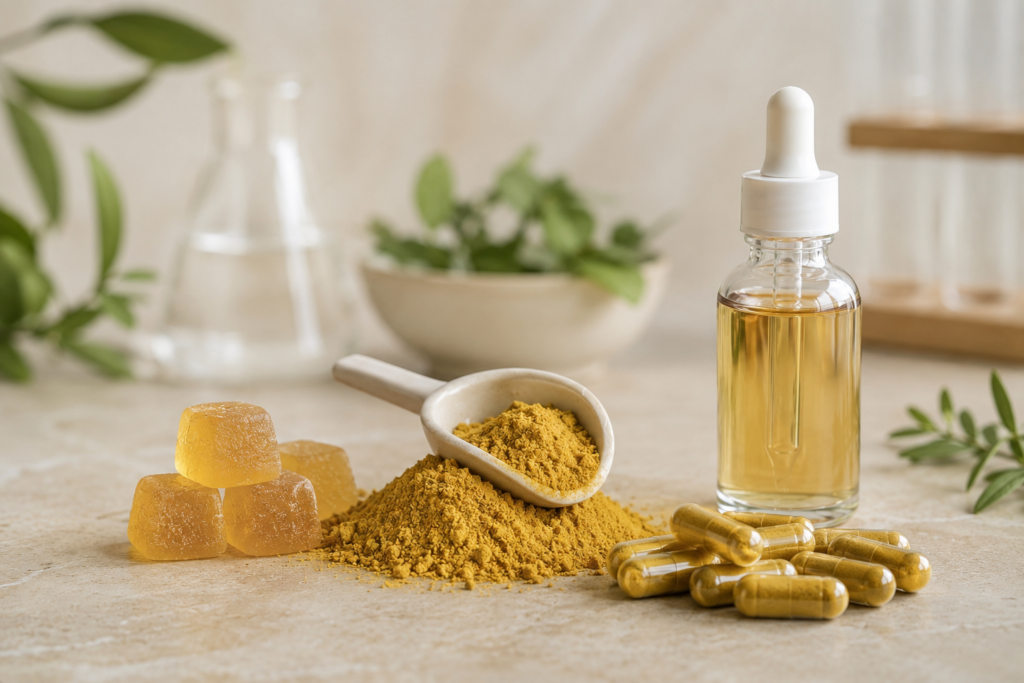
Berberine remains one of the most recognized botanical ingredients in the metabolic wellness category. Consumers search for berberine capsules, berberine drops, berberine gummies, berberine powder and even berberine patches as they look for more convenient or differentiated formats.
For supplement brands, this search interest creates a real content and product development opportunity. But a rising search trend does not automatically mean a format is technically feasible, commercially scalable or appropriate for dietary supplement positioning.
A berberine product must be evaluated through a B2B lens: active content, taste, solubility, dose load, stability, delivery format, supplier documentation and claim-safe language. The goal is not to promise drug-like effects. The goal is to build metabolic wellness products that are practical to manufacture, easy for consumers to use and supported by responsible positioning.
Naturalbestbio’s Berberine, Dihydroberberine 98% BerbaFlux and Berberine Pro-Micelle Fiber 50 give brands several routes to evaluate when developing berberine-based metabolic wellness formulas.
Why Berberine Delivery Formats Are Getting More Attention
Berberine already has strong consumer recognition. Many consumers associate it with metabolic wellness, body composition routines and healthy glucose metabolism already within the normal range. This awareness has expanded beyond traditional capsules into newer or more convenient format searches.
Common consumer-facing searches now include:
- Berberine capsules
- Berberine drops
- Berberine gummies
- Berberine powder
- Berberine complex
- Berberine patches
For brands, these searches can guide SEO topics and product education. However, they should not be treated as proof that every format is equally suitable.
Berberine has a bitter taste, a strong color and a relatively high dose load. It may also present solubility and dispersibility challenges in powders, beverages and liquid formats. These issues make delivery format selection especially important.
Brands should also keep claim language conservative. Berberine content should avoid claims such as “lowers blood sugar,” “controls diabetes,” “causes weight loss,” “treats obesity” or “works like GLP-1.” For claim review, the FDA’s guidance on Structure/Function Claims is a useful reference.
Berberine Capsules: Familiar, Scalable and Still the Baseline Format
Berberine capsules remain the most familiar format for metabolic wellness supplements. For many brands, capsules are still the easiest starting point because they are scalable, stable and compatible with a broad range of ingredient blends.
Capsules offer several advantages:
- Clear serving size
- Better taste masking than powders or liquids
- Established manufacturing process
- Easier active content control
- Compatibility with companion ingredients
- Lower development complexity than gummies or liquids
A capsule formula may combine berberine with ingredients such as chromium, cinnamon, alpha lipoic acid, fiber concepts or microbiome-focused ingredients. For GLP-1 era metabolic wellness positioning, brands may also connect berberine formulas with digestive comfort, daily routines and body composition support. Naturalbestbio’s Post-GLP-1 Companion & Metabolic Support Platform is a relevant internal resource for this angle.
The main limitation of capsules is dose load. Berberine can require relatively large serving amounts, which may increase capsule count. This can affect user experience and make differentiation more difficult.
B2B buyers should check:
- Active content
- Purity
- COA and assay method
- Particle size
- Flowability
- Capsule load
- Heavy metal and microbiology documents
- Batch consistency
Capsules may not be the newest format, but they remain the baseline that other berberine delivery formats should be compared against.
Berberine Powder and Stick Packs: Useful for Functional Drinks, but Taste Is the Main Barrier
Berberine powder and stick-pack formats are attractive for brands building daily metabolic wellness routines. A powder format can be blended with fiber, electrolytes, botanicals, polyphenols or postbiotic concepts. It may also fit a morning drink, meal companion or metabolic support sachet.
However, berberine powder is challenging.
The main formulation issues include:
- Bitter taste
- Strong color
- Limited solubility
- Sedimentation
- Gritty mouthfeel
- Interaction with flavors and acids
- Compatibility with fiber systems
- Serving size limitations
A powder format must be tested in the real use environment. It is not enough to check the raw material specification. Brands need prototype taste screening, dispersibility testing and stability review in the final formula matrix.
This is where upgraded delivery systems or complexed formats may be useful. Naturalbestbio’s Berberine Pro-Micelle Fiber 50 is positioned as an improved-solubility berberine platform for metabolic wellness formats. For brands evaluating dry powders or stick packs, this type of ingredient platform can support a more modern formulation story.
The positioning should remain careful. Brands can discuss solubility, format fit, dry powder compatibility and routine-friendly delivery. They should not claim that a powder format guarantees superior clinical outcomes.
Berberine Drops and Liquid Formats: Convenient, but Stability and Flavor Need Early Testing
Berberine drops and liquid formats are gaining attention because they feel convenient and modern. Drops, shots and liquid concentrates can look attractive in direct-to-consumer product concepts.
For formulation teams, liquid berberine is usually more difficult than it appears.
Key technical questions include:
- What pH range keeps the formula stable?
- Does the berberine remain dispersed or dissolved?
- Does sediment appear over time?
- How strong is the bitter taste?
- What flavor system can mask it?
- Is microbial control adequate?
- Is the preservative system compatible?
- Does the formula interact with the bottle, cap or dropper?
- Can the active content remain consistent through shelf life?
Brands should not assume that a trending liquid concept can move directly into production. Berberine drops require early taste screening, accelerated stability review and packaging compatibility testing.
A liquid format can be considered, but it should be approached as a technical development project, not simply a marketing variation.
Berberine Gummies: Consumer-Friendly, but Dose Load Can Be Difficult
Berberine gummies may appeal to consumers who prefer chewable, convenient and less “pill-like” supplements. Gummies are especially attractive for brands that want to reach users who dislike capsules.
But berberine gummies create a difficult formulation tradeoff.
The main challenges are:
- High active loading
- Bitter taste masking
- Heat exposure during gummy processing
- Color impact
- Texture stability
- Water activity
- Sugar-free system compatibility
- Realistic serving size
A gummy may be consumer-friendly, but it has limited space for active ingredients. If the target berberine serving requires too much active material, the gummy may become too large, too bitter or too difficult to stabilize.
Brands should also consider whether a gummy can deliver the intended positioning without making claims that exceed dietary supplement boundaries. “Supports metabolic wellness” or “supports daily metabolic routines” is safer than weight-loss or disease-related language.
For many brands, capsules or upgraded powder platforms may be more practical than gummies, depending on the target dose and user experience.
Berberine Patches: A Rising Search Trend, but Brands Should Be Careful
Berberine patches are appearing in search trends, but supplement brands should approach this format very carefully.
A search trend does not prove transdermal feasibility. It also does not resolve regulatory classification, substantiation requirements or claim risk. Patch products can move closer to drug-like positioning if they imply transdermal delivery, appetite effects, blood sugar control or weight-loss outcomes.
For B2B teams, berberine patches should be treated as a market signal rather than an automatic product direction.
Questions brands should ask include:
- Is there credible substantiation for the delivery route?
- What regulatory category would the product fall into?
- Are the claims structure/function compliant?
- Is the active content measurable and consistent?
- Does the patch imply drug-like action?
- Can the product be marketed without weight-loss or disease claims?
Naturalbestbio is better positioned to support ingredient-based metabolic wellness formulas, powder platforms, capsule formats and premium berberine-related raw materials than to endorse unverified patch claims.
Brands can monitor patch searches, but they should be cautious before building a product strategy around them.
Dihydroberberine and Berberine Complexes: When Brands Want a Premium Bioavailability Story
Some brands want a more premium berberine story than a standard capsule. This is where dihydroberberine and berberine complexes may become relevant.
Dihydroberberine is often positioned as a bioavailability-focused alternative to standard berberine. It may fit lower-dose, premium metabolic wellness formulas where capsule burden and differentiation matter.
Naturalbestbio’s Dihydroberberine vs Berberine page can support brands comparing these two directions.
Berberine complexes may also help brands address formulation issues such as solubility, dispersibility, capsule burden or powder compatibility. The key is to evaluate the actual technical data, not only the marketing language.
For any premium berberine format, buyers should check:
- Assay method
- Purity
- Active content
- Stability data
- Batch-specific COA
- Format compatibility
- Taste and solubility profile
- Supplier documentation
- Cost-in-use
For research background, product teams can review PubMed literature on berberine and metabolic health and dihydroberberine. These resources should support internal understanding, not be used to justify disease claims.
How to Choose the Right Berberine Format for a Metabolic Wellness Product
Each berberine delivery format has a different role. The best choice depends on product positioning, serving size, manufacturing constraints and user experience.
| Format | Best For | Main Advantage | Main Risk |
|---|---|---|---|
| Capsules | Standard metabolic wellness formulas | Scalable, stable, familiar | Capsule burden and limited differentiation |
| Powder / Stick Pack | Drink mixes and fiber blends | Routine-friendly and blendable | Bitter taste and solubility |
| Liquid / Drops | Convenience concepts | Easy-use positioning | pH, flavor and stability |
| Gummies | Consumer-friendly formats | High acceptance | Dose load, heat and taste |
| Patches | Trend monitoring | Novelty | Regulatory and substantiation risk |
| Dihydroberberine | Premium low-dose concepts | Bioavailability story | Cost and documentation needs |
A brand developing a berberine product should start with the consumer use case, then test whether the format can support the required active amount, claim language and shelf-life expectations.
What to Check When Sourcing Berberine Ingredients
Berberine sourcing should go beyond price comparison. The ingredient must match the finished product format and documentation requirements.
A practical sourcing checklist includes:
- COA and assay method
- Active content
- Purity
- Berberine HCl or other form identity
- Dihydroberberine identity, if applicable
- Solubility and dispersibility
- Taste profile
- Particle size
- Flowability
- Stability data
- Capsule, gummy, powder or liquid compatibility
- Heavy metals
- Microbiology
- MOQ and lead time
- Sample availability
- Regulatory documents
Brands should also evaluate compatibility with related metabolic wellness ingredients such as fiber, chromium, cinnamon, alpha lipoic acid, Akkermansia or postbiotic concepts. Naturalbestbio’s Akkermansia Muciniphila may be relevant for brands building gut-metabolism or post-GLP-1 companion formulas.
Claim-Safe Positioning for Berberine Products
Berberine sits close to sensitive categories such as blood sugar, weight management and metabolic health. That makes claim review especially important.
Suitable language may include:
- Supports metabolic wellness
- Supports healthy glucose metabolism already within the normal range
- Supports daily metabolic routines
- Supports body composition routines
- Designed for metabolic wellness formulas
- Format-ready berberine ingredient strategy
Avoid language such as:
- Lowers blood sugar
- Controls diabetes
- Works like GLP-1
- Causes weight loss
- Treats obesity
- Replaces medication
- Burns fat
- Clinically proven for diabetes, unless legally reviewed and fully substantiated
Brands can also review FDA guidance on Label Claims for Food & Dietary Supplements when preparing product pages, labels or marketing copy.
Conclusion
Berberine continues to be a high-interest ingredient for metabolic wellness brands, but delivery format selection should be driven by technical feasibility rather than trend-chasing.
Capsules remain familiar, scalable and practical. Powder and stick-pack formats can support daily routine products but require serious taste and solubility work. Liquid drops may be convenient but need early pH, flavor and stability testing. Gummies are consumer-friendly but can struggle with dose load, bitterness and heat exposure. Patches should be treated cautiously because of regulatory and substantiation concerns.
For brands seeking differentiation, dihydroberberine and berberine complex platforms may offer more advanced positioning, provided the supplier can support the ingredient with COA, assay data, stability information and format compatibility review.
To evaluate berberine delivery formats for your next metabolic wellness product, explore Naturalbestbio’s Berberine, Berberine Pro-Micelle Fiber 50 and Dihydroberberine 98% BerbaFlux.