Dihydroberberine (DHB) supplier specification
Nutrition BioTech is a bulk dihydroberberine ingredient supplier and manufacturer, supplying DHB powder at 98% minimum by HPLC (CAS 483-15-8), produced by controlled reduction of berberine, for B2B nutraceutical and dietary-supplement formulation.
Every lot ships with a Certificate of Analysis stating identity, HPLC assay and the assay basis, from an ISO 22000 and FSSC 22000 certified quality system. Samples, specifications and COAs are available on request for formulation trials.
| Ingredient name | Dihydroberberine (DHB) |
|---|---|
| Synonyms | DHB; 7,8-dihydroberberine; reduced berberine; protoberberine-class isoquinoline alkaloid |
| CAS number | 483-15-8 |
| Machine-readable identifiers | InChIKey FZAGOOYMTPGPGF-UHFFFAOYSA-N · PubChem CID 10217 |
| Molecular formula | C20H19NO4 |
| Molecular weight | 337.37 g/mol |
| Assay / purity | 98% minimum by HPLC; other grades available on request. |
| Production route | Controlled reduction of berberine (itself obtained from Phellodendron and Coptis botanical sources). Route and starting material are stated in the lot documentation. |
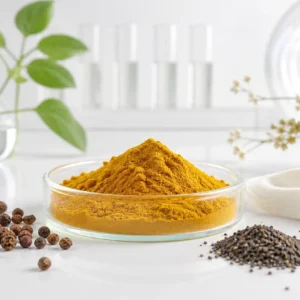
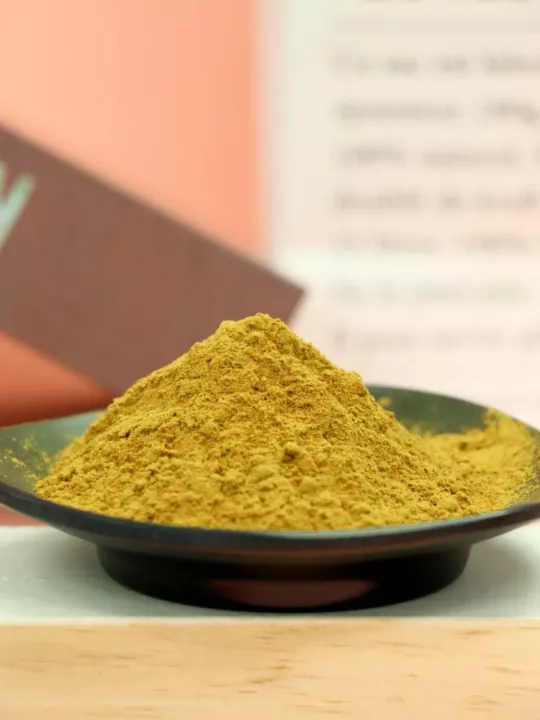
| Appearance | Yellow to yellow-brown crystalline powder |
| Solubility | Practically insoluble in water; soluble in methanol, ethanol and DMSO. DHB is oxidation-sensitive; protective packaging and handling guidance are supplied with the specification. |
| Typical applications | Capsules, tablets and low-dose powder blends for B2B dietary-supplement programs; stability-focused formats reviewed per project. |
| Documentation | Download public specification sheet Public sheet prepared from the current product-page specification block; not a batch-specific Certificate of Analysis. Lot-specific COA and supporting records are available for qualified buyer review when appropriate. |
| Quality system | ISO 22000:2018, FSSC 22000 and HACCP based quality system, GMP-aligned manufacturing; certificates available on request. |
| Supplier | Nutrition BioTech, 1601 W. Mission Blvd, Suite 103 (DL#29), Pomona, CA 91766, United States |
DHB Pro-Stable / stability-first product route
DHB Pro-Stable: the berberine upgrade has to survive the launch path.
Dihydroberberine can give metabolic-wellness brands a premium upgrade story, but the buyer review should not stop at a single headline. The real launch questions are stability, bitterness, color, packaging, sensory direction and technical file readiness.
Buyer reframe
Getting attention is easy. Passing formulation review is harder.
Many DHB products compete on headline bioavailability. A serious B2B launch has to go further: how the material behaves in sachets, powders, capsules or chewables; whether bitterness and color can be managed; what packaging route is realistic; and which files R&D, QA and regulatory teams need before launch planning.
Stability
Review the intended format, storage condition, water activity direction and packaging assumptions before choosing the finished-product route.
retention reviewpackaging
Taste and color
Bitterness, yellowing, appearance and sensory direction matter early, especially for powders, sachets, gummies and chewables.
bitternesscolor drift
File readiness
DHB should move with a clear technical review path: COA/spec, assay, safety files, allergen/GMO/vegan statements as applicable, and launch-language support.
COA/specclaim boundary
Best-fit applications
Where DHB Pro-Stable fits
- Post-GLP-1 companion sachets paired with protein, fiber, creatine or gut-metabolic support ingredients.
- Premium berberine-family upgrade concepts where the brand needs a sharper technical reason to exist.
- Powder and stick-pack formats where stability, bitterness, color and packaging need early review.
- Capsule or tablet lines where DHB is used as the technical upgrade while Berberine Pro-Micelle supports the broader platform story.
DHB launch review checklist
What a serious buyer should review before choosing a DHB route
Material identity
- DHB assay and specification.
- Source identity and production route discussion where available.
- COA and method notes for buyer review.
Format risk
- Stability discussion for the target dosage form.
- Bitterness, appearance and color notes.
- Packaging recommendation for the intended route.
Commercial readiness
- Sample and application review route.
- QA / regulatory file package as applicable.
- Supplement-category launch wording and claim-boundary support.
Connected route
Use DHB Pro-Stable as the technical upgrade, then build the platform around the formula job.
DHB Pro-Stable is strongest when the buyer needs a premium berberine-family route with stability, taste, color, packaging and file review. Berberine Pro-Micelle can carry the broader routine-fit and dispersion discussion.
Together, they give Post-GLP-1 companion concepts a product-first architecture: material selection first, platform logic second, application and file package third.
FAQ for brand teams
DHB Pro-Stable FAQ
Is DHB only an absorption story?
No. For a serious product launch, the better question is whether the ingredient route can support the target format, taste, color, packaging, file package and supplement-category language.
Which formats should be reviewed first?
Capsules and tablets are the simpler starting point. Sachets, powders, gummies and chewables need earlier review of bitterness, color, water exposure, processing route and packaging direction.
What should a buyer request first?
Ask for sample availability, COA/spec, assay method, stability discussion for the intended format, sensory direction, packaging recommendation and file-package support.
Do not launch DHB on a headline alone.
Nutrition BioTech can review DHB Pro-Stable against the target format, stability route, sensory direction, sample path, file package and public claim boundary before your brand commits to a formula.
Specification FAQ
What is the CAS number for Dihydroberberine?
The CAS number for Dihydroberberine is 483-15-8. The molecular formula is C20H19NO4 and the molecular weight is 337.37 g/mol. Machine-readable identifiers: InChIKey FZAGOOYMTPGPGF-UHFFFAOYSA-N · PubChem CID 10217.
What purity is Dihydroberberine supplied at, and by which method?
98% minimum by HPLC; other grades available on request.
Is Dihydroberberine soluble in water?
Practically insoluble in water; soluble in methanol, ethanol and DMSO. DHB is oxidation-sensitive; protective packaging and handling guidance are supplied with the specification.
How is Dihydroberberine produced and where does it come from?
Controlled reduction of berberine (itself obtained from Phellodendron and Coptis botanical sources). Route and starting material are stated in the lot documentation.
Published research context
Dihydroberberine, the reduced form of berberine, has a focused peer-reviewed literature on absorption, interconversion and bioanalysis. The studies below are provided as technical context for formulators evaluating this raw material. These entries summarise what the cited publications report. They are not claims about Nutrition BioTech material, and no health, therapeutic or cosmetic outcome is claimed or implied for any finished product. Buyers are responsible for the claims they make on their own labels and for confirming what is permitted in their market.
- Microbial reduction, absorption and solution instabilityReported that nitroreductases of the gut microbiota reduce berberine to dihydroberberine, that dihydroberberine showed an intestinal absorption rate about 5-fold that of berberine in animal experiments, and that dihydroberberine was unstable in solution and reverted to berberine in intestinal tissue through a non-enzymatic oxidation. The instability and reversion behaviour of the reduced form is directly relevant to its handling, packaging and formulation.Feng R, Shou JW, Zhao ZX, He CY, et al. Sci Rep. 2015;5:12155. PMID 26174047. DOI 10.1038/srep12155. source
- Human absorption kinetics of oral dihydroberberineIn a randomized, double-blind, crossover pilot trial in five adult males, measured plasma berberine after single 100 mg and 200 mg doses of dihydroberberine against a 500 mg dose of berberine: Cmax was 3.76 ± 1.4 ng/mL for 100 mg dihydroberberine versus 0.4 ± 0.17 ng/mL for 500 mg berberine, and AUC was 284.4 ± 115.9 versus 42.3 ± 17.6 ng/mL x 120 min. This is a pharmacokinetic study in volunteers, not raw-material release testing; identity and assay of supplied powder follow the methods stated in our specification and COA.Moon JM, Ratliff KM, Hagele AM, Stecker RA, et al. Nutrients. 2021;14(1):124. PMID 35010998. DOI 10.3390/nu14010124. source
- Metabolite profiling in Caco-2 cells and human volunteersUsing UHPLC-HRMS over a 24 h period in nine volunteers and in Caco-2 cells, reported that dihydroberberine administration gave higher blood concentrations of berberine and most berberine metabolites, while a micellar berberine formulation gave a higher proportion of unmetabolized berberine, and that individual metabolites followed distinct metabolic pathways.Chang C, Roh YS, Du M, Kuo YC, et al. Int J Mol Sci. 2024;25(11):5625. PMID 38891813. DOI 10.3390/ijms25115625. source
- Transdermal pharmacokinetics with validated LC-MS/MS bioanalysisDescribed transdermal formulations of berberine and dihydroberberine together with an LC-MS/MS method validated according to FDA bioanalytical guidelines, and reported in rats that bioavailability ranked by AUC0-8 as transdermal dihydroberberine above transdermal berberine, with both well above oral berberine. The matrix of this work is rat plasma, not raw-material assay.Buchanan B, Meng Q, Poulin MM, Zuccolo J, et al. PLoS One. 2018;13(3):e0194979. PMID 29579096. DOI 10.1371/journal.pone.0194979. source
Related ingredient pages
For buyer evaluation, compare this guide with the closest Nutrition BioTech ingredient pages and sourcing route.