Urolithin A (pomegranate-derived metabolite) supplier specification
Nutrition BioTech is a bulk Urolithin A ingredient supplier and manufacturer, supplying the pomegranate-derived metabolite Urolithin A at 98% minimum by HPLC (CAS 1143-70-0). Current production is by fermentation. The production route for each lot is stated on the Certificate of Analysis.
Every lot ships with a Certificate of Analysis stating identity, HPLC assay and the assay basis, from an ISO 22000 and FSSC 22000 certified quality system. Samples, specifications and COAs are available on request for formulation trials.
| Ingredient name | Urolithin A (pomegranate-derived metabolite) |
|---|---|
| Synonyms | 3,8-dihydroxy-6H-dibenzo[b,d]pyran-6-one; 3,8-dihydroxybenzo[c]chromen-6-one; UA |
| CAS number | 1143-70-0 |
| Machine-readable identifiers | InChIKey RIUPLDUFZCXCHM-UHFFFAOYSA-N · PubChem CID 5488186 |
| Molecular formula | C13H8O4 |
| Molecular weight | 228.20 g/mol |
| Assay / purity | 98% minimum by HPLC; other grades available on request. |
| Production route | Current production is by fermentation. The production route for each lot is stated on the Certificate of Analysis. |
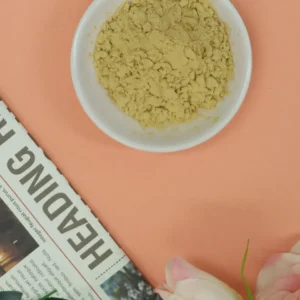
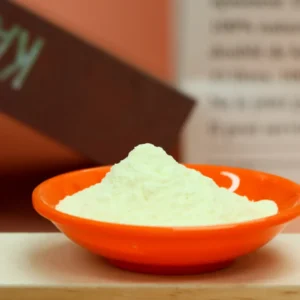
| Appearance | Off-white to light-beige powder |
| Solubility | Practically insoluble in water; soluble in DMSO and in ethanol. Micronized and dispersible concepts can be discussed per project. |
| Typical applications | Capsules, tablets, sachets, and cosmetic or topical concepts for B2B programs. |
| Documentation | Download public specification sheet Download Urolithin A 98% public specification sheet Public sheet prepared from the current product-page specification block; not a batch-specific Certificate of Analysis. Lot-specific COA and supporting records are available for qualified buyer review when appropriate. |
| Quality system | ISO 22000:2018, FSSC 22000 and HACCP based quality system, GMP-aligned manufacturing; certificates available on request. |
| Supplier | Nutrition BioTech, 1601 W. Mission Blvd, Suite 103 (DL#29), Pomona, CA 91766, United States |
Urolithin A Specification Limits And Analytical Methods
Every specification below is the limit carried on our published product specification sheet, with the analytical method stated for each item.
| Test item | Specification | Method |
|---|---|---|
| Purity | NLT 98.0% | HPLC |
| Purity | NLT 98.0% | ¹H NMR |
| Assay | NLT 98.0% | HPLC |
| Identification | ¹H NMR spectrum corresponds to reference standard | ¹H NMR |
| Identification | HPLC retention time corresponds to reference standard | HPLC |
| Appearance | Light yellow powder | Organoleptic |
| Odour and taste | Characteristic | Organoleptic |
| Water content | NMT 2.0% | USP <921> |
| Residue on ignition | NMT 0.5% | USP <281> |
| Bulk density (loose) | NLT 0.5 g/mL | USP <616> |
| Bulk density (tapped) | NLT 0.6 g/mL | USP <616> |
| Residual solvents | Within USP <467> limits | USP <467> |
| Heavy metals (total) | NMT 10 mg/kg | USP <233> |
| Lead | NMT 1.0 mg/kg | USP <233> |
| Arsenic | NMT 1.0 mg/kg | USP <233> |
| Cadmium | NMT 1.0 mg/kg | USP <233> |
| Mercury | NMT 0.1 mg/kg | USP <233> |
| Total plate count | NMT 1,000 cfu/g | USP <61> |
| Yeast and mould | NMT 100 cfu/g | USP <61> |
| E. coli | Negative in 25 g | USP <62> |
| Salmonella | Negative in 25 g | USP <62> |
- Purity is checked by both HPLC and ¹H NMR, and identity is checked against a reference standard by both NMR spectrum and HPLC retention time.
- Package: 20 kg/drum, fiber drum with inner plastic bag.
Method and limit block for buyer QA review. Batch-specific results, lot numbers, production dates and expiry dates are not published here.
Pomegranate-derived Metabolite
Pomegranate-derived metabolite for mitochondrial and premium longevity supplement concepts.
Why brands ask for it
Use this page to connect the pomegranate-derived metabolite to mitochondrial optimizer formulas, especially stacks with NAD, PQQ, CoQ10 or polyphenols. The strongest B2B story is formulation logic plus clear claim and IP boundaries.
Finished-product fit
Mitochondrial support, energy, longevity stack, postbiotic-metabolite wellness. The strongest conversations start with format, serving size, documentation, and how the material behaves in the intended formula.
What makes the sample useful
- Can be linked to NAD/PQQ/CoQ10 stacks
- Strong premium market acceptance
- Needs clear identity and regulatory positioning
Before the sample ships
- Confirm the material is Urolithin A (CAS 1143-70-0) and matches your specification.
- Confirm active marker, assay method, and specification range.
- Confirm which claims are permitted for your market, dosage form, and channel.
- Confirm the freedom-to-operate and patent position with your own legal review.
- Confirm the stability data and storage conditions you need for your formulation.
File Package
Ask for the material files that match your market, dosage form, and internal review process.
Available documents may include: COA / Specification / Allergen Statement / GMO Statement / Vegan Statement / Heavy Metals / Microbial Limits / Manufacturing Flow Chart / Residual Solvent / Country of Origin / Composition Statement.
Regulatory & Facility Support
Regulatory review notes for the target market can be provided. Nutrition BioTech does not hold and does not claim any GRAS notification or NDI notification for this material.
Facility and quality system support follows the same certificate set named in the specification table: ISO 22000:2018, FSSC 22000, HACCP and GMP. The holding entity for each certificate is named on the certificate and confirmed under buyer review.
Specification FAQ
What is the CAS number for Urolithin A?
The CAS number for Urolithin A is 1143-70-0. The molecular formula is C13H8O4 and the molecular weight is 228.20 g/mol. Machine-readable identifiers: InChIKey RIUPLDUFZCXCHM-UHFFFAOYSA-N · PubChem CID 5488186.
What purity is Urolithin A supplied at, and by which method?
98% minimum by HPLC; other grades available on request.
Is Urolithin A soluble in water?
Practically insoluble in water; soluble in DMSO and in ethanol. Micronized and dispersible concepts can be discussed per project.
Published research context
Urolithin A has a long peer-reviewed literature. The studies below are provided as technical context for formulators evaluating this raw material. These entries summarise what the cited publications report. They are not claims about Nutrition BioTech material, and no health, therapeutic or cosmetic outcome is claimed or implied for any finished product. Buyers are responsible for the claims they make on their own labels and for confirming what is permitted in their market.
- Preparative isolation and structural confirmationReported a two-step high-speed counter-current chromatography separation of urolithins from the intestinal metabolites of pomegranate ellagitannins, using n-hexane–ethyl acetate–methanol–acetic acid–water solvent systems. Each 100 mg injection of extract yielded 21 mg of urolithin A and 10 mg of urolithin B, HPLC analysis put the purity of both above 98.5%, and the structures were confirmed by high-resolution MS, NMR and single-crystal X-ray analysis.Zhao W, Wang Y, Hao W, Yang H, Song X, Zhao M, Peng S. J Chromatogr B Analyt Technol Biomed Life Sci. 2015;990:111–117. PMID 25864012. DOI 10.1016/j.jchromb.2015.03.024 — source
- Water solubility and liposomal encapsulation behaviourDescribed urolithin A as poorly water soluble and used its pH-dependent dissolution behaviour to load it into liposomes. The pH-driven preparation was reported to give lower particle size, lower polydispersity index and higher encapsulation efficiency than a thin-film dispersion preparation of the same material, together with better thermal, storage and in vitro digestion stability.Hu Y, Zhang L, Wei LF, Lu FY, Wang LH, Ding Q, Chen MS, Tu ZC. Int J Biol Macromol. 2023;253(Pt 7):127554. PMID 37865359. DOI 10.1016/j.ijbiomac.2023.127554 — source
- Validated UPLC–MS/MS quantification in plasmaReported a validated UPLC–MS/MS method for the simultaneous quantification of urolithin A and cyclosporine A, with a calibration range of 0.5–125 ng/mL for urolithin A, average R2 at or above 0.999, limits of quantification of 1–2.5 ng/mL across the plasma models examined, and a 6-minute run time. The matrix in that work is plasma, not a raw-material assay; identity and assay of supplied powder are established by the methods stated on our specification and COA.Heyns IM, Ganugula R, Kumar MNVR, Arora M. ACS Omega. 2025;10(5):4569–4579. PMID 39959077. DOI 10.1021/acsomega.4c08515 — source