Fenugreek Extract supplier specification
Nutrition BioTech is a bulk fenugreek extract ingredient supplier and manufacturer, supplying Trigonella foenum-graecum L. seed extract standardised to an agreed marker by HPLC or UV, produced by solvent extraction and purification, for B2B nutraceutical formulation.
Fenugreek is a multi-marker botanical, and the standardisation choice defines the material. The two commercial routes are saponin-standardised extract (steroidal or furostanolic saponins, typically by UV or gravimetric method) and 4-hydroxyisoleucine-standardised extract (by HPLC). They are not interchangeable in label space, cost or specification, so the marker, method and percentage are agreed per order and stated on the Certificate of Analysis.
| Ingredient name | Fenugreek Extract (Trigonella foenum-graecum L. seed extract) |
|---|---|
| Synonyms | Fenugreek seed extract; Trigonella foenum-graecum extract; methi seed extract |
| CAS number | Not applicable — multi-constituent botanical extract, identified by botanical source, plant part, extraction ratio and standardised marker rather than a single CAS number. The reference marker 4-hydroxyisoleucine carries CAS 55399-93-4 (C6H13NO3, 147.17 g/mol) where that standardisation is selected. |
| Botanical identity | Trigonella foenum-graecum L., Fabaceae; seed. Identity confirmed by macroscopic, TLC or HPLC fingerprint as agreed. |
| Standardisation | Standardised to an agreed marker — steroidal or furostanolic saponins by UV or gravimetric method, or 4-hydroxyisoleucine by HPLC. Marker, method and percentage are specified per order; grade options available on request. |
| Source / production route | Solvent extraction of cleaned fenugreek seed followed by concentration, purification and drying. Extraction ratio, solvent system and carrier are stated on the specification sheet. |
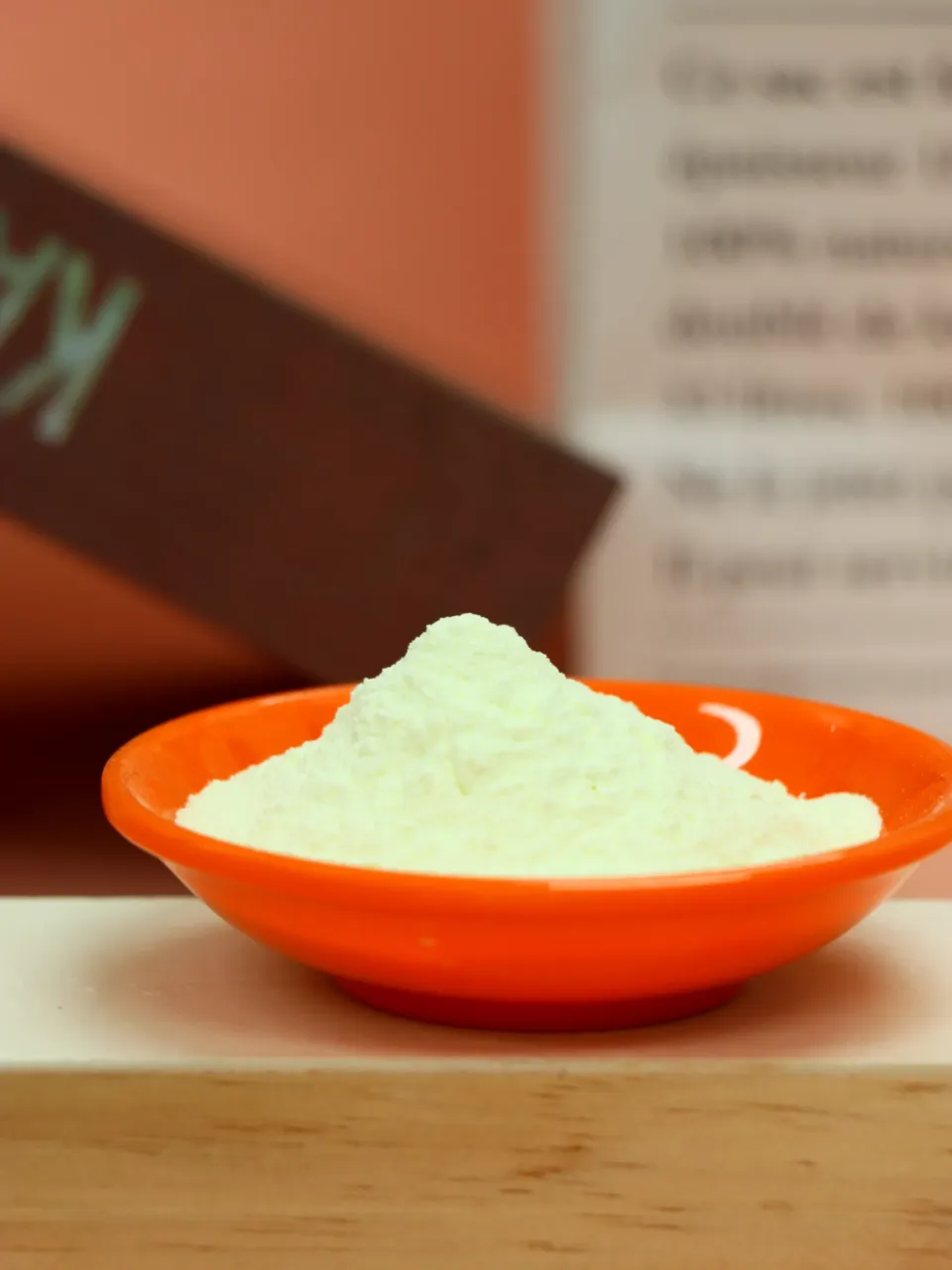
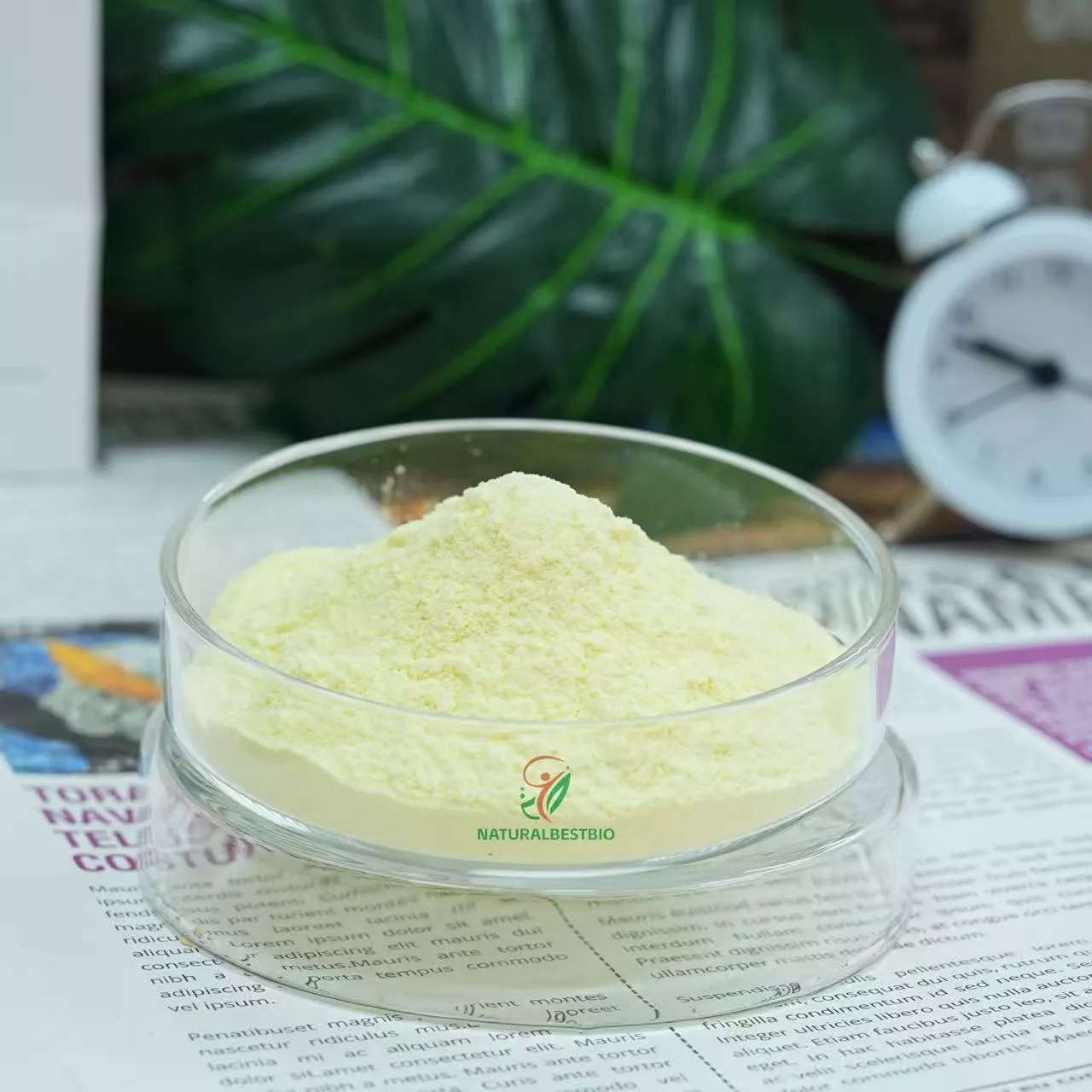
| Appearance | Light yellow to yellow-brown or brown powder, characteristic odour |
| Solubility | Partially soluble to dispersible in water depending on grade and carrier; solubility and taste or odour behaviour should be confirmed in the intended base, since fenugreek carries a pronounced sensory profile. |
| Typical applications | Capsules, tablets, powder blends and sachets for B2B nutraceutical manufacturing; commonly formulated alongside berberine, chromium and dietary fibre |
| Documentation | Download public specification sheet Public sheet prepared from the current product-page specification block; not a batch-specific Certificate of Analysis. Lot-specific COA and supporting records are available for qualified buyer review when appropriate. |
| Quality system | ISO 22000:2018, FSSC 22000, HACCP and GMP (certificates provided on request) |
| Supplier | Nutrition BioTech, 1601 W. Mission Blvd, Suite 103 (DL#29), Pomona, CA 91766, United States |
Fenugreek Extract
Fenugreek extract for metabolic, appetite and performance-support formulations.
Why brands ask for it
Fenugreek Extract can support several formulation directions, including metabolic wellness, appetite support and performance formulas. The page should clearly separate standardization options and intended product angle to avoid confusing buyers.
Finished-product fit
Metabolic support, appetite support, testosterone/libido, lactation/women's wellness depending on claim route. The strongest conversations start with format, serving size, documentation, and how the material behaves in the intended formula.
What makes the sample useful
- Multiple market angles
- Saponins or 4-hydroxyisoleucine standardization
- Pairing with berberine, chromium, fiber
Before the sample ships
- Confirm active marker, assay method, and specification range.
- Check taste, odor, and sensory fit before formula lock.
- Confirm ratio.
- Request allergen, GMO, vegan, and source statements.
- Match the material to the target capsule, tablet, sachet, gummy, or powder format.
File Package
Ask for the material files that match your market, dosage form, and internal review process.
Available documents may include: COA / Specification / Allergen Statement / GMO Statement / Vegan Statement / Heavy Metals / Microbial Limits / Manufacturing Flow Chart / Residual Solvent / Country of Origin / Composition Statement.
Regulatory & Facility Support
Regulatory review notes for the target market can be provided. Nutrition BioTech does not hold and does not claim any GRAS notification or NDI notification for this material.
Facility and quality system support follows the same certificate set named in the specification table: ISO 22000:2018, FSSC 22000, HACCP and GMP. The holding entity for each certificate is named on the certificate and confirmed under buyer review.
Specification FAQ
Does Fenugreek Extract have a CAS number?
Not applicable — multi-constituent botanical extract, identified by botanical source, plant part, extraction ratio and standardised marker rather than a single CAS number. The reference marker 4-hydroxyisoleucine carries CAS 55399-93-4 (C6H13NO3, 147.17 g/mol) where that standardisation is selected.
Is Fenugreek Extract soluble in water?
Partially soluble to dispersible in water depending on grade and carrier; solubility and taste or odour behaviour should be confirmed in the intended base, since fenugreek carries a pronounced sensory profile.
How is Fenugreek Extract produced and where does it come from?
Solvent extraction of cleaned fenugreek seed followed by concentration, purification and drying. Extraction ratio, solvent system and carrier are stated on the specification sheet.
Published research context
Fenugreek (Trigonella foenum-graecum) has a peer-reviewed standardisation and analytical literature. The studies below are provided as technical context for formulators evaluating this raw material. These entries summarise what the cited publications report. They are not claims about Nutrition BioTech material, and no health, therapeutic or cosmetic outcome is claimed or implied for any finished product. Buyers are responsible for the claims they make on their own labels and for confirming what is permitted in their market.
- Marker compound ranges across genotypes Measured diosgenin at 0.50-0.93%, trigonelline at 5.22-13.65 mg/g and 4-hydroxyisoleucine at 0.41-1.90% across 31 fenugreek genotypes grown under irrigated and non-irrigated conditions over two seasons, with genotype, environment and their interaction all significant at p < 0.001 for the levels of these markers. Coban F, Ozer H, Yilmaz B, Lan Y. Front Plant Sci. 2025;16:1562931. PMID 40196427. DOI 10.3389/fpls.2025.1562931. source
- Validated UPLC-MS/MS for three markers Reported a validated UPLC-MS/MS method for simultaneous quantification of trigonelline, 4-hydroxyisoleucine and diosgenin from a purified standardised Trigonella foenum-graecum extract, using positive electrospray ionisation with MRM transitions of m/z 138.14 > 94.63, 148.19 > 74.08 and 415.54 > 271.33 respectively. The application matrix of this work is rat plasma, not raw-material release testing; identity and assay of supplied extract follow the methods stated on our specification sheet and COA. Wadhwa G, Krishna KV, Taliyan R, Tandon N, Yadav SS, Banerjee D, Narwaria A, et al. Biomed Chromatogr. 2022;36(2):e5275. PMID 34738247. DOI 10.1002/bmc.5275. source
- Compositional change during germination measured Reported quality-controlled LC-ESI-MS/MS metabolomics of fenugreek seeds germinated in darkness for 72 hours, quantifying a rise of 33.5% in trigonelline and 33.3% in 4-hydroxyisoleucine relative to dormant seeds, alongside measured fold-changes in flavonoids and steroid saponins; an illustration that marker levels depend on the physiological state of the seed material. Gonda S, Szűcs Z, Plaszkó T, Cziáky Z, Kiss-Szikszai A, Sinka D, Bácskay I, Vasas G. Food Res Int. 2023;164:112347. PMID 36737938. DOI 10.1016/j.foodres.2022.112347. source