Berberine supplier specification
Nutrition BioTech is a bulk berberine ingredient supplier and manufacturer, supplying berberine hydrochloride powder at 97% minimum by HPLC (CAS 633-65-8), plant-derived from Phellodendron and Coptis botanical sources, including micellized Pro-Micelle formats, for B2B nutraceutical and dietary-supplement formulation.
Every lot ships with a Certificate of Analysis stating identity, HPLC assay and the assay basis, from an ISO 22000 and FSSC 22000 certified quality system. Samples, specifications and COAs are available on request for formulation trials.
| Ingredient name | Berberine (supplied as berberine hydrochloride) |
|---|---|
| Brand / platform name | BERBYNIA™ is the Nutrition BioTech brand name for our berberine micelle / Pro-Micelle ingredient route. The underlying ingredient identity and COA specifications remain stated by lot. |
| Synonyms | Berberine HCl; berberine chloride; berberine hydrochloride; protoberberine-class isoquinoline alkaloid |
| CAS number | 633-65-8 (berberine hydrochloride) |
| Machine-readable identifiers | InChIKey VKJGBAJNNALVAV-UHFFFAOYSA-M · PubChem CID 12456 |
| Molecular formula | C20H18ClNO4 (C20H17NO4 · HCl) |
| Molecular weight | 371.81 g/mol (hydrochloride) |
| Assay / purity | 97% minimum by HPLC (berberine hydrochloride). Micellized (Pro-Micelle) formats are specified per project; other grades available on request. |
| Production route | Botanical extraction and purification. Berberine is a protoberberine-class isoquinoline alkaloid; commercial material is typically obtained from Phellodendron and Coptis botanical sources. Botanical origin is stated in the lot documentation. |
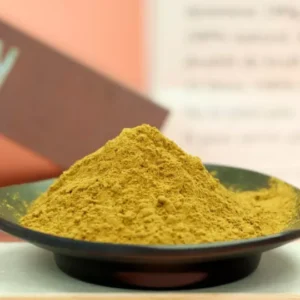
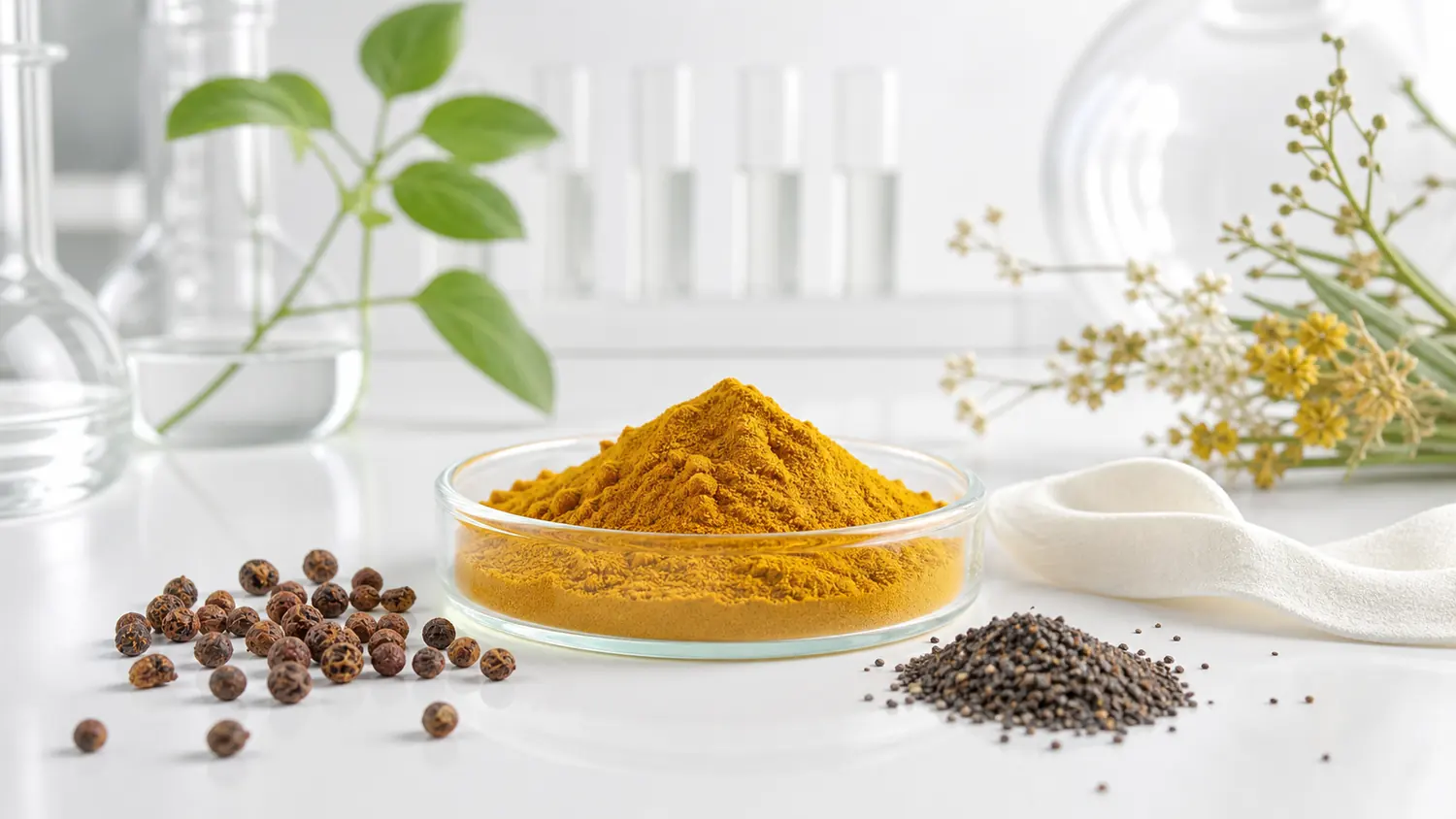
| Appearance | Yellow crystalline powder |
| Solubility | Slightly soluble in water at room temperature; more soluble in hot water and in dilute ethanol. Micellized formats are supplied for water-dispersible applications. |
| Typical applications | Capsules, tablets, sachets and stick packs, powder blends, and micellized liquid or powder concepts for B2B dietary-supplement programs. |
| Documentation | Certificate of Analysis (identity and HPLC assay with assay basis), specification sheet, heavy metals, microbiological, residual solvents, allergen and GMO statements; stability data available on request. |
| Quality system | ISO 22000:2018, FSSC 22000 and HACCP based quality system, GMP-aligned manufacturing; certificates available on request. |
| Supplier | Nutrition BioTech, 1601 W. Mission Blvd, Suite 103 (DL#29), Pomona, CA 91766, United States |
| Documentation | Download public specification sheet Public sheet prepared from the current product-page specification block; not a batch-specific Certificate of Analysis. Lot-specific COA and supporting records are available for qualified buyer review when appropriate. |
Berberine Pro-Micelle / product-first metabolic route
Berberine Pro-Micelle: make berberine work harder than a capsule label.
Berberine already has market awareness. The next buyer question is whether the ingredient can support a better product experience: dispersion, routine fit, capsule burden, sensory direction, sample review, file package and claim-safe post-GLP-1 companion positioning.
Market reframe
The market knows berberine. That is the opening and the trap.
Another high-dose berberine story is easy to ignore. A stronger B2B route starts with the material, then asks how it behaves in real formats: wetting, dispersion, bitterness, powder flow, daily routine fit, and whether the brand can explain the product without risky disease or drug language.
Ingredient first
Start with Berberine Pro-Micelle as the material route, not a vague “solution” pitch.
raw materialsampleCOA/spec
Format second
Review sachet, stick pack, powder, capsule and routine-use fit before promising a launch path.
dispersiontasteroutine fit
Platform third
Connect the material to Post-GLP-1 companion concepts with protein, fiber, creatine or DHB only after the formula job is clear.
post-GLP-1sachet routeclaim review
Best-fit applications
Where Berberine Pro-Micelle fits
- Post-GLP-1 companion sachets with protein, fiber, creatine or other muscle / gut / metabolic routine ingredients.
- Metabolic-wellness capsules where commodity berberine needs a better format and consumer-experience story.
- Stick packs and powders where dispersion, residue, taste direction and usage ritual matter.
- Brand teams comparing berberine, DHB and broader gut-metabolic platform routes.
Buyer review checklist
What a serious buyer should review before choosing a berberine route
Format behavior
- Dispersion and wetting behavior in the intended format.
- Residue, clumping, bitterness and sensory direction.
- Capsule burden versus sachet / stick pack routine fit.
File package
- COA/spec and assay method.
- Heavy metals, microbial limits and residual solvent files as applicable.
- Allergen, GMO and vegan statements as applicable.
Launch language
- Supplement-safe metabolic wellness language.
- Post-GLP-1 companion wording with clear supplement-category positioning.
- Claim boundary support for sales, website and packaging review.
Connected route
Pair Berberine Pro-Micelle with DHB Pro-Stable when the formula needs a sharper upgrade path.
Berberine Pro-Micelle opens the category conversation around dispersion and routine fit. DHB Pro-Stable supports the technical upgrade conversation around stability, bitterness, color, packaging and file-package discipline.
Together, they can support a more serious post-GLP-1 companion platform discussion without turning the public page into a drug-comparison or disease claim.
FAQ for brand teams
Berberine Pro-Micelle FAQ
How should this sit next to post-GLP-1 programs?
Use it as a companion ingredient route for metabolic wellness routines, format review, sample planning and claim-safe product development. Keep public language focused on supplement positioning and application fit.
Is this only for capsules?
No. The stronger buyer conversation is format-specific: capsules, powders, sachets and stick packs each need different review of dispersion, taste, dose, packaging and claim language.
What should a buyer request first?
Ask for sample availability, COA/spec, assay method, dispersion or application notes where available, sensory direction, file package and claim-boundary support.
Bring the format, not just the ingredient name.
Nutrition BioTech can review Berberine Pro-Micelle against the target application, sample path, file package and public claim boundary before your brand commits to a formulation.
Published research context
Berberine has a large peer-reviewed literature. The studies below are provided as technical context for formulators evaluating this raw material. These entries summarise what the cited publications report. They are not claims about Nutrition BioTech material, and no health, therapeutic or cosmetic outcome is claimed or implied for any finished product. Buyers are responsible for the claims they make on their own labels and for confirming what is permitted in their market.
- pH-dependent solubility, stability and log P of berberine chlorideCharacterised berberine chloride as a step towards a solution dosage form: pH-dependent aqueous solubility and stability at 25 °C and 37 °C, an experimentally determined log P indicating a fairly hydrophilic compound, and solubility enhancement with surfactants and 2-hydroxypropyl-β-cyclodextrin, with complexation examined by DSC, FTIR, NMR and SEM. Berberine chloride was reported to be stable for up to six months at all pH and temperature conditions tested.Battu SK, Repka MA, Maddineni S, Chittiboyina AG, Avery MA, Majumdar S. AAPS PharmSciTech. 2010;11(3):1466–1475. DOI 10.1208/s12249-010-9520-y — source
- Efflux transport as a factor in intestinal absorptionReported that berberine absorption increased approximately six-fold in a rat recirculating intestinal perfusion model in the presence of P-glycoprotein inhibitors, and that serosal-to-mucosal transport in everted rat intestinal sacs was reduced by cyclosporin A.Pan GY, Wang GJ, Liu XD, Fawcett JP, Xie YY. Pharmacology & Toxicology. 2002;91(4):193–197. PMID 12530470 — source
- Absolute oral bioavailability in rats and the effect of a solubilising excipientMeasured an absolute oral bioavailability of 0.68% for berberine in rats and reported that d-α-tocopheryl polyethylene glycol succinate (TPGS) significantly increased intestinal absorption in the same model.Chen W, Miao YQ, Fan DJ, et al. AAPS PharmSciTech. 2011;12(2):705–711. PMID 21637946 — source
Specification FAQ
What is the CAS number for Berberine?
The CAS number for Berberine is 633-65-8 (berberine hydrochloride). The molecular formula is C20H18ClNO4 (C20H17NO4 · HCl) and the molecular weight is 371.81 g/mol (hydrochloride). Machine-readable identifiers: InChIKey VKJGBAJNNALVAV-UHFFFAOYSA-M · PubChem CID 12456.
What purity is Berberine supplied at, and by which method?
97% minimum by HPLC (berberine hydrochloride). Micellized (Pro-Micelle) formats are specified per project; other grades available on request.
Is Berberine soluble in water?
Slightly soluble in water at room temperature; more soluble in hot water and in dilute ethanol. Micellized formats are supplied for water-dispersible applications.
How is Berberine produced and where does it come from?
Botanical extraction and purification. Berberine is a protoberberine-class isoquinoline alkaloid; commercial material is typically obtained from Phellodendron and Coptis botanical sources. Botanical origin is stated in the lot documentation.