GHK-Cu and AHK-Cu copper peptides for skin and scalp cosmetic formulation review
Nutrition BioTech supplies GHK-Cu and AHK-Cu copper peptides for B2B cosmetic, topical, skin-care and scalp-care formulation review. Buyers can request identity, assay, copper content, storage guidance, COA, specification sheet, SDS and sample support by product and lot.
CUPRIVA™ is the Nutrition BioTech brand name for this GHK-Cu / AHK-Cu copper peptide platform. Product identity, assay and copper content remain specified by item and lot on the COA and specification sheet.
| Buyer question | GHK-Cu | AHK-Cu |
|---|---|---|
| Common cosmetic lane | Skin appearance, peptide serum, cream, body-care and broader topical concepts | Scalp-care, hair-appearance and localized topical cosmetic concepts |
| Identity review | Copper Tripeptide-1 identity and CAS reference should be checked against the supplied specification and COA | Copper Tripeptide-3 / AHK-Cu identity should be checked against the supplied specification and target-market requirements |
| Documents available for buyer review | COA, specification sheet, SDS, assay method, copper content and storage guidance | COA, specification sheet, SDS, assay method, copper content and storage guidance |
Request GHK-Cu / AHK-Cu COA, specification sheet or sample review
GHK-Cu / AHK-Cu 98% (laboratory and cosmetic R&D use) supplier specification
Nutrition BioTech is a bulk copper tripeptide ingredient supplier and manufacturer, supplying GHK-Cu (copper tripeptide-1, CAS 89030-95-5) and AHK-Cu hydrochloride (CAS 682809-81-0) at 98% minimum by HPLC, produced by solid-phase peptide synthesis followed by copper complexation, for B2B laboratory and cosmetic research and development use. Both grades are specified for sealed storage at 2–8 °C. GHK-Cu carries a five-year shelf life under the recommended conditions, and sealed room-temperature stability support is available under buyer review.
These materials are supplied for laboratory and topical cosmetic development work, not as dietary ingredients. AHK-Cu is supplied in the hydrochloride form. Because a metal complex is not fully described by a single purity figure, peptide purity, peptide content and copper content are reported separately on the Certificate of Analysis, alongside cold-chain handling guidance.
| Ingredient name | GHK-Cu and AHK-Cu hydrochloride copper tripeptides, 98% (laboratory and cosmetic R&D use). INCI names: Copper Tripeptide-1 (GHK-Cu) and Copper Tripeptide-3 (AHK-Cu). |
|---|---|
| Synonyms | GHK-Cu: copper tripeptide-1; glycyl-L-histidyl-L-lysine copper(II) complex; prezatide copper. AHK-Cu: alanyl-L-histidyl-L-lysine copper(II) complex hydrochloride. INCI name: Copper Tripeptide-3. |
| INCI name | Copper Tripeptide-1 (GHK-Cu). AHK-Cu is supplied as the hydrochloride; confirm the INCI designation applicable to your market and formulation before label lock. |
| CAS number | GHK-Cu: 89030-95-5. AHK-Cu (hydrochloride, as supplied): 682809-81-0. |
| Molecular formula | GHK-Cu: C14H22CuN6O4. AHK-Cu hydrochloride: C15H25ClCuN6O4. |
| Molecular weight | GHK-Cu: 401.91 g/mol. AHK-Cu hydrochloride: 452.40 g/mol. |
| Assay / purity | 98% minimum by HPLC, stated on the Certificate of Analysis for each lot. Peptide content and copper content are reported separately from HPLC purity. |
| Source / production route | Solid-phase peptide synthesis of the tripeptide followed by controlled complexation with copper(II) and purification. AHK-Cu is isolated as the hydrochloride. |
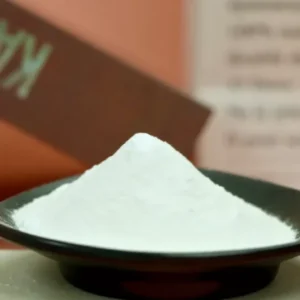
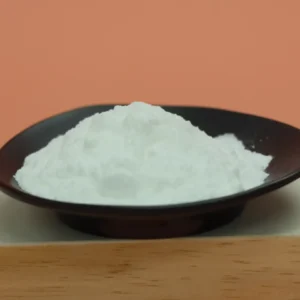
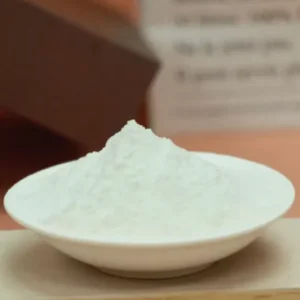
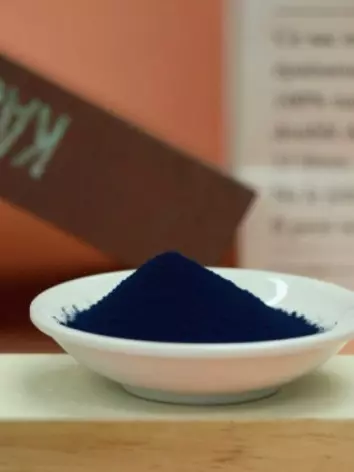
| Appearance | Blue to deep blue-violet powder (colour reflects the copper(II) complex) |
| Solubility | Soluble in water; the complex is pH sensitive and can dissociate outside the working pH range, so buffer choice and chelator compatibility should be confirmed for the intended base. |
| Typical applications | Topical cosmetic and scalp development bases, serums and micro-formulation work, and laboratory research use in B2B settings. Supplied for laboratory and cosmetic R&D use, not offered as a dietary ingredient. |
| Storage and handling | Both grades are specified for sealed storage at 2–8 °C in a dry, dark place, protected from damp, heat, light and reducing agents. Sealed room-temperature stability support is retained and available under buyer review for projects where cold chain is not practical. Handling and re-test guidance is issued with each lot. |
| Minimum order quantity | 1 kg. Larger volumes and scheduled call-off quantities are quoted on request. |
| Packaging | 1 kg, 5 kg or 10 kg per foil bag. Alternative pack sizes are available on request. |
| Lead time | Held in stock in Pomona, California. Dispatched within 3 working days of order confirmation. Quantities beyond the current stock position are confirmed with a firm lead time before the order is accepted. |
| Shelf life | GHK-Cu: five years under the recommended storage conditions, supported by current COA and stability documentation. AHK-Cu hydrochloride: shelf life is stated on the specification sheet and Certificate of Analysis for each lot; a holding-time study is available under buyer review. |
| Samples | 10 g samples are available on request for evaluation and compatibility work. |
| Documentation | Download public specification sheet Public sheet prepared from the current product-page specification block; not a batch-specific Certificate of Analysis. Lot-specific COA and supporting records are available for qualified buyer review when appropriate. |
| Quality system | ISO 22000:2018, FSSC 22000, HACCP and GMP (certificates provided on request) |
| Supplier | Nutrition BioTech, 1601 W. Mission Blvd, Suite 103 (DL#29), Pomona, CA 91766, United States |
GHK-Cu and AHK-Cu copper peptide supplier for cosmetic and scalp-care formulation review
GHK-Cu and AHK-Cu peptide actives for skin, scalp and cosmetic R&D applications.
Why brands ask for it
GHK-Cu/AHK-Cu are technical peptide actives for skin longevity, scalp and cosmetic R&D projects. Nutrition BioTech supports peptide identity, purity, storage guidance and technical documentation for formulators developing topical concepts.
Finished-product fit
Skin renewal, scalp/hair cosmetic innovation, micro-infusion, topical R&D. The strongest conversations start with format, serving size, documentation, and how the material behaves in the intended formula.
What makes the sample useful
- High-purity peptide documentation
- Cold-chain/storage guidance
- Cosmetic R&D and topical positioning
Before the sample ships
- Confirm active marker, assay method, and specification range.
- Review stability expectations and storage conditions for the finished format.
- Confirm copper content.
- Confirm suitable for topical.
- Confirm it supplement or cosmetic.
File Package
Ask for the material files that match your market, dosage form, and internal review process.
Available documents may include: COA / Specification / Allergen Statement / GMO Statement / Vegan Statement / Heavy Metals / Microbial Limits / Manufacturing Flow Chart / Residual Solvent / Country of Origin / Composition Statement.
Regulatory & Facility Support
Regulatory review notes for the target market can be provided. Nutrition BioTech does not hold and does not claim any GRAS notification or NDI notification for this material.
Facility and quality system support follows the same certificate set named in the specification table: ISO 22000:2018, FSSC 22000, HACCP and GMP. The holding entity for each certificate is named on the certificate and confirmed under buyer review.
Published research context
GHK-Cu has a long peer-reviewed literature. The studies below are provided as technical context for formulators evaluating this raw material. These entries summarise what the cited publications report. They are not claims about Nutrition BioTech material, and no health, therapeutic or cosmetic outcome is claimed or implied for any finished product. Buyers are responsible for the claims they make on their own labels and for confirming what is permitted in their market.
- Collagen synthesis in fibroblast cultureReported that the GHK–copper complex increased collagen synthesis in cultured human fibroblasts over a 10−12–10−9 M range, with no change in cell number, while a control tripeptide tested in the same system was inactive.Maquart FX, Pickart L, Laurent M, Gillery P, Monboisse JC, Borel JP. FEBS Letters. 1988;238(2):343–346. DOI 10.1016/0014-5793(88)80509-X — source
- In vitro skin penetration and retentionMeasured copper retention and penetration across isolated stratum corneum, heat-separated epidermis and dermatomed human skin from an aqueous GHK–copper solution using flow-through diffusion cells and ICP-MS. Relevant to topical formulation and vehicle design.Hostynek JJ, Dreher F, Maibach HI. Inflammation Research. 2011;60(1):79–86. PMID 20721598 — source
- Review — matrix turnover and metalloproteinase balanceReview of the reported activity of GHK on collagen and glycosaminoglycan synthesis and breakdown, and on the balance between matrix metalloproteinases and their tissue inhibitors.Pickart L, Vasquez-Soltero JM, Margolina A. BioMed Research International. 2015;2015:648108. DOI 10.1155/2015/648108 — source
- Review — gene-expression dataReview discussing gene-expression datasets associated with the GHK peptide and the copper-binding chemistry underlying its reported activity.Pickart L, Margolina A. International Journal of Molecular Sciences. 2018;19(7):1987. DOI 10.3390/ijms19071987 — source
Specification FAQ
What is the CAS number for GHK-Cu and AHK-Cu?
The CAS number for GHK-Cu and AHK-Cu is GHK-Cu: 89030-95-5. AHK-Cu (hydrochloride, as supplied): 682809-81-0. The molecular formula is GHK-Cu: C14H22CuN6O4. AHK-Cu hydrochloride: C15H25ClCuN6O4. and the molecular weight is GHK-Cu: 401.91 g/mol. AHK-Cu hydrochloride: 452.40 g/mol..
What purity is GHK-Cu and AHK-Cu supplied at, and by which method?
98% minimum by HPLC, stated on the Certificate of Analysis for each lot. Peptide content and copper content are reported separately from HPLC purity.
Is GHK-Cu and AHK-Cu soluble in water?
Soluble in water; the complex is pH sensitive and can dissociate outside the working pH range, so buffer choice and chelator compatibility should be confirmed for the intended base.
How is GHK-Cu and AHK-Cu produced and where does it come from?
Solid-phase peptide synthesis of the tripeptide followed by controlled complexation with copper(II) and purification. AHK-Cu is isolated as the hydrochloride.