
1. Introduction
Let’s be honest—finding the right Magnesium Acetyl-Taurate supplier can feel a bit like searching for a needle in a haystack. There are countless suppliers out there, all claiming to offer “high purity,” “premium quality,” and “industry-leading standards.” But how do you actually know which one delivers on those promises?
If you’ve ever wondered whether your supplier’s product is truly better, safer, or more reliable compared to others, you’re not alone. In the world of nutraceuticals and advanced magnesium compounds, details matter—a lot. From purity levels to particle size, from synthesis methods to contamination protocols, every small factor plays a big role in the final product’s performance.
Magnesium Acetyl-Taurate itself is often praised as a more advanced, brain-friendly magnesium compound compared to traditional options like magnesium oxide or magnesium citrate. Why? Because it’s designed to be more bioavailable, potentially faster-absorbing, and gentler on the digestive system. But here’s the catch—its benefits are only as good as the supplier behind it.
Think of it like buying a sports car. Two cars might look identical on the outside, but one has a finely tuned engine, while the other struggles to perform. The same goes for magnesium acetyl-taurate—quality differences can be huge depending on the supplier.
So, in this guide, we’re going to walk through the most important questions you should ask any Magnesium Acetyl-Taurate supplier. Not just surface-level questions, but deep, meaningful ones that separate average suppliers from truly reliable partners.
Ready to dig in? Let’s go.
2. What is Your Verified Purity and Heavy Metal Profile?
When it comes to sourcing Magnesium Acetyl-Taurate, purity isn’t just a checkbox—it’s everything.
Why Purity Matters More Than You Think
Imagine drinking water that’s “mostly clean.” Sounds uncomfortable, right? The same principle applies here. Even small impurities can impact safety, effectiveness, and long-term health.
Compared to lower-grade magnesium compounds, high-purity Magnesium Acetyl-Taurate is:
- Better absorbed by the body
- Safer for long-term use
- Less likely to cause side effects
- More consistent in performance
Heavy Metals: The Hidden Risk
Here’s where things get serious. Heavy metals like lead, arsenic, cadmium, and mercury can sneak into raw materials during sourcing or manufacturing.
A trustworthy supplier should provide:
- ICP-MS or equivalent testing reports
- Batch-specific Certificates of Analysis (COA)
- Compliance with USP, EP, or FCC standards
Typical Quality Comparison
| Parameter | High-Quality Supplier | Low-Quality Supplier |
|---|---|---|
| Purity | ≥ 98–99% | 90–95% or unspecified |
| Lead (Pb) | < 0.1 ppm | Higher or not disclosed |
| Arsenic (As) | < 0.1 ppm | Unclear |
| Transparency | Full COA available | Limited or none |
The Bottom Line
A supplier offering verified purity and a clean heavy metal profile is not just better—it’s essential. Compared to cheaper alternatives, it’s safer, stronger in performance, and worth the investment.
3. Can You Provide the Synthesis Flow Chart and Residual Solvent Analysis?
Ever wondered how your Magnesium Acetyl-Taurate is actually made?
Why the Manufacturing Process Matters
The synthesis process is like a recipe. Two chefs can use the same ingredients, but one creates a gourmet dish while the other makes something… less impressive.
A transparent supplier should provide:
- A clear synthesis flow chart
- Details on reaction conditions
- Purification steps
Residual Solvents: The Silent Factor
During synthesis, solvents are often used. If not properly removed, they can linger in the final product.
Compared to poorly processed materials, a well-refined product is:
- Cleaner
- Safer for consumption
- More stable over time
Acceptable Residual Solvent Standards
| Solvent Type | Acceptable Limit | Risk if Exceeded |
|---|---|---|
| Ethanol | < 5000 ppm | Mild toxicity |
| Methanol | < 3000 ppm | Serious health risks |
| Acetone | < 5000 ppm | Irritation |
Why This Question Separates Professionals from Amateurs
If a supplier hesitates or avoids sharing synthesis details, that’s a red flag. Transparency here signals confidence—and quality.
4. What is Your Particle Size and Flowability (Bulk Density)?
Now let’s talk about something most people overlook—physical properties.
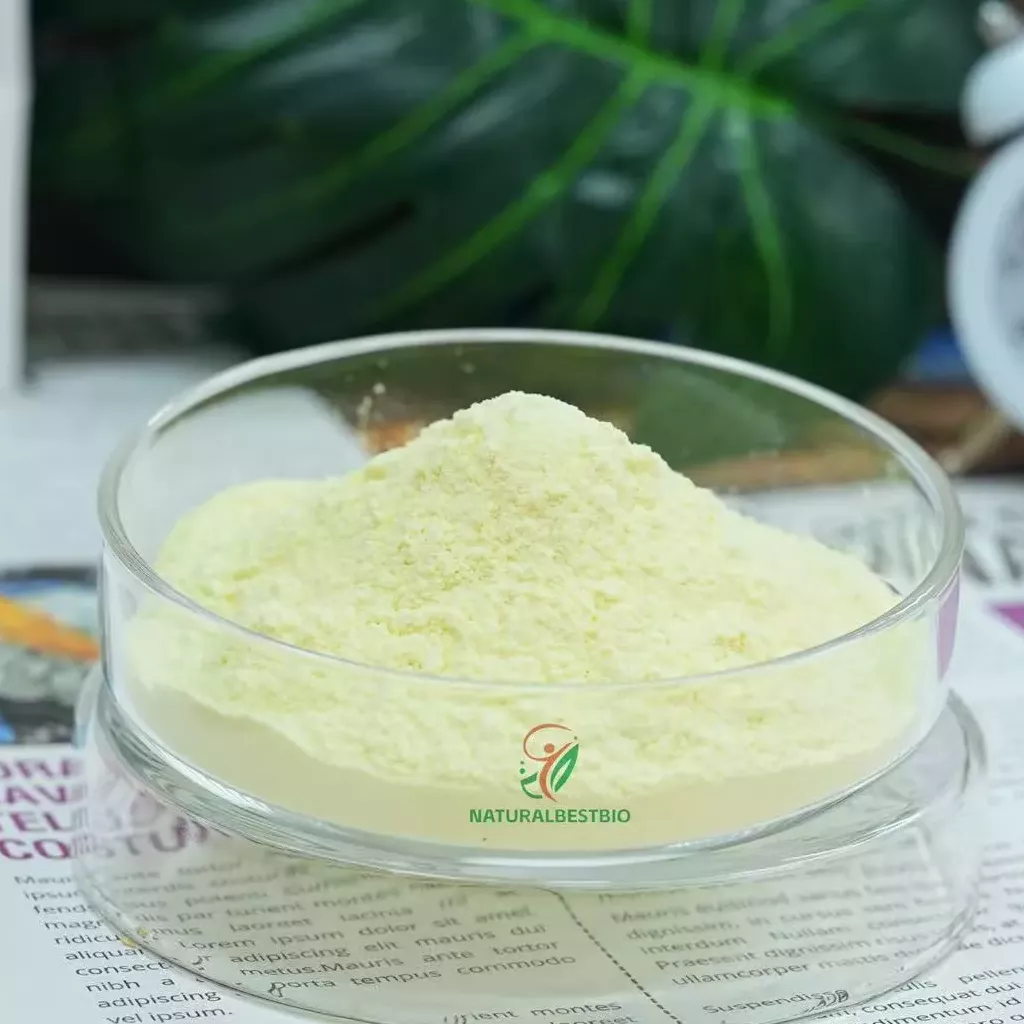
Particle Size: Small Detail, Big Impact
Particle size affects:
- Dissolution rate
- Absorption efficiency
- Manufacturing compatibility
Compared to coarse powders, fine and uniform particles are:
- Faster dissolving
- More bioavailable
- Better suited for capsules and tablets
Flowability: Why It Matters in Production
Flowability determines how well the powder moves during processing.
Think of it like sand vs flour. One flows smoothly, the other clumps.
Bulk Density Comparison
| Property | High-Quality Material | Low-Quality Material |
|---|---|---|
| Particle Size | Uniform, fine | Irregular |
| Flowability | Excellent | Poor |
| Bulk Density | Consistent | Variable |
Real-World Impact
Better flowability means:
- Faster production
- Less waste
- More consistent dosing
5. What Stability and Shelf-Life Data Do You Have?
Would you buy a product that might degrade in a few months? Probably not.
Why Stability Testing is Crucial
Magnesium Acetyl-Taurate must remain stable under:
- Heat
- Humidity
- Light exposure
Compared to unstable compounds, a stable product is:
- More reliable
- Longer-lasting
- Safer for consumers
Key Stability Indicators
- Shelf life (typically 24–36 months)
- Accelerated stability testing data
- Packaging recommendations
Stability Comparison
| Factor | Stable Product | Unstable Product |
|---|---|---|
| Shelf Life | 2–3 years | < 1 year |
| Moisture Resistance | High | Low |
| Degradation | Minimal | Significant |
Practical Insight
A supplier with strong stability data is offering something stronger and more dependable compared to competitors.
6. Do You Have Allergen and Cross-Contamination Protocols?
Let’s talk safety—real safety.
Why This Matters More Than Ever
In today’s world, consumers are more sensitive to allergens and contamination risks.
A reliable supplier should have:
- Dedicated production lines
- Cleaning validation procedures
- Allergen-free certifications
Cross-Contamination Risks
Without proper controls, your product could contain traces of:
- Gluten
- Soy
- Dairy
- Nuts
Protocol Comparison
| Feature | Certified Supplier | Non-Certified Supplier |
|---|---|---|
| Allergen Control | Strict | Minimal |
| Cleaning Validation | Documented | Unclear |
| Risk Level | Low | High |
The Takeaway
Compared to suppliers without strict protocols, those with robust systems are safer, more trustworthy, and better aligned with global standards.
7. Conclusion
Choosing the right Magnesium Acetyl-Taurate supplier isn’t just about price—it’s about trust, quality, and long-term success.
From purity and synthesis to particle size and safety protocols, every detail adds up. A better supplier doesn’t just deliver a product—they deliver confidence.
Compared to cheaper, less transparent options, a high-quality supplier offers:
- Better safety
- Faster absorption
- Stronger reliability
- More consistent results
So next time you evaluate a supplier, don’t just ask what they sell—ask how they make it, test it, and protect it.
Because in this industry, the difference between good and great is in the details.
8. FAQ
| Question | Answer |
|---|---|
| What is Magnesium Acetyl-Taurate used for? | It is commonly used for neurological support, relaxation, and magnesium supplementation with better brain bioavailability compared to other forms. |
| Is it better than magnesium citrate or oxide? | Yes, it is often considered better for brain health and gentler on digestion, though it may be more expensive. |
| How do I verify a supplier’s quality? | Request COA, heavy metal testing, synthesis details, and stability data. Transparency is key. |
| Are there side effects? | Generally well tolerated, but excessive intake may cause mild digestive discomfort. Always follow dosage guidelines. |
| Who should use Magnesium Acetyl-Taurate? | It’s ideal for individuals seeking cognitive support, stress reduction, or improved magnesium absorption. |
| What certifications should a supplier have? | Look for GMP, ISO, and third-party testing certifications. |
| Why is it more expensive than other magnesium forms? | Due to its complex synthesis and higher bioavailability, it is more costly but often more effective. |
| How should it be stored? | Store in a cool, dry place away from light and moisture to maintain stability. |