+1 (949) 712-7328     |     sales@naturalbestbio.com

Urolithin A: The Gut-Microbiome Metabolite Revolutionizing Anti-Aging—From Metabolism to Multidimensional Health Benefits

Views: 1000     Author: Site Editor     Publish Time: 2025-11-05      Origin: Site

wechat sharing button
line sharing button
twitter sharing button
facebook sharing button
linkedin sharing button
pinterest sharing button
whatsapp sharing button
sharethis sharing button
Urolithin A: The Gut-Microbiome Metabolite Revolutionizing Anti-Aging—From Metabolism to Multidimensional Health Benefits

In the field of health and wellness, novel functional compounds consistently attract significant attention, and Urolithin A (UA) has emerged as a prominent "potential candidate" in recent years. Unlike many bioactive substances that are directly abundant in food sources, UA is a metabolite produced by the gut microbiota. Nevertheless, it exhibits remarkable potential in multiple domains, including antioxidant activity, anti-inflammatory effects, and anti-aging properties. This article aims to provide a comprehensive overview of Urolithin A, unraveling the unique characteristics of this specialized metabolite.


1. Understanding Urolithin A: The "Progressive Path" from Discovery to Metabolism

1.1 The "Identity Profile" of Urolithin A

Urolithin A was formally identified and named in 2005, with a molecular formula of C₁₃H₈O₄ and a relative molecular mass of 228.2. From a physical property perspective, it appears as a yellow or pale yellow solid powder under normal temperature and pressure. Its solubility profile is notably distinctive: it dissolves readily in strongly polar organic solvents such as dimethyl sulfoxide (DMSO) and N,N-dimethylformamide (DMF), yet exhibits poor solubility in low-polarity solvents (e.g., petroleum ether, diethyl ether) and water. This characteristic directly results in extremely low natural abundance of Urolithin A in nature, making direct dietary intake an impractical means of obtaining it.
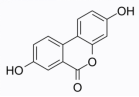
Urolithin A分子结构


1.2 From Ellagitannins to Urolithin A: A Complex In Vivo Metabolic Journey

Given the scarcity of natural Urolithin A, how is this metabolite produced within the human body? The answer lies in its "precursor substances"—ellagic acid (EA) and ellagitannins (ET).
Natural foods such as pomegranates, strawberries, and raspberries are rich in ellagitannins (ET). However, ET contains glycosyl units, which contribute to its high polarity. This structural feature limits its absorption in the human body, leading to low bioavailability. Nevertheless, ET undergoes hydrolysis in vivo to form ellagic acid (EA), which serves as the direct metabolic precursor of Urolithin A and is also a polyphenolic natural substance with significant biological activity.
The subsequent metabolic process can be described as a "precision chemical reaction": After ingestion, foods rich in ET are digested in the stomach and small intestine, with the majority of Urolithin A production occurring in the colon (a small amount of UA can also be detected in the lower segment of the small intestine). The specific metabolic pathway proceeds as follows:
  1. ET is hydrolyzed to form EA;

  2. EA undergoes lactone ring cleavage and decarboxylation to generate Urolithin M5 (UM5);

  3. UM5 undergoes dehydroxylation at different positions, producing tetrahydroxyurolithin isomers such as Urolithin D (UD) and Urolithin M6 (UM6);

  4. Tetrahydroxyurolithins undergo another round of dehydroxylation, forming trihydroxyurolithin isomers including Urolithin C (UC) and Urolithin M7 (UM7);

  5. Trihydroxyurolithins continue to undergo dehydroxylation, yielding dihydroxyurolithins such as Urolithin A (UA) and its isomer (isoUA);

  6. A final dehydroxylation step produces the monohydroxy derivative Urolithin B (UB).

Ultimately, the generated urolithins are absorbed by intestinal epithelial cells, conjugated with glucuronic acid, and enter the systemic circulation to be transported to various target organs for biological activity.
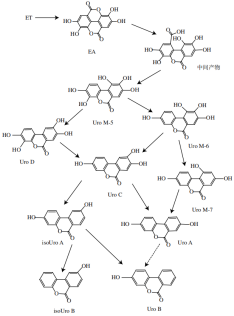
代谢途径


1.3 Interindividual Variability in Metabolic Capacity: Not All Individuals Can Produce Urolithin A

Notably, not all individuals possess gut microbiota capable of decomposing EA to produce UA. Variations in the composition and diversity of gut bacterial communities across different populations directly lead to differences in EA metabolic capacity.
Research conducted by TOMAS-BARBERA et al. provides robust evidence for this phenomenon. Based on quantitative and qualitative analysis of urolithin production following ET or EA intake, the researchers classified individuals into three urolithin metabolic phenotypes: Metabolizer Type A, Type B, and Type O. These phenotypes correspond to high-concentration urolithin producers, low-concentration urolithin producers, and extremely low-concentration urolithin producers (with extremely low concentrations considered equivalent to non-producers). Specifically:
  • Individuals with Metabolizer Type A harbor microbiota capable of producing UA and its conjugates;

  • Those with Metabolizer Type B have microbiota that primarily generate UB and its conjugates;

  • Individuals with Metabolizer Type O lack microbiota capable of producing any urolithins.

This finding implies that the proportion of individuals who can naturally produce Urolithin A via gut microbiota metabolism through regular dietary intake is relatively small—estimates suggest only 40% of individuals can naturally convert polyphenolic precursors into UA. For the majority of consumers, direct intake of Urolithin A supplements represents a more direct and effective approach.

UA


2. The "Potent Capabilities" of Urolithin A: Multidimensional Health Protection

Urolithin A’s emergence as a "rising star" in the health sector stems from its diverse and powerful physiological activities, which provide comprehensive health protection ranging from antioxidant effects to neuroprotection.

2.1 Potent Antioxidant Activity: A "Guardian" Against Free Radicals

Among all urolithin metabolites, Urolithin A exhibits the strongest antioxidant activity, second only to compounds such as procyanidin oligomers, catechin, epicatechin, and 3,4-dihydroxyphenylacetic acid. Multiple studies have confirmed its antioxidant capacity:
  • In a study involving healthy volunteers, plasma oxygen radical absorbance capacity (ORAC) increased by 32% 0.5 hours after pomegranate juice intake;

  • In vitro experiments using Neuro-2a cells demonstrated that UA effectively reduced reactive oxygen species (ROS) levels within cells;

  • Additionally, Robuvit®—a compound with UA as its primary active metabolite—was shown to reduce oxidative stress levels in patients, thereby improving mood, alleviating fatigue, and addressing insomnia.

These findings collectively confirm that UA serves as a "powerful ally" in combating free radicals and mitigating oxidative damage.

2.2 Significant Anti-Inflammatory Effects: A "Key Link" in Anti-Aging

Aging is characterized by systemic chronic inflammation, accompanied by cellular senescence, immunosenescence, and age-related diseases. The anti-inflammatory effects of Urolithin A are considered one of the key mechanisms underlying its potential anti-aging properties.
Specifically, UA exerts anti-inflammatory effects through multiple pathways:
  1. It inhibits the nuclear factor κB (NF-κB) and Akt/mitogen-activated protein kinase (MAPK) signaling pathways;

  2. This inhibition further reduces the mRNA and protein levels of cyclooxygenase-2 (COX-2), thereby decreasing the production of inflammatory mediators;

  3. Additionally, UA regulates cytokine balance by reducing the production of pro-inflammatory cytokines (e.g., tumor necrosis factor-α, TNF-α) while enhancing the synthesis of anti-inflammatory cytokines (e.g., interleukin-10, IL-10) and the expression of transforming growth factor-β1 (TGF-β1).

These actions collectively alleviate inflammatory responses at multiple levels.

2.3 Obesity Improvement: A "Helper" in Metabolic Regulation

Urolithin A also demonstrates unique advantages in weight management. It reduces fat accumulation in in vitro-cultured adipocytes and hepatocytes while promoting fat oxidation. The underlying mechanism involves the conversion of thyroxine’s less active form (T4) to its more active form (T3). By enhancing metabolic rate and thermogenesis through thyroid hormone signaling, UA exerts weight control effects, offering a novel approach to weight loss and management.

2.4 Neuroprotective Effects: A "Barrier" for Brain Health

Neurodegenerative diseases (e.g., Alzheimer’s disease and Parkinson’s disease) remain major challenges to elderly health. These conditions are typically triggered by oxidative stress and abnormal protein aggregation, which induce cellular apoptosis and initiate neuroinflammation. Pro-inflammatory cytokines released during neuroinflammation further exacerbate neurodegeneration.
As an effective neuroprotective agent, Urolithin A combats neurodegenerative processes through multiple pathways:
  1. It induces autophagy, facilitating the clearance of abnormally accumulated proteins within cells;

  2. It activates the deacetylation mechanism of sirtuin 1 (SIRT-1), mediating anti-inflammatory activity to inhibit neuroinflammation and neurotoxicity;

  3. It directly scavenges free radicals, reducing oxidative stress-induced damage to nerve cells;

  4. It inhibits oxidase activity, reducing the production of oxidative products at the source.

2.5 Eye Protection: A "New Hope" for Delaying Retinal Aging

On January 27, 2024, a study titled "Mitophagy curtails cytosolic mtDNA dependent activation of cGAS/STING inflammation during aging" published in Nature Communications provided authoritative evidence for the eye-protective effects of Urolithin A. The research revealed that UA, as a mitophagy inducer, can:
  • Reduce oxidative stress in the aging retina;

  • Decrease cytosolic cGAS levels in the aged retina;

  • Reduce glial cell activation.

These findings offer new hope for delaying retinal aging and protecting ocular health.

2.6 Skincare Potential: Antioxidant Support for Youthful Skin

Owing to its strong antioxidant activity, Urolithin A ranks among the most potent antioxidants among all identified mammalian gut metabolites—second only to procyanidin oligomers, catechin, epicatechin, and 3,4-dihydroxyphenylacetic acid. This property endows UA with potential value in the skincare field, as it may help maintain youthful skin by combating oxidative damage.


3. Application Prospects of Urolithin A: A "Potential Asset" Driven by Anti-Aging Demand

According to projections from the World Health Organization (WHO), by 2030, 1 in every 60 people worldwide will be aged 60 years or older. The growing trend of population aging has fueled strong market demand for products that support healthy longevity. With its unique health benefits and exceptional anti-aging potential, Urolithin A aligns perfectly with consumer needs for aging intervention and health maintenance, positioning it as an ideal anti-aging supplement with broad market application prospects.
石榴

4. Conclusion: An Emerging Anti-Aging Star Facing Opportunities and Challenges

In summary, Urolithin A exhibits multidimensional value in the anti-aging field—from cellular repair to systemic function enhancement—through its dual-core mechanisms of targeted mitophagy and circadian rhythm regulation. It plays a crucial role in multiple domains, including antioxidant defense, anti-inflammation, neuroprotection, and eye health.
However, the clinical translation of Urolithin A faces several challenges that need to be addressed:
  1. Microbiota dependence: Only a subset of the population can naturally produce UA via gut microbiota metabolism;

  2. Long-term safety verification: Additional data on the long-term safety of UA supplementation are required;

  3. Cost optimization: Developing cost-effective production and extraction methods to improve accessibility for a broader population remains an urgent task.

It is anticipated that with the advancement of research, these challenges will be gradually overcome. Urolithin A is poised to shine more brightly in the health sector, contributing significantly to human health and longevity.


Important Reminder:All content in this article is for general reference only and is provided solely to offer information support for practitioners in the nutrition and health industry. Descriptions related to efficacy are supported by corresponding data, but they do not represent claims or guidance for consumers. Content related to health, medical care, and technological applications is for reference only. For medical matters, please consult professional medical institutions and follow medical advice. This article does not provide any medical recommendations.


QUICK LINKS

From research to formulation, we focus on transparency, efficacy, and long-term value for our partners.We’re here to support your success — with integrity, precision, and passion for health innovation.

PRODUCTS CATEGORY

Copyright © 2025 Nutrition BioTech USA Inc. Co., Ltd.All Rights Reserved.