
Views: 1000 Author: Site Editor Publish Time: 2025-11-03 Origin: Site


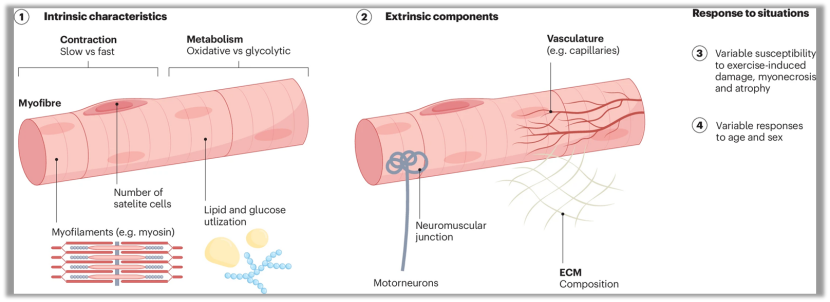
Skeletal muscle contains various types of muscle fibers, ranging from slow-twitch (Type I) to fast-twitch (Type II). The contraction speed of these fibers is determined by specific myosin isoforms and other contractile proteins. Muscle fiber contraction relies on ATP as an energy source, and ATP is produced through different metabolic pathways. Typically, Type I muscle fibers mainly use lipid oxidation for energy supply, while Type II muscle fibers depend on glycogen or glucose breakdown.
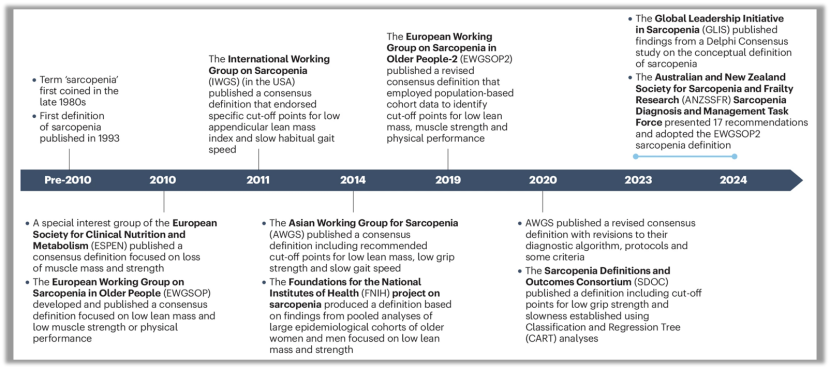
Currently, there are differences in the diagnostic criteria for sarcopenia among different organizations. Taking the European Working Group on Sarcopenia in Older People 2 (EWGSOP2) as an example, its diagnosis is mainly based on three indicators: muscle mass (e.g., the appendicular lean mass of men should not be less than 20 kg), muscle strength (grip strength should not be less than 27 kg), and gait speed (should not be less than 0.8 m/s).
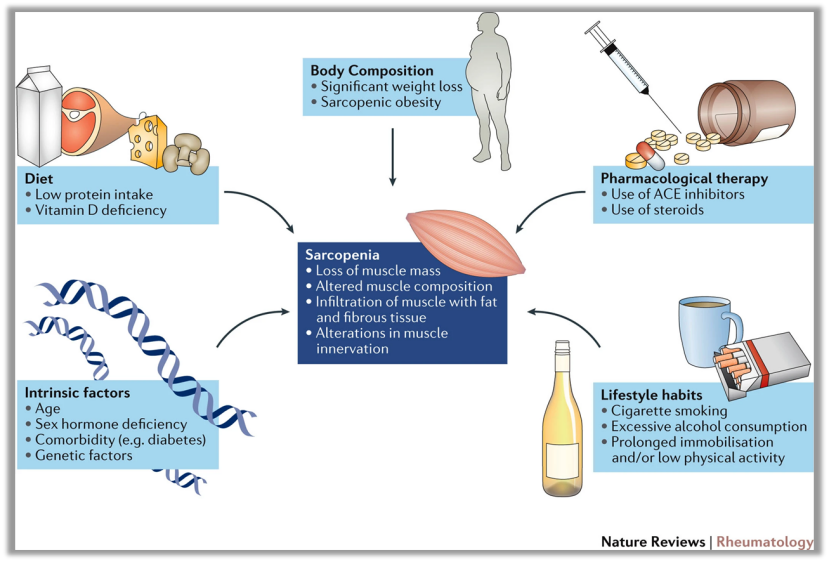
Modifiable extrinsic factors involve various aspects of nutrition and lifestyle. Insufficient protein intake can lead to negative nitrogen balance and promote muscle breakdown. Vitamin D deficiency is associated with decreased muscle strength, impaired balance function, and increased risk of falls. Significant weight loss often directly reflects muscle loss. In sarcopenic obesity (i.e., the coexistence of sarcopenia and obesity), inflammatory factors and adipokines secreted by adipose tissue further deteriorate muscle mass and function. Inadequate physical activity or long-term immobilization is a key trigger for muscle loss. Studies have confirmed that even short-term bed rest can quickly lead to a decrease in muscle strength. In addition, smoking, excessive alcohol consumption, and the use of certain drugs (e.g., glucocorticoids) can also cause direct damage to muscle health.
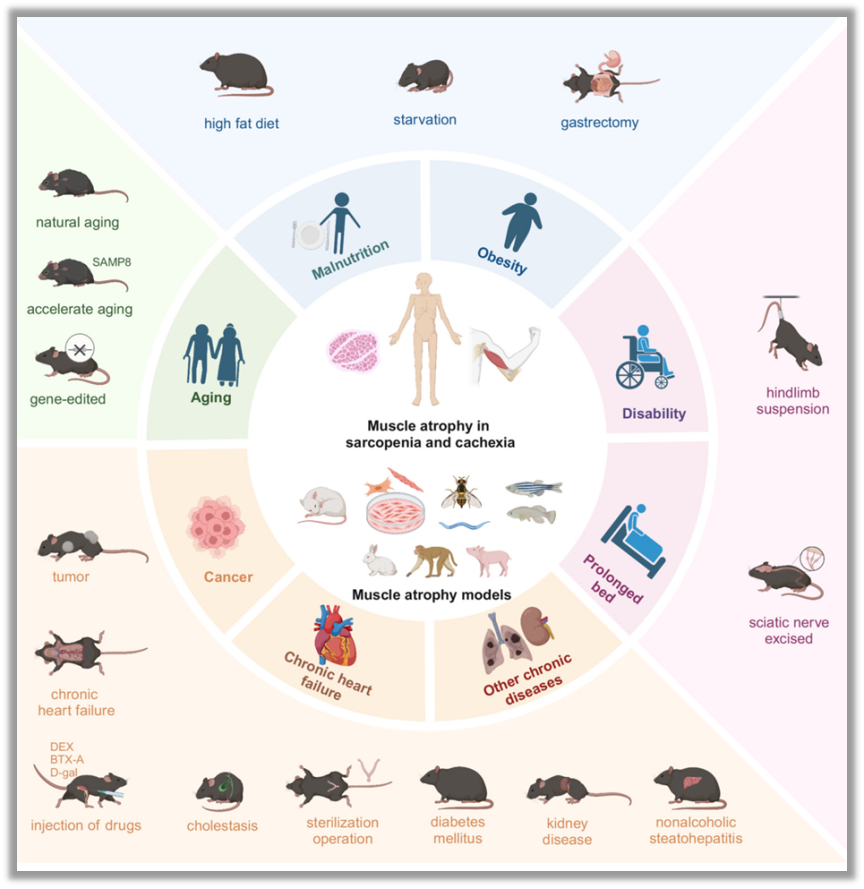
In terms of research models, common models for sarcopenia include zebrafish, nematodes, mice, rats, rabbits, non-human primates, and cell models. Among them, mouse models are widely used, and various models can be constructed based on different pathogenic mechanisms, such as natural aging, gene editing, high-fat diet induction, tail suspension, tumor burden, chronic heart failure, and drug induction. The high-fat diet-induced model is particularly suitable for the exploration of metabolic mechanisms and nutritional intervention studies.
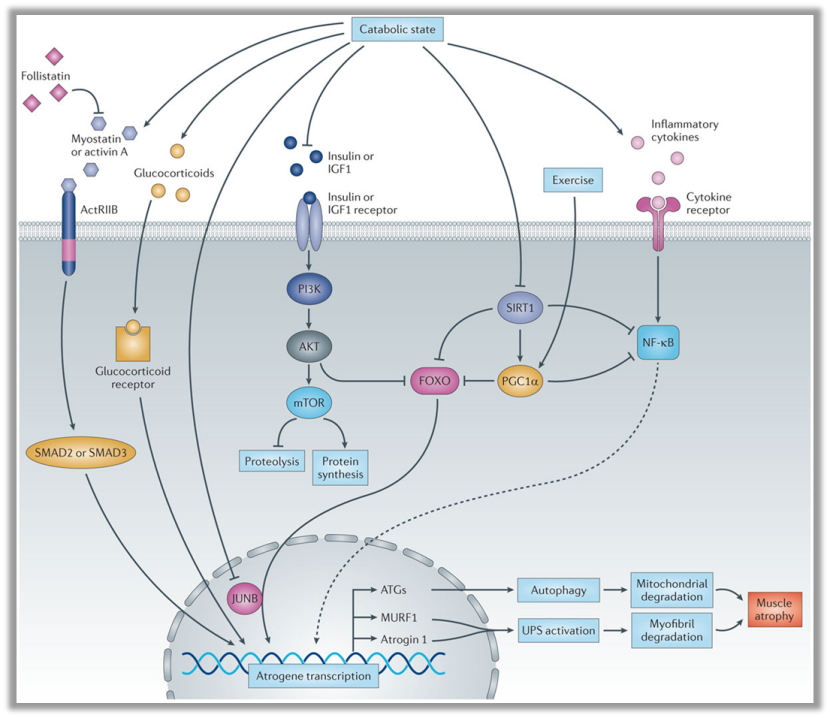
In addition, a variety of transcription factors play key roles in muscle atrophy, including glucocorticoid receptors, SMAD2/3, and NF-κB. Inhibiting the activity of these factors can delay the atrophy process to varying degrees. Among them, SMAD2 and SMAD3 mediate the proteolytic signals downstream of myostatin, activin A, and other members of the TGF-β family, promoting a hypercatabolic state. As a core regulator of inflammation and apoptosis, NF-κB plays an important role in various muscle atrophy models. Although its specific mechanism has not been fully clarified, recent studies have shown that it may be an effective inducer of myostatin. In addition, branched-chain amino acid (BCAA) catabolism dysfunction has been identified as a potential therapeutic target for sarcopenia, and relevant studies were published in Nature Aging in 2025.
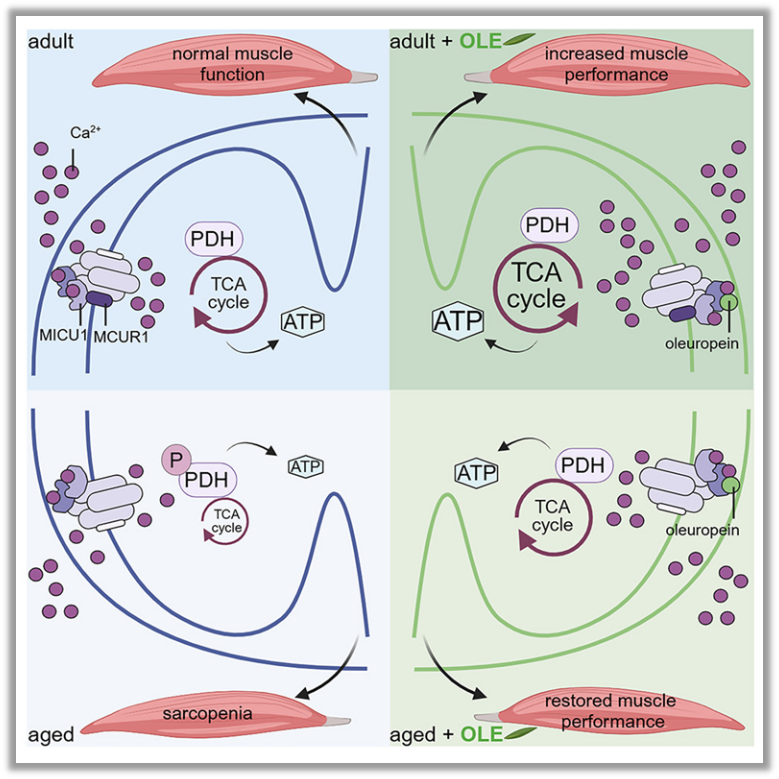
In addition, another study published in Cell Metabolism in 2025 reported that oleuropein enhances energy metabolism by activating mitochondrial calcium uptake. The researchers found that the decrease in mitochondrial calcium ion levels in elderly sarcopenia patients is related to abnormal calcium regulation mediated by the MCUR1 protein, leading to reduced pyruvate dehydrogenase (PDH) activity and decreased ATP production. Through high-throughput screening of 5,571 natural products, oleuropein showed the strongest ability to activate mitochondrial calcium uptake. Its effect of improving mitochondrial function and the underlying molecular mechanism were verified in primary human muscle cells and in vivo experiments.
Reference
1. Sayer, A. A. et al. Sarcopenia. Nat Rev Dis Primers 10, 68 (2024).
2. Cohen, S., Nathan, J. A. & Goldberg, A. L. Muscle wasting in disease: molecular mechanisms and promising therapies. Nat Rev Drug Discov 14, 58–74 (2015).
3. Batsis, J. A. & Villareal, D. T. Sarcopenic obesity in older adults: aetiology, epidemiology and treatment strategies. Nat Rev Endocrinol 14, 513–537 (2018).
4. Dennison, E. M., Sayer, A. A. & Cooper, C. Epidemiology of sarcopenia and insight into possible therapeutic targets. Nat Rev Rheumatol 13, 340–347 (2017).
5. Zhang, G. et al. The recent development, application, and future prospects of muscle atrophy animal models. MedComm – Future Medicine 3, e70008 (2024).
6. Wall, B. T. et al. Aging Is Accompanied by a Blunted Muscle Protein Synthetic Response to Protein Ingestion. PLOS ONE 10, e0140903 (2015).
7. Ceglia, L. et al. A Randomized Study on the Effect of Vitamin D3 Supplementation on Skeletal Muscle Morphology and Vitamin D Receptor Concentration in Older Women. J Clin Endocrinol Metab 98, E1927–E1935 (2013).
8. McGlory, C., Calder, P. C. & Nunes, E. A. The Influence of Omega-3 Fatty Acids on Skeletal Muscle Protein Turnover in Health, Disuse, and Disease. Front. Nutr. 6, (2019).
9. Bagherniya, M. et al. The beneficial therapeutic effects of plant-derived natural products for the treatment of sarcopenia. Journal of Cachexia, Sarcopenia and Muscle 13, 2772–2790 (2022).
10. Singh, A. et al. Urolithin A improves muscle strength, exercise performance, and biomarkers of mitochondrial health in a randomized trial in middle-aged adults. Cell Rep Med 3, 100633 (2022).
11. Ryu, D. et al. Urolithin A induces mitophagy and prolongs lifespan in C. elegans and increases muscle function in rodents. Nat Med 22, 879–888 (2016).
12. Andreux, P. A. et al. The mitophagy activator urolithin A is safe and induces a molecular signature of improved mitochondrial and cellular health in humans. Nat Metab 1, 595–603 (2019).
13. Liu, S. et al. Effect of Urolithin A Supplementation on Muscle Endurance and Mitochondrial Health in Older Adults: A Randomized Clinical Trial. JAMA Netw Open 5, e2144279 (2022).
14. Membrez, M. et al. Trigonelline is an NAD+ precursor that improves muscle function during ageing and is reduced in human sarcopenia. Nat Metab 6, 433–447 (2024).
15. Gherardi, G. et al. Mitochondrial calcium uptake declines during aging and is directly activated by oleuropein to boost energy metabolism and skeletal muscle performance. Cell Metab 37, 477-495.e11 (2025).
Important Reminder:All content in this article is for general reference only and is provided solely to offer information support for practitioners in the nutrition and health industry. Descriptions related to efficacy are supported by corresponding data, but they do not represent claims or guidance for consumers. Content related to health, medical care, and technological applications is for reference only. For medical matters, please consult professional medical institutions and follow medical advice. This article does not provide any medical recommendations.


