
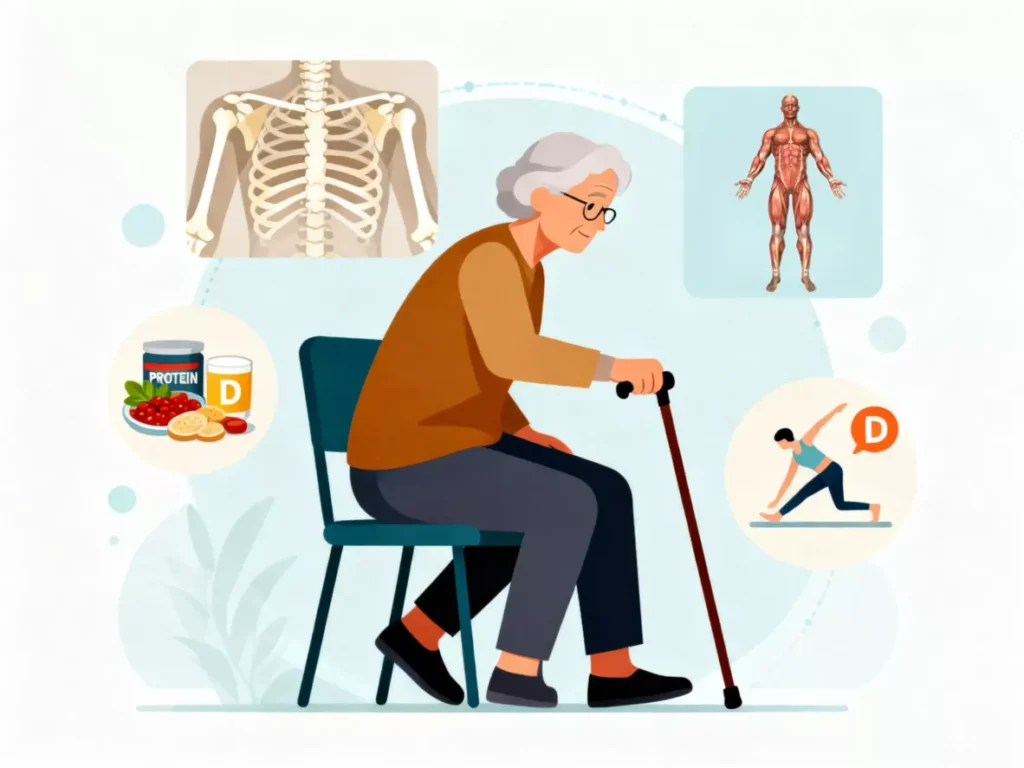
Sarcopenia is a syndrome characterized by the progressive decline in skeletal muscle mass, muscle strength, and function, which severely impairs the quality of life of the elderly. Its pathogenic mechanisms involve a variety of intrinsic factors (such as age, hormone levels, and genetic background) and extrinsic factors (such as malnutrition and lack of exercise). At the molecular level, it is closely associated with abnormalities in the PI3K-AKT-mTOR signaling pathway, transcription factors including FOXO, SMAD2/3, and NF-κB, as well as branched-chain amino acid (BCAA) metabolism. Currently, there are no clearly effective pharmacological treatments, making dietary intervention a crucial strategy. These findings provide new research directions for the prevention and treatment of sarcopenia.
1. Definition and Development of Sarcopenia
1.1 Physiological Role and Structural Characteristics of Skeletal Muscle
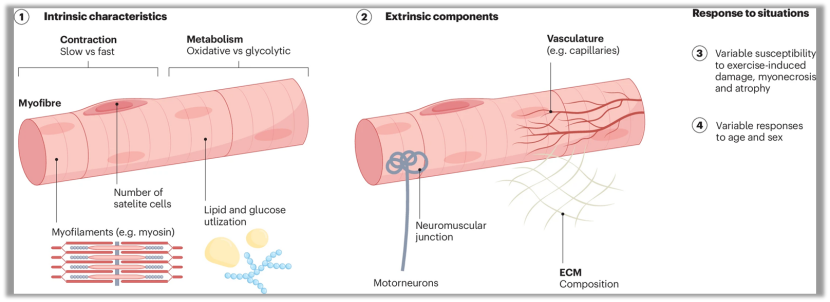
Skeletal muscle accounts for approximately 40% of the total human body weight, making it the largest organ in the human body. It plays a role in supporting the body, balance maintenance, movement, and energy metabolism. However, with aging, skeletal muscle function gradually declines. Studies have shown that skeletal muscle aging is a major cause of disability and physical frailty in the elderly.
The structure of skeletal muscle is highly conserved across species. It is composed of differentiated muscle fibers organized into sarcomeres—the basic functional units. Contraction relies on ATP, produced through different metabolic pathways (lipid oxidation for Type I fibers; glycogen/glucose breakdown for Type II fibers).
1.2 Concept Evolution and Diagnostic Criteria of Sarcopenia
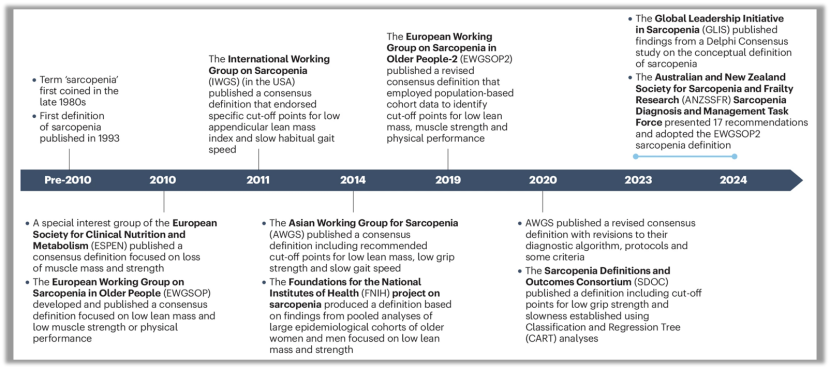
The term “sarcopenia” was proposed in the late 1980s. Its definition centers on three core indicators: the decline in skeletal muscle mass, strength, and function. In humans, a decline usually begins after the age of 50. The European Working Group on Sarcopenia in Older People 2 (EWGSOP2) currently diagnoses it based on muscle mass, grip strength, and gait speed.
2. Risk Factors of Sarcopenia and Common Animal Models
2.1 Classification of Risk Factors: Intrinsic and Extrinsic
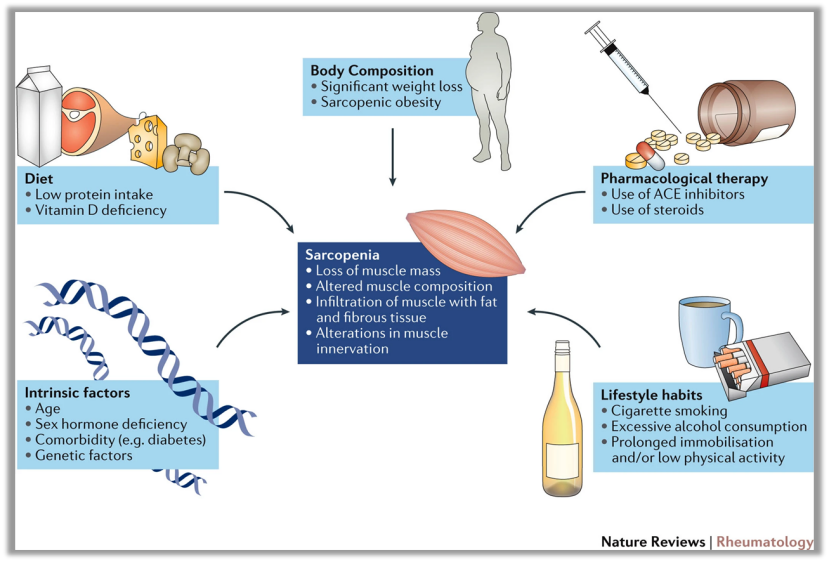
Risk factors are divided into intrinsic and extrinsic factors. Age is the most critical; muscle mass peaks in early adulthood and declines after 40. Intrinsic factors include sex hormone levels and genetic background. Modifiable extrinsic factors involve nutrition and lifestyle. Insufficient protein intake, Vitamin D deficiency, and lack of physical activity are key triggers for muscle loss.
2.2 Overview of Sarcopenia Research Models
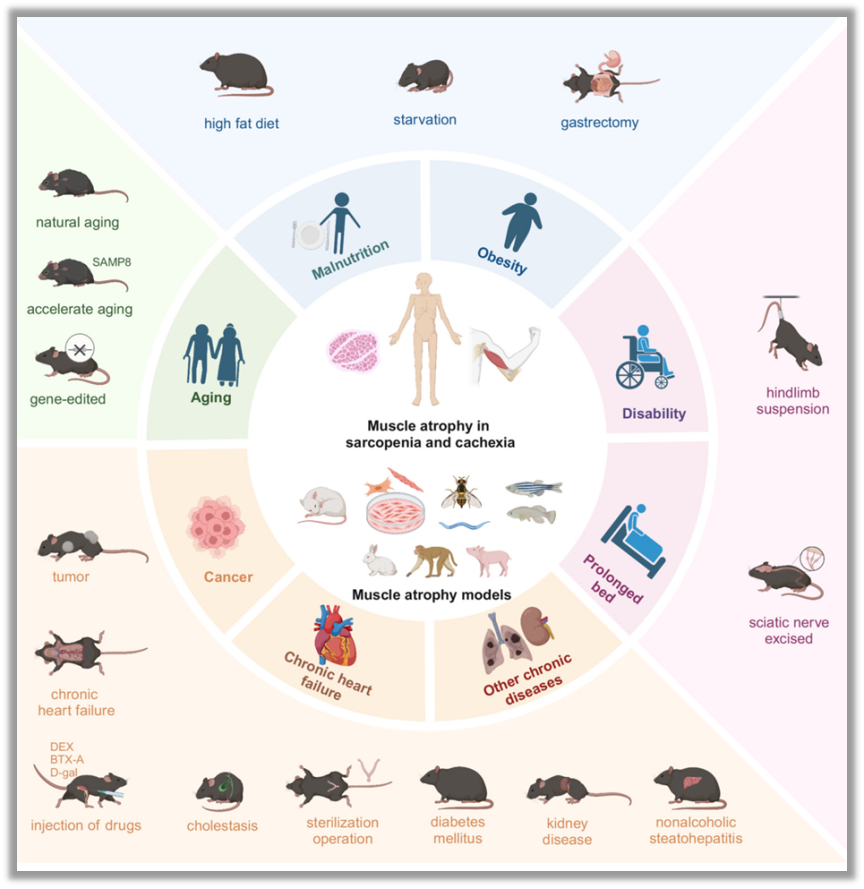
In terms of research models, common models for sarcopenia include zebrafish, nematodes, mice, rats, rabbits, non-human primates, and cell models. Among them, mouse models are widely used, and various models can be constructed based on different pathogenic mechanisms, such as natural aging, gene editing, high-fat diet induction, tail suspension, tumor burden, chronic heart failure, and drug induction. The high-fat diet-induced model is particularly suitable for the exploration of metabolic mechanisms and nutritional intervention studies.
3. Tissue and Molecular Changes During the Development of Sarcopenia
At the histopathological level, sarcopenia is characterized by inflammatory infiltration, extracellular matrix remodeling, and abnormal innervation.
Molecular Regulation of Muscle Mass
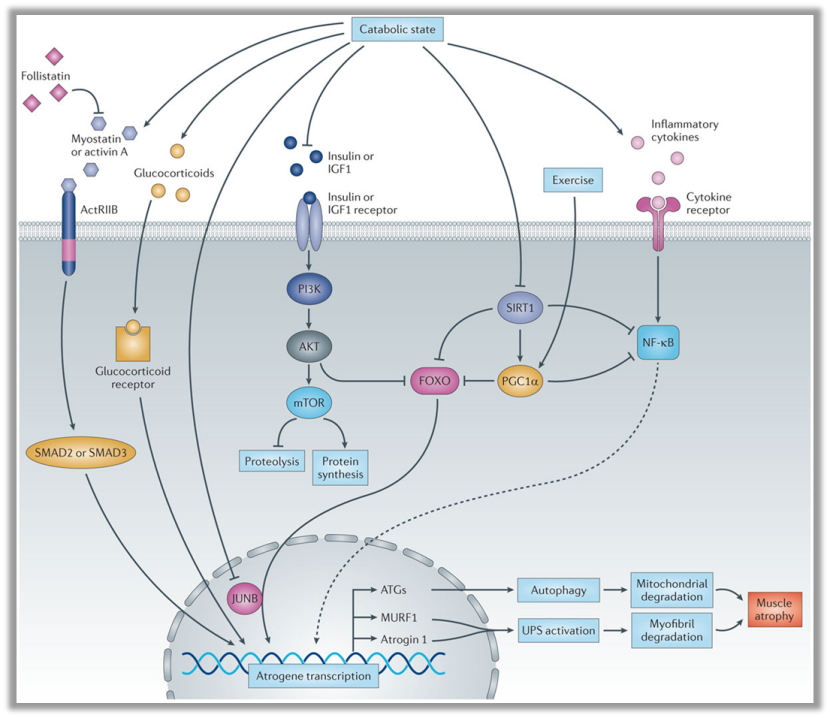
The PI3K-AKT-mTOR pathway maintains muscle mass by promoting protein synthesis and inhibiting degradation. Specifically, the activation of PI3K-AKT inhibits the FOXO transcription factor, enhancing net protein accumulation.
Key Transcription Factors in Atrophy
Transcription factors such as glucocorticoid receptors, SMAD2/3, and NF-κB play key roles in muscle atrophy. SMAD2/3 mediate proteolytic signals downstream of the TGF-β family, promoting a hypercatabolic state. As a core regulator of inflammation, NF-κB may act as an inducer of myostatin. Additionally, branched-chain amino acid (BCAA) catabolism dysfunction has been identified as a therapeutic target, as noted in recent studies published in Nature Aging.
4. Dietary Intervention Measures and Mechanisms for Sarcopenia
4.1 Current Status of Pharmacological Research and Core Dietary Interventions
Currently, no drugs have proven clinical benefits for human sarcopenia, but mitochondrial dysfunction strategies show potential. Dietary protein provides amino acids and acts as an anabolic signal. Vitamin D may influence strength via the vitamin D receptor (VDR). Furthermore, n-3 fatty acids directly promote protein synthesis by regulating the mTOR pathway.
4.2 Natural Products as Novel Intervention Agents: Trigonelline and Oleuropein
In recent years, research has focused on natural products.
- Trigonelline: A study published in Nature Metabolism (2024) showed that trigonelline acts as a NAD+ precursor. It improves mitochondrial energy metabolism via the Preiss-Handler pathway.
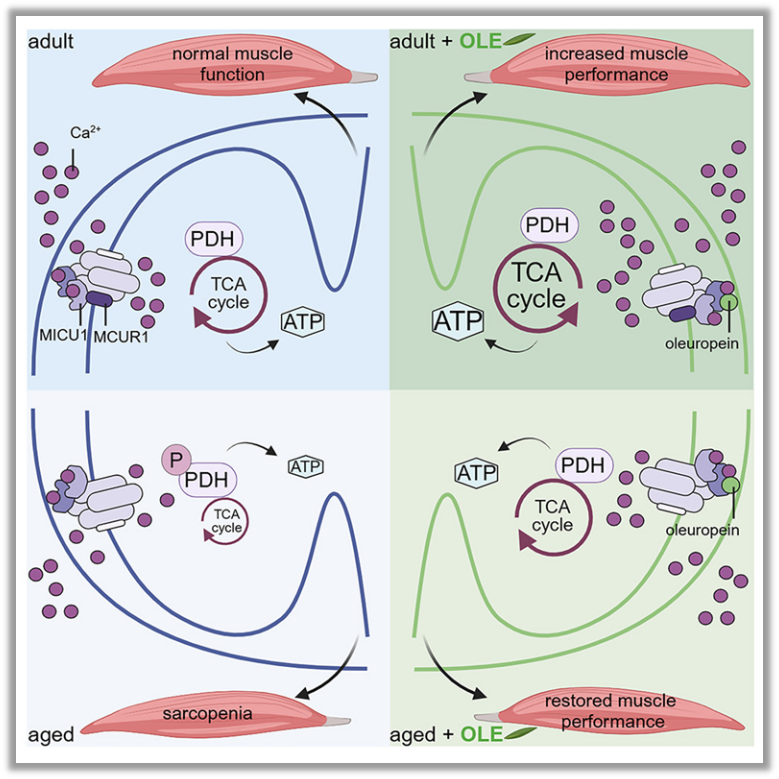
- Oleuropein: A study published in Cell Metabolism (2025) reported that oleuropein enhances energy metabolism by activating mitochondrial calcium uptake, correcting abnormal regulation mediated by the MCUR1 protein.
Important Reminder: This article is for general reference only. Descriptions of efficacy do not represent medical claims. Please consult medical institutions for health advice.
Reference
1. Sayer, A. A. et al. Sarcopenia. Nat Rev Dis Primers 10, 68 (2024).
2. Cohen, S., Nathan, J. A. & Goldberg, A. L. Muscle wasting in disease: molecular mechanisms and promising therapies. Nat Rev Drug Discov 14, 58–74 (2015).
3. Batsis, J. A. & Villareal, D. T. Sarcopenic obesity in older adults: aetiology, epidemiology and treatment strategies. Nat Rev Endocrinol 14, 513–537 (2018).
4. Dennison, E. M., Sayer, A. A. & Cooper, C. Epidemiology of sarcopenia and insight into possible therapeutic targets. Nat Rev Rheumatol 13, 340–347 (2017).
5. Zhang, G. et al. The recent development, application, and future prospects of muscle atrophy animal models. MedComm – Future Medicine 3, e70008 (2024).
6. Wall, B. T. et al. Aging Is Accompanied by a Blunted Muscle Protein Synthetic Response to Protein Ingestion. PLOS ONE 10, e0140903 (2015).
7. Ceglia, L. et al. A Randomized Study on the Effect of Vitamin D3 Supplementation on Skeletal Muscle Morphology and Vitamin D Receptor Concentration in Older Women. J Clin Endocrinol Metab 98, E1927–E1935 (2013).
8. McGlory, C., Calder, P. C. & Nunes, E. A. The Influence of Omega-3 Fatty Acids on Skeletal Muscle Protein Turnover in Health, Disuse, and Disease. Front. Nutr. 6, (2019).
9. Bagherniya, M. et al. The beneficial therapeutic effects of plant-derived natural products for the treatment of sarcopenia. Journal of Cachexia, Sarcopenia and Muscle 13, 2772–2790 (2022).
10. Singh, A. et al. Urolithin A improves muscle strength, exercise performance, and biomarkers of mitochondrial health in a randomized trial in middle-aged adults. Cell Rep Med 3, 100633 (2022).
11. Ryu, D. et al. Urolithin A induces mitophagy and prolongs lifespan in C. elegans and increases muscle function in rodents. Nat Med 22, 879–888 (2016).
12. Andreux, P. A. et al. The mitophagy activator urolithin A is safe and induces a molecular signature of improved mitochondrial and cellular health in humans. Nat Metab 1, 595–603 (2019).
13. Liu, S. et al. Effect of Urolithin A Supplementation on Muscle Endurance and Mitochondrial Health in Older Adults: A Randomized Clinical Trial. JAMA Netw Open 5, e2144279 (2022).
14. Membrez, M. et al. Trigonelline is an NAD+ precursor that improves muscle function during ageing and is reduced in human sarcopenia. Nat Metab 6, 433–447 (2024).
15. Gherardi, G. et al. Mitochondrial calcium uptake declines during aging and is directly activated by oleuropein to boost energy metabolism and skeletal muscle performance. Cell Metab 37, 477-495.e11 (2025).
Important Reminder:All content in this article is for general reference only and is provided solely to offer information support for practitioners in the nutrition and health industry. Descriptions related to efficacy are supported by corresponding data, but they do not represent claims or guidance for consumers. Content related to health, medical care, and technological applications is for reference only. For medical matters, please consult professional medical institutions and follow medical advice. This article does not provide any medical recommendations.