

Obesity represents a global public health challenge. According to the World Obesity Federation, experts project that 3.3 billion adults will struggle with obesity by 2035. Recently, GLP-1 medications brought breakthroughs to weight loss research. However, scientists now explore alternative pathways. On August 7, a study in Nature revealed that Dr. Jonathan Long’s team at Stanford University identified a new weight-regulating pathway. Crucially, this discovery functions independently of GLP-1 mechanisms, offering hope for novel anti-obesity medications.
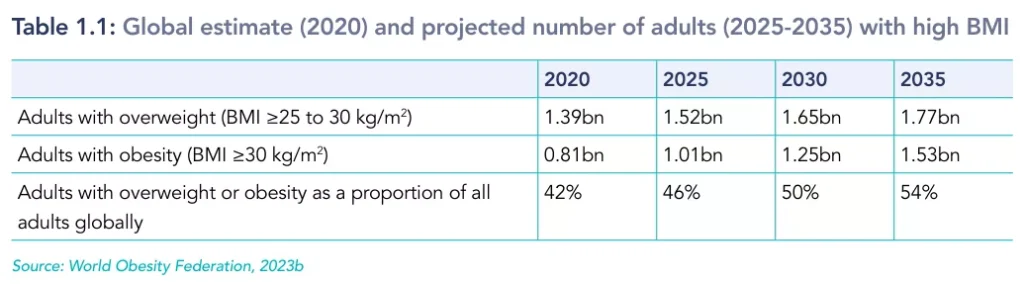
Source: World Obesity Federation
Source: Nature
Specifically, in this study, Dr. Long and Dr. Wei Wei (first author of the paper) focused on taurine. Taurine is abundant in protein-rich foods such as meat and shellfish. Supplementation of taurine in mice was found to reduce body weight and enhance exercise performance. Conversely, mice with genetically engineered reduced taurine levels exhibited muscle atrophy and decreased exercise capacity. However, the exact mechanism by which taurine exerts these effects remained unclear.
A metabolite of taurine is known as N-acetyltaurine, which is formed when taurine binds to another molecule called acetate. The level of N-acetyltaurine in the body fluctuates in response to physiological changes (including endurance exercise and diet) that affect taurine and acetate levels. To date, the enzymes involved in N-acetyltaurine metabolism and the potential functions of N-acetyltaurine itself have remained unclear.
PTER is N-acetyltaurine Hydrolase
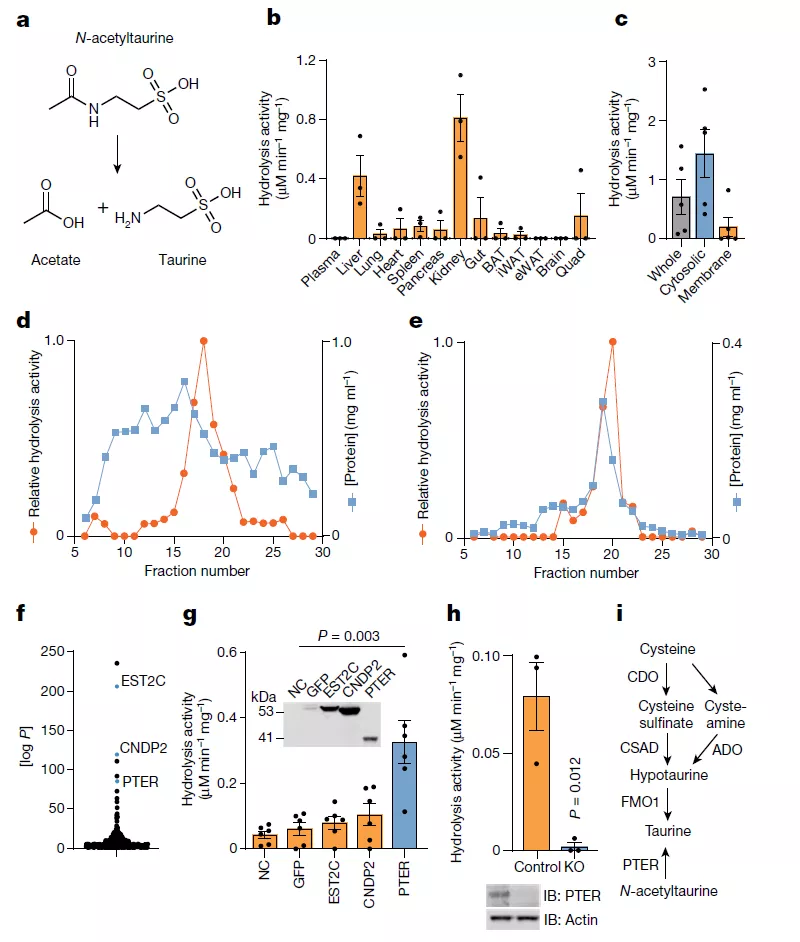
Source: Nature
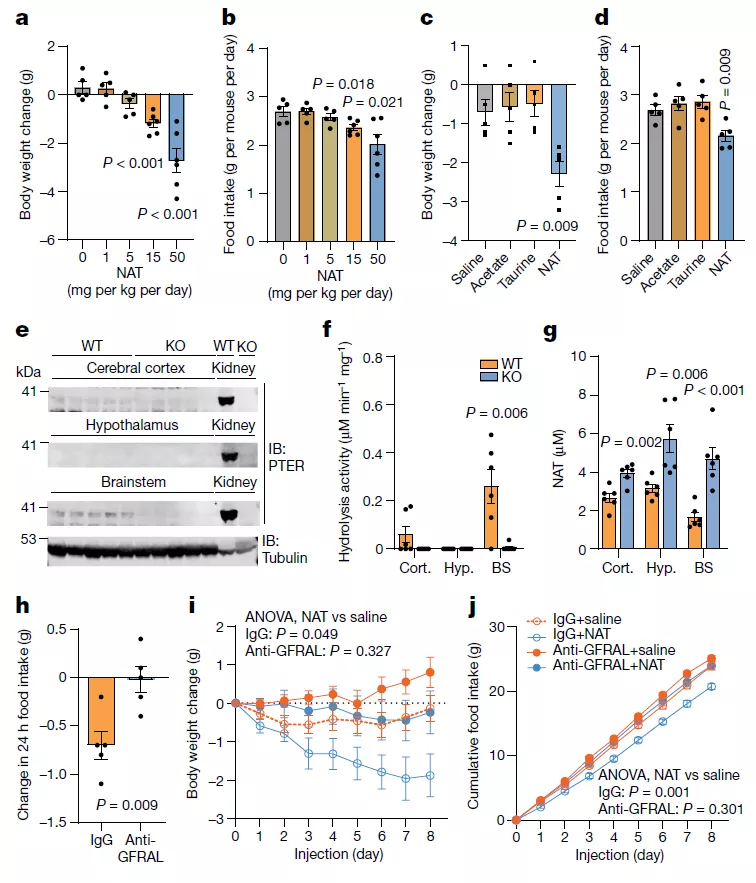
In this study, scientists discovered that an enzyme called PTER (phosphotriesterase-related), which is associated with BMI, acts as the hydrolase for N-acetyltaurine. It can hydrolyze N-acetyltaurine into taurine and acetate. In mice, PTER is expressed in the kidneys, liver, and brainstem. Knocking out the Pter gene in mice resulted in the complete loss of N-acetyltaurine hydrolytic activity in tissues, leading to a systematic increase in N-acetyltaurine levels in the blood and tissues of the mice.
Metabolic Phenotype of Pter-Knockout Mice
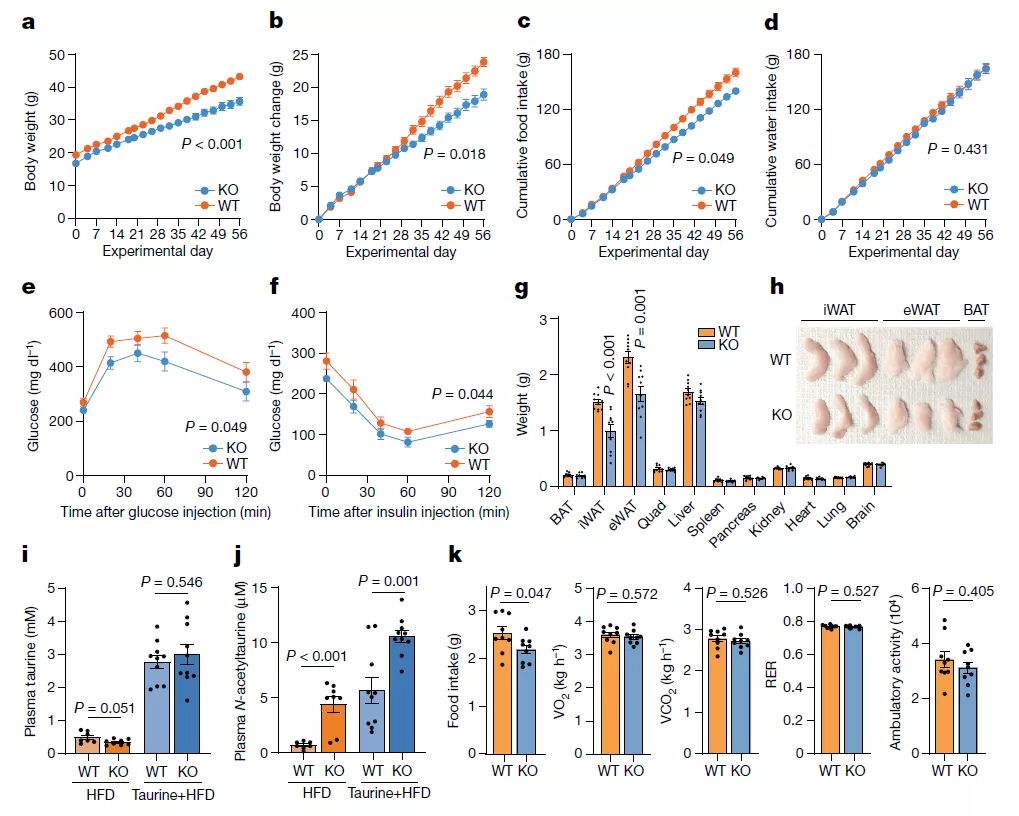
Source: Nature
When Pter-knockout mice were fed a high-fat diet and given taurine in their drinking water, they consumed significantly less food and had lower body weight compared to control mice. The study also found that the difference in body weight was entirely due to reduced fat mass in the gene-knockout mice.
Subsequently, the research showed that when obese wild-type mice (with intact Pter gene) were administered N-acetyltaurine, it also reduced food intake and body weight in a manner dependent on the functional GFRAL receptor. Notably, the PTER pathway is independent of the pathway used by currently marketed GLP-1 receptor agonists.
Effects of N-acetyltaurine Administration on Mice
Source: Nature
These data reveal the role of PTER and N-acetyltaurine in weight control and energy balance, and demonstrate that either genetic knockout of Pter or administration of N-acetyltaurine in mice can inhibit body weight gain and obesity.
It is worth noting that the researchers indicated that the mechanism by which N-acetyltaurine is produced remains unclear. The gut microbiota may play a role: a study found that mice treated with antibiotics for one week (to eliminate most gut bacteria) had a 30% reduction in circulating N-acetyltaurine compared to before treatment.
Perhaps one day, we could promote the formation of N-acetyltaurine through probiotics or dietary interventions to reduce body weight. However, there is still a long way to go to achieve this goal.
References
[1] https://med.stanford.edu/news/all-news/2024/08/diet-taurine-weight.html
[2] https://www.nature.com/articles/s41586-024-07801-6
[3] https://brainresilience.stanford.edu/news/qa-unlocking-secrets-taurine-obesity-control
[4] https://data.worldobesity.org/publications/?cat=22
[5] https://data.worldobesity.org/publications/WOF-Obesity-Atlas-v7.pdf
Important Reminder: All content in this article is for general reference only and is provided solely to offer information support for practitioners in the nutrition and health industry. Descriptions related to efficacy are supported by corresponding data, but they do not represent claims or guidance for consumers. Content related to health, medical care, and technological applications is for reference only. For medical matters, please consult professional medical institutions and follow medical advice. This article does not provide any medical recommendations.